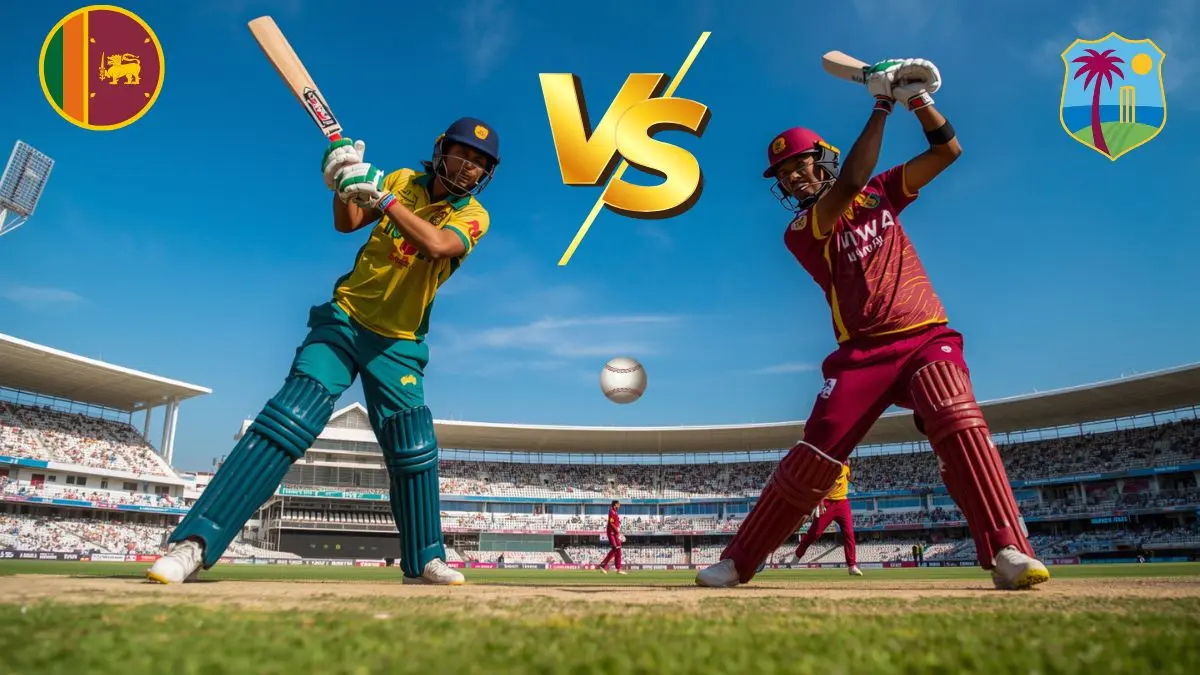
Sri Lanka National Cricket Team vs West Indies National Cricket Team Players
Cricket, in its purest form, is often defined by the balance of power between two competing nations. Few rivalries in the history of One Day International cricket have been as exquisitely poised as that between Sri Lanka and the West Indies. As the calendar turns toward the summer of 2026, these two proud cricketing nations are preparing to add another chapter to their storied history. A three-match ODI series is scheduled to take place from June 3 to June 8, 2026, at the historic Sabina Park in Kingston, Jamaica. This series, part of the Sri Lanka tour of the West Indies 2026, promises not only high-quality cricket but also a continuation of a head-to-head record that is so evenly matched it defies conventional logic.
With the first ball scheduled to be bowled in just a few months, the context of this series extends far beyond the immediate battle for bilateral silverware. It is a meeting of two teams that have, over nearly five decades, produced some of the most memorable moments in the 50-over format. From the pace and flair of the Caribbean to the cunning spin and technical grit of the island nation, the upcoming series is a celebration of cricketing diversity. This article delves deep into the provided schedule, the astonishingly balanced historical records, the recent form of both teams, and the squads assembled for the tour, offering a comprehensive preview of what promises to be a fascinating contest.
The Stage is Set: The 2026 ODI Schedule
All roads in the cricketing world will lead to Sabina Park, Kingston, one of the most iconic venues in the sport. Known for its vibrant atmosphere, close boundaries, and a pitch that traditionally offers a fair contest between bat and ball, Sabina Park is the perfect amphitheater for this rivalry. The series will comprise three ODIs, each scheduled to begin at 11:00 AM local time, which translates to 4:00 PM GMT. The schedule is as follows:
The first ODI is slated for June 3, 2026. This opening match will set the tone for the series. Both teams will be eager to draw first blood, especially knowing that the remaining two games will be played in quick succession. The second ODI will take place on June 6, 2026, followed by the third and final match on June 8, 2026. As of the latest available information, all three matches bear the status of “Scheduled,” indicating that preparations are firmly underway with no reported disruptions.
All matches will be played at Sabina Park, Kingston, Jamaica.
Match | Date | GMT | ||
1st ODI | June 3, 2026 | 4:00 PM | ||
2nd ODI | June 6, 2026 | 4:00 PM | ||
3rd ODI | June 8, 2026 | 4:00 PM |
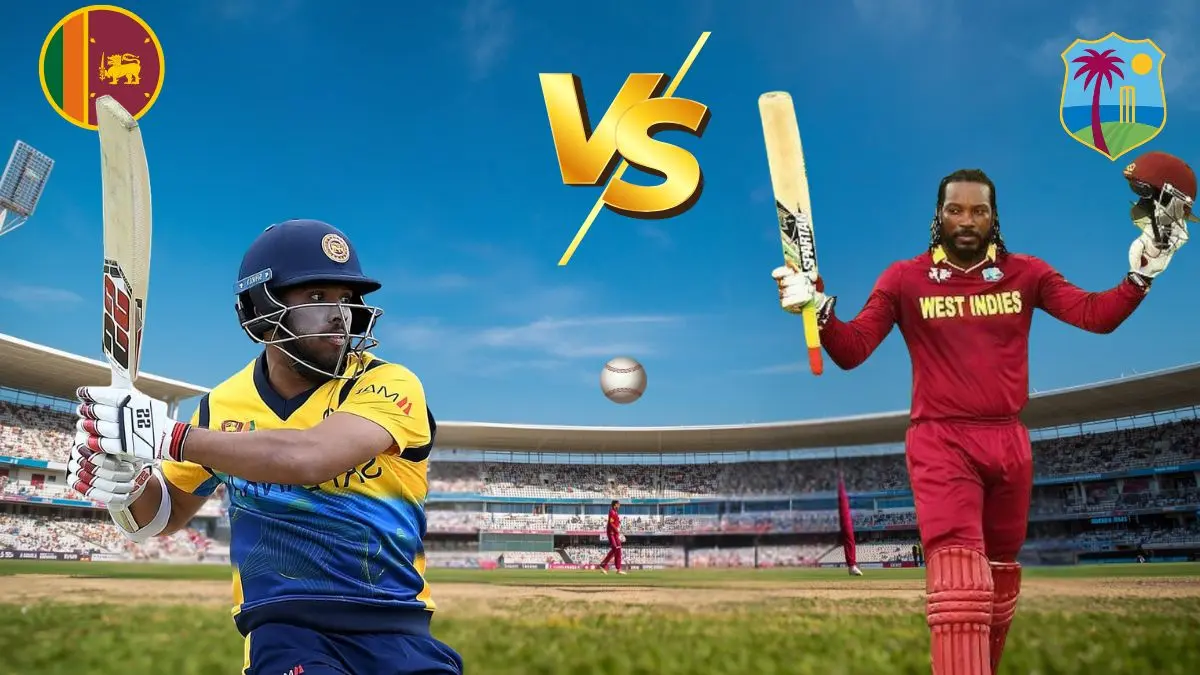
The compact nature of the series—three matches over six days—adds a layer of strategic urgency. There is little room for error. A single bad day with bat or ball could be the difference between winning the series and losing it. For the West Indies, playing at home in front of a passionate Jamaican crowd is a significant advantage. The familiar conditions, the supportive spectators, and the knowledge of the Sabina Park pitch characteristics could play into the hands of the home side. However, Sri Lanka, a team renowned for its adaptability and resilience on overseas tours, will be no pushovers. Their recent history against the West Indies, particularly their triumph in their last home series, will give them immense psychological confidence.
Squad
| Sri Lanka | west indies |
| Dushmantha Chameera | Justin Greaves |
| Kusal Mendis (c) (wk) | Roston Chase |
| Wanindu Hasaranga | John Campbell |
| Asitha Fernando | Shai Hope (c) (wk) |
| Kamindu Mendis | Gudakesh Motie |
| Charith Asalanka | Alzarri Joseph |
| Janith Liyanage | Shimron Hetmyer |
| Pramod Madushan | Amir Jangoo (wk) |
| Pathum Nissanka | Keacy Carty |
| Milan Rathnayake | Shamar Springer |
| Maheesh Theekshana | Sherfane Rutherford |
| Kamil Mishara | Jayden Seales |
| Dunith Wellalage | Matthew Forde |
| Dilshan Madushanka | Ackeem Auguste |
| Pavan Rathnayake | Shamar Joseph |
A Statistical Mirror: The Overall Head-to-Head Record
To understand the intensity of the upcoming series, one must first appreciate the historical context. The rivalry between Sri Lanka and the West Indies in One Day Internationals dates back to 1975, when the two teams first crossed paths on the global stage. Since that inaugural meeting, they have engaged in 67 matches. What makes this rivalry truly unique in the annals of cricket is the extraordinary parity of the results.
Overall Head-to-Head ODI Records
- Total Matches Played: 67
- Sri Lanka Won: 32
- West Indies Won: 32
- No Result / Abandoned: 3
Recent ODI Match Results
Date | Winner | Margin | |
Oct 26, 2024 | West Indies | 8 wickets | |
Oct 23, 2024 | Sri Lanka | 5 wickets | |
Oct 20, 2024 | Sri Lanka | 5 wickets | |
Jul 7, 2023 | Sri Lanka | 8 wickets | |
Mar 14, 2021 | West Indies | 5 wickets | |
Mar 12, 2021 | West Indies | 5 wickets | |
Mar 10, 2021 | West Indies | 8 wickets | |
Mar 1, 2020 | Sri Lanka | 6 runs | |
Feb 26, 2020 | Sri Lanka | 161 runs | |
Feb 22, 2020 | Sri Lanka | 1 wicket |
According to the historical data, out of the 67 matches played, Sri Lanka has emerged victorious on 32
occasions. The West Indies, matching their opponents step for step, have also won 32 times. This leaves three matches that yielded no result or were abandoned, often due to inclement weather or external factors beyond the players’ control. This statistical equilibrium is almost unprecedented in international cricket, especially between two nations from different continents with distinct cricketing cultures and resources.
For decades, the West Indies dominated world cricket with their fearsome pace bowling and explosive batting. Sri Lanka, meanwhile, evolved from underdogs to world champions, particularly after their 1996 World Cup victory. Despite these shifting trajectories, whenever these two teams meet, the ledger remains stubbornly balanced. Neither nation has been able to establish long-term dominance over the other. This parity means that every match, every series, is a genuine toss-up. The 2026 series in Jamaica is not merely a bilateral engagement; it is a continuation of a 67-match-long stalemate that begs to be broken. The team that wins the upcoming series will not only claim the trophy but also take a slender 33-32 lead in the all-time count—a bragging right that carries immense weight given the history.
Recent Form: The Last Ten Encounters
While the overall 32-32 record provides the macro view, an analysis of the last ten matches between Sri Lanka and the West Indies reveals more immediate trends and psychological nuances. The balance has heavily tilted toward the home teams during recent bilateral tours. This trend underscores the importance of familiar conditions and suggests that the 2026 series, being in the West Indies, could favor the Caribbean side. However, the most recent series tells a slightly different story.
The data shows that the last ten completed ODIs between these two sides have produced some decisive results. The most recent encounter took place on October 26, 2024, at Pallekele. On that day, the West Indies emerged victorious by a convincing margin of 8 wickets. This victory was a strong response from the visitors, as earlier in that same home series for Sri Lanka, the hosts had won two consecutive matches. On October 23, 2024, Sri Lanka won by 5 wickets at Pallekele. Just three days earlier, on October 20, 2024, Sri Lanka had again won by 5 wickets at the same venue. Therefore, in that three-match series on Sri Lankan soil in late 2024, the home side took the series 2-1.
Prior to that, the teams met on July 7, 2023, at a neutral venue—Harare, during a World Cup Qualifier. In that high-pressure contest, Sri Lanka proved superior, winning by 8 wickets. This victory was crucial for Sri Lanka’s campaign and demonstrated their ability to perform in knockout-style environments.
Looking further back, the West Indies enjoyed a period of dominance on their home turf in early 2021. On March 14, 2021, at North Sound, the West Indies won by 5 wickets. Two days earlier, on March 12, 2021, the result was identical: West Indies won by 5 wickets at North Sound. The pattern continued from March 10, 2021, when the West Indies secured an 8-wicket victory at the same ground. This was a clean sweep for the home side, a whitewash that would have stung the Sri Lankan camp deeply.
Before that whitewash, however, Sri Lanka had asserted their authority on home soil in early 2020. On March 1, 2020, at Pallekele, Sri Lanka won a tight contest by just 6 runs. A few days earlier, on February 26, 2020, Hambantota, Sri Lanka, produced a dominant performance, winning by a massive margin of 161 runs. The streak began on February 22, 2020, at Colombo (SSC), where Sri Lanka clinched a thrilling one-wicket victory.
The pattern is unmistakable. In the last ten matches, the home team has almost always won. Sri Lanka won their home series in 2020 and 2024; the West Indies won their home series in 2021. The only exception in this dataset is the neutral-venue match in Harare in 2023, which Sri Lanka won. This trend places an even greater premium on the upcoming three matches in Jamaica. If the “home advantage” pattern holds, the West Indies will enter the series as favorites. However, Sri Lanka’s recent 2-1 series victory over the same opponent (even if at home) and their win at the World Cup Qualifier suggest they have the mental edge to break patterns. The question for 2026 is simple: can Sri Lanka buck the trend and win a bilateral ODI series in the Caribbean, or will the West Indies continue their recent dominance at home?
The Contenders: A Closer Look at the Squads
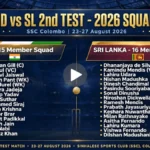
A cricket match is ultimately decided by the 22 players on the field. For the upcoming series, the provided images reveal the squad assembled by Sri Lanka. The West Indies squad, while mentioned in the document structure, is not populated with player names in the given text, but the Sri Lankan lineup provides a wealth of information about their strategy, leadership, and potential starting XI.
Sri Lanka Squad Analysis
The Sri Lankan squad for the tour of West Indies 2026 is a carefully curated mix of experienced campaigners and exciting young talent. The leadership structure has been clearly defined, with Kusal Mendis named as the captain and also serving as the wicketkeeper. This dual role underscores the trust the selectors place in Mendis, not only as a top-order batsman but also as a tactical leader behind the stumps. His ability to read the game from the keeper’s position could be invaluable in the Caribbean conditions.
The bowling attack appears to be Sri Lanka’s primary weapon, with a strong emphasis on both pace and spin. Dushmantha Chameera leads the fast-bowling contingent. Known for his raw pace and ability to generate bounce, Chameera will relish the lively tracks at Sabina Park. Alongside him, Asitha Fernando and Pramod Madushan provide additional seam options. Fernando has proven himself as a wicket-taker with the new ball, while Madushan offers control and subtle variations. Dilshan Madushanka, another left-arm seamer, adds variety to the pace battery. The inclusion of Milan Rathnayake and Pavan Rathnayake (distinct players) suggests depth in the fast-bowling reserves, giving the captain multiple options depending on pitch conditions.
The spin department is equally formidable, if not more so. Wanindu Hasaranga is arguably one of the world’s premier limited-overs bowlers. His leg-spin, combined with deceptive googlies and athletic fielding, makes him a game-changer in the middle overs. Maheesh Theekshana, with his mysterious carrom-ball action, provides a perfect complement to Hasaranga. Theekshana’s ability to bowl dot balls under pressure is a critical asset. Dunith Wellalage, a left-arm orthodox spinner who also contributes handy runs with the bat, rounds out the spin attack. This trio gives Sri Lanka the ability to strangle the run rate and take wickets on surfaces that offer any turn.
The batting lineup, led by Kusal Mendis, features a blend of aggression and stability. Pathum Nissanka is likely to open the innings. He has developed into a reliable accumulator who can also accelerate when required. Charith Asalanka, a middle-order lynchpin, is known for his cool demeanor and ability to finish games. Kamindu Mendis, an ambidextrous batter who can bowl with both arms, adds a unique tactical dimension. Janith Liyanage and Kamil Mishara are promising young batters eager to prove themselves on the international stage. Finally, Eshan Malinga—not to be confused with the legendary Lasith Malinga—represents the new generation of Sri Lankan cricketers.
In summary, Sri Lanka’s squad appears well-balanced. They have a formidable spin attack suited for subcontinental conditions, but the question remains how they will adapt to the faster, bouncier pitches of Jamaica. The pace of Chameera and Madushanka will be crucial, but the spinners’ ability to adjust their lengths will determine whether Sri Lanka can replicate their recent home success away from home.
The West Indies Squad
The provided documents indicate a section for the West Indies squad, but the specific player names are not filled in the available text. However, based on the historical context of the rivalry and the nature of Caribbean cricket, one can infer the likely composition. Historically, West Indies teams rely on explosive power-hitting in the batting order and a battery of fast bowlers who exploit home conditions. Players like Shai Hope (the prolific ODI batsman/wicketkeeper), Nicholas Pooran (a destructive finisher), and a host of tall, quick bowlers have been staples of their recent campaigns. Whoever dons the maroon jersey for the 2026 series will be buoyed by the historical parity of the head-to-head record and the recent trend of home victories. The absence of a named squad in the provided data does not diminish the threat they pose; rather, it invites focus on the known quantity of the rivalry itself.
Tactical Battles to Watch
Given the squads and the venue, several key tactical battles are likely to decide the fate of the series.
First, Sri Lanka’s spinners vs. West Indies’ power-hitters. Sabina Park has historically not been a rank turner, but it does offer bounce that can assist wrist-spinners like Hasaranga. If the pitch is dry, Hasaranga and Theekshana will test the patience of the West Indian middle order. The home side’s batters will likely try to attack the spinners to disrupt their length. The outcome of this battle in the middle overs (10-40) will be pivotal.
Second, the West Indies’ pace attack vs. Sri Lanka’s top order. On a Jamaican pitch, the new ball will likely seam and bounce. Sri Lanka’s openers, Nissanka and possibly Mendis, will need to survive the initial spell. If the West Indian quicks can remove Sri Lanka’s top three cheaply, they can expose a middle order that, while talented, may be less experienced in overseas conditions.
Third, Captaincy and composure under pressure. With the head-to-head record perfectly tied at 32 wins each, every close match will carry the weight of history. How Kusal Mendis marshals his bowlers in the death overs, and how his West Indian counterpart rotates his strike bowlers, could be the difference between a 32-33 deficit or a 33-32 lead for their nation.
The Venue: Sabina Park, Kingston
The choice of Sabina Park as the sole venue for all three ODIs is significant. This ground is famous for its intimate atmosphere and the proximity of the fans to the playing area, creating a cauldron of noise. The outfield is traditionally fast, and the boundaries, while not tiny, reward well-timed shots. Historically, Sabina Park has favored fast bowlers due to its bounce and carry, but in recent years, it has become more balanced. Scores of 250-280 are often competitive. Teams winning the toss may choose to bat first to put runs on the board and then use the pressure of a raucous home crowd defending a total. However, evening dew could affect the team bowling second. Given that all matches start at 11:00 AM local time, dew is less of a factor than in night games, making the toss slightly less critical than in day-night fixtures.
Conclusion: The Countdown to June 2026
As the cricketing world looks toward June 2026, the scheduled three-match ODI series between Sri Lanka and the West Indies at Sabina Park represents more than just another bilateral tour. It is a continuation of one of the most evenly fought rivalries in the history of One Day International cricket. With 67 matches played, 32 wins each, and only three no-results separating the two sides, the ledger is perfectly balanced.
The recent history of the last ten encounters reinforces the importance of home advantage—a trend that bodes well for the West Indies, who will play in front of their passionate supporters in Kingston. Yet, Sri Lanka’s 2-1 series victory on home soil in late 2024 and their 8-wicket win at the Harare World Cup Qualifier in 2023 demonstrate that they have the quality and temperament to win anywhere.
The Sri Lankan squad, led by the capable Kusal Mendis and armed with a devastating spin trio of Hasaranga, Theekshana, and Wellalage, alongside pace spearheads like Dushmantha Chameera, appears ready for the challenge. Their batting, anchored by Nissanka and Asalanka, will need to stand up to the inevitable pace barrage from the home side.
Starting June 3, 2026, and concluding on June 8, 2026, the three matches will unfold at one of cricket’s most storied venues. By the time the last ball is bowled, one of two things will happen: either the deadlock will be broken, with one team moving to 33 wins, or the perfect symmetry will be restored with a drawn series or a no-result that leaves the tally at 32-32. For fans of pure, competitive cricket, either outcome is delicious. But for the players, the stakes could not be higher. A rivalry renewed, a ledger to be settled, and a summer of cricket in Jamaica awaits. The stage is set. The players are ready. History beckons.
Footnotes
References
External links