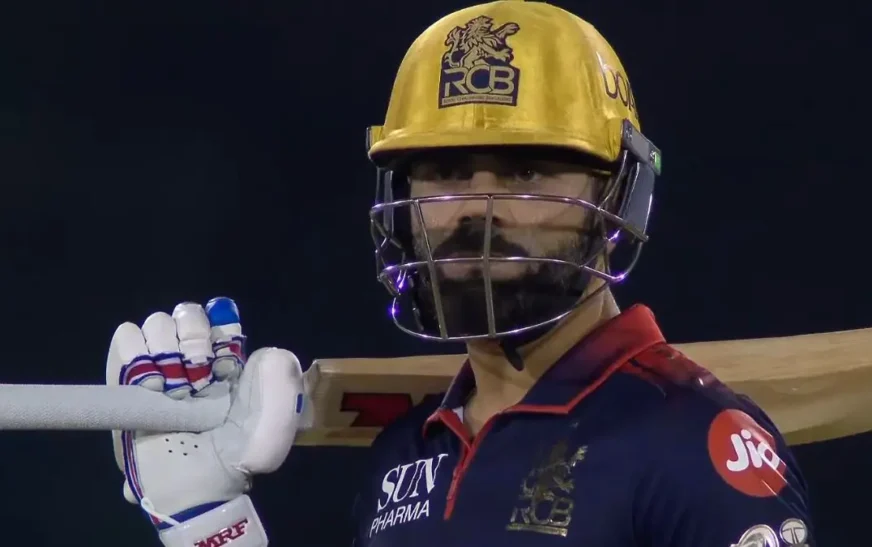
Virat Kohli Net Worth 2026
According to the latest financial estimates, Virat Kohli’s estimated net worth now ranges between ₹1,050 crore and ₹1,115 crore (approximately 126millionto126millionto134 million USD). However, to view his finances in isolation is to miss the bigger picture. When combined with his wife, Bollywood actress and producer Anushka Sharma, the Kohli-Sharma family empire stands at a monumental ₹1,300+ crore.
This figure places the couple in the rarefied air of global celebrity power couples. But how exactly is this wealth structured? Unlike the traditional cricketers of the 1990s who relied almost entirely on match fees and modest endorsements, Kohli has constructed a diversified, multi-layered financial portfolio. From a staggering IPL salary to a digital influence that rivals global pop stars, from a burgeoning restaurant chain to a luxury real estate portfolio worth over ₹150 crore, the former captain has become a case study in athlete entrepreneurship.
Breakdown of Core Wealth & Income Streams
| Income | Details | Earning |
| IPL | RCB | ₹21 crore per season |
| BCCI | Top-tier Grade A+ national contract | ₹7 crore annually |
| Brand | Puma, Audi, MRF Tyers, etc. | ₹150 crore to ₹200 crore annually |
| Influence | 270M+ followers Instagram | ₹8 crore to ₹14 crore per post |
| Business | Go Digit, Blue Tribe, etc. | (Varies based on equity) |
Premium Real Estate Portfolio
| Location | Asset Type | Approximate |
| Gurugram | Luxury Bungalow | ₹80 crore |
| Alibaug | 5.1-Acre Land | ₹70 crore |
| Mumbai | Luxury Apartment | ₹34 crore |
Professional Cricket Earnings – Life After Test Retirement
The year 2025 marked a seismic shift in Indian cricket. Virat Kohli, a man who had defined the country’s red-ball resurgence, retired from Test cricket. For any other player, retirement from the longest format would signal a dramatic drop in income. For Kohli, however, retirement has merely streamlined his earnings, allowing him to focus on the more lucrative, shorter formats of the game.
Even without Test cricket, Kohli continues to command substantial revenue through limited-overs internationals and, most lucratively, league cricket. The structure of his professional earnings is two-fold, yet remains dizzyingly high for an athlete past his international prime.
The IPL Behemoth: ₹21 Crore Retainership
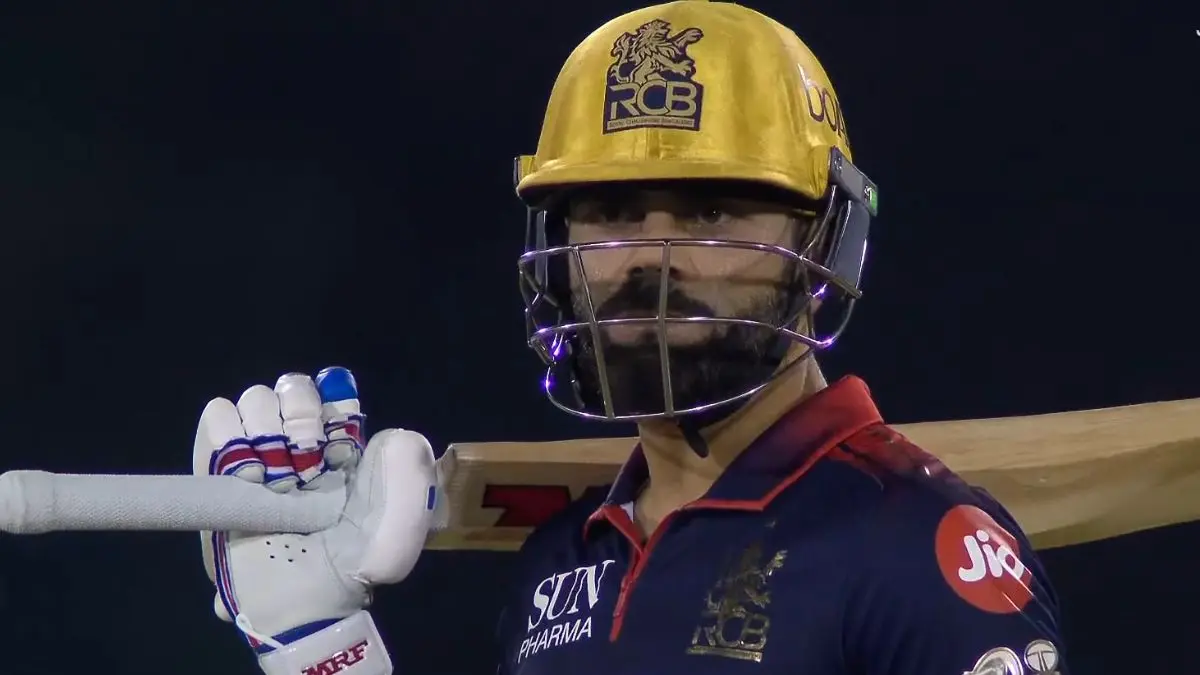
The Indian Premier League (IPL) is no longer just a cricket tournament; it is the second-largest sports media property in the world by per-match value, and its salary cap reflects that financial muscle. Kohli’s relationship with the Royal Challengers Bengaluru (RCB) is the stuff of sporting legend—a one-team man in an era of mega auctions and franchise hopping.
As of 2026, Kohli remains retained by RCB for a staggering ₹21 crore per season. To put this in perspective, this retainer fee is higher than the entire salary cap for some original IPL teams in the league’s early years. This figure was cemented under the mega auction rules, which allow franchises to retain a core of players using a combination of pre-auction retention and the Right to Match (RTM) card.
Why is Kohli worth ₹21 crore to RCB? Beyond his batting average, he brings a brand value that fills the M. Chinnaswamy Stadium for every home game. He brings sponsorship deals that dwarf the franchise’s operational costs. For RCB, paying Kohli ₹21 crore is not an expense; it is an investment that guarantees a return in fan engagement, merchandise sales, and television ratings. Even in the twilight of his T20 career, Kohli remains the box-office draw that every franchise craves, and his salary reflects that continued dominance.
The BCCI Contract: Grade A+ Privilege
Despite walking away from Test cricket in mid-2025, Kohli has not been cast aside by the Board of Control for Cricket in India (BCCI). Instead, he retains his position at the apex of the central contract system. He currently receives a ₹7 crore annual retainer under the elite Grade A+ contract category. This is the highest tier available to any Indian cricketer, a bracket typically reserved for players who are automatic selections in all formats.
However, given his Test retirement, Kohli’s earnings from match fees have naturally shifted. The data reveals a structured pay scale for the limited-overs formats he still graces. For every One Day International (ODI) he plays, Kohli earns a match fee of ₹6 lakh. For every T20 International (T20I), he earns ₹3 lakh.
While these match fees might seem modest compared to his IPL salary, they serve a different purpose. They represent the prestige of representing the nation. Combined with his annual retainer, Kohli likely still banks close to ₹7.5 to ₹8 crore annually from the BCCI, even with a reduced international schedule. This income stream, while the smallest percentage of his overall net worth, provides a stable, foundational layer to his finances, ensuring that his cash flow remains positive regardless of his off-field business performance.
Brand Endorsements & Digital Influence – The Engine of Wealth
If professional cricket provides the platform, brand endorsements provide the rocket fuel. The provided data makes one thing abundantly clear: the vast majority of Virat Kohli’s wealth stems from his immense commercial marketability. In 2026, Kohli is not merely a cricketer who does ads; he is a walking media house, a billboard unto himself.
The Annual Endorsement Tsunami: ₹150 to ₹200 Crore
Kohli’s annual earnings from endorsements alone dwarf the lifetime earnings of many international athletes. According to the breakdown, he generates over ₹150 to ₹200 crore annually by serving as the face of over 30 global brands. This portfolio is not just about volume; it is about strategic alignment. The brands he endorses—Puma, Audi, MRF Tires, and Hero MotoCorp—are not fly-by-night startups. They are established giants in sportswear, automobiles, tires, and two-wheelers.
The economics of a Kohli endorsement are brutal for competitors. When a brand signs Kohli, they are not just hiring a face for a print campaign. They are hiring a lifestyle curator. His social media integration, his fitness aura, and his aggressive on-field persona translate directly into consumer trust. The data reveals a specific micro-figure that illustrates his premium pricing: Kohli charges roughly ₹7.5 to ₹10 crore per commercial shoot.
Consider the implications of that figure. A single day of shooting—perhaps six to eight hours in a studio—generates an income equivalent to a decade’s salary for a senior corporate executive in India. Brands are willing to pay this premium because Kohli delivers a return on investment that is measurable in increased sales and stock prices. Whether he is promoting Puma’s latest running shoes or Audi’s luxury sedans, Kohli’s endorsement triggers a psychological shortcut in the Indian consumer’s mind: excellence.
The Social Media Goldmine: ₹8-11 Crore Per Post
In the digital age, influence is currency, and Virat Kohli is the richest man in Asian sports when it comes to social media. The data states that he is the most-followed Asian athlete, boasting over 270 million followers on Instagram alone. To contextualize this number: 270 million people is roughly 80% of the population of the United States. It is a captive audience larger than the entire country of Indonesia.
With such reach comes staggering monetization. Kohli commands between ₹8 crore and ₹11 crore per sponsored post on Instagram. That is roughly 1millionto1millionto1.3 million USD for a single image or Reel that takes him five minutes to upload.
This income stream is revolutionary for several reasons. First, it bypasses traditional media agencies. Kohli can deal directly with global brands for digital campaigns. Second, it allows for micro-targeting. A single post about a specific protein shake or a luxury watch reaches exactly the demographic that the brand wants—affluent, young, and aspirational. Third, this revenue is passive in nature. While he has to shoot the content, the post remains on his grid forever, generating impressions for years. For any brand looking to reach the Indian diaspora or the domestic millennial, a Kohli Instagram post is the most efficient advertising spend available. This digital revenue, combined with his traditional endorsements, ensures that even if he stopped playing cricket tomorrow, his annual income would remain in the hundreds of crores.
Business Ventures & Startups – The Mogul Transition
What separates Virat Kohli from the previous generation of cricketing greats is his aggressive transition into a sports business mogul. He has successfully moved from being the product to being the producer. Through strategic equity investments and self-owned brands, Kohli is building a legacy that will outlast his cricketing records. The data outlines a dual-pronged approach: consumer-facing lifestyle brands and high-growth startup investments.
One8 & WROGN: Building a Lifestyle Empire
Kohli’s entrepreneurial journey began with apparel, and it has since matured into a multi-vertical lifestyle brand. He owns the apparel and lifestyle brand WROGN, which was initially launched in collaboration with Universal Sportsbiz. WROGN was designed to capture the street-style, athleisure market, resonating with young Indians who want to dress like Kohli but cannot afford international luxury brands.
However, the crown jewel of his consumer business is One8. What started as a clothing label has expanded into a massive multi-city premium restaurant chain known as One8 Commune. Unlike celebrity-endorsed restaurants that often fail within two years, One8 Commune has expanded strategically across major Indian metros. The concept marries Kohli’s public persona of fitness and discipline with a relaxed, upscale dining environment.
The 18 brand (named after his jersey number) is a masterclass in brand extension. It allows Kohli to monetize his name in sectors where he has no direct professional expertise—hospitality and retail. By licensing his name and image to these ventures, Kohli earns not just a flat fee but a percentage of the revenue. This transforms his identity into an annuity. Whether people are buying a WROGN t-shirt or eating a salad at One8 Commune, they are contributing to Kohli’s bottom line.
Startup Investments: The Equity Play
While restaurants and apparel generate cash flow, startup investments build generational wealth. Kohli has shown a keen eye for high-growth Indian startups, holding profitable equity in companies that are disrupting traditional industries.
The data highlights four key investments:
- Go Digit General Insurance: A unicorn in the insurtech space, Go Digit has revolutionized how Indians buy insurance. Kohli’s early bet on this company, coupled with his role as a brand ambassador, has likely multiplied his investment several times over.
- Blue Tribe (Plant-based meat): Aligning with his personal philosophy of fitness and, reportedly, a move towards a more sustainable diet (if not fully vegetarian, then plant-forward), Kohli invested in Blue Tribe. This positions him at the cutting edge of the alternative protein market in India, a sector expected to explode in the coming decade.
- Universal Sportsbiz (USPL): This is the parent company behind WROGN and other celebrity-led fashion lines. By holding equity here, Kohli has a direct stake in the manufacturing and distribution chain of his own merchandise.
- Mobile Premier League (MPL): As esports and mobile gaming exploded in India, MPL became a major player. Kohli’s investment here ties him to the digital-native generation, ensuring his brand remains relevant to teenagers who consume gaming content more than live sports.
These investments are not vanity projects. They are calculated risks in sectors where India is poised for massive growth: insurance, food tech, fashion, and gaming. By parking his cricket earnings into these startups, Kohli is effectively doing what the world’s wealthiest people do—using his liquidity to buy equity in future unicorns.
Luxury Real Estate Portfolio – Bricks, Mortar, and Billion-Dollar Views
For all his digital disruption and startup savvy, Virat Kohli remains a traditionalist when it comes to wealth preservation. Real estate has historically been the safest bet for high-net-worth individuals in India, and the Kohli-Sharma household has parked a substantial portion of their wealth in high-end properties worth over ₹150+ crore.
The portfolio is geographically diverse, spanning the National Capital Region (NCR), the financial capital of Mumbai, and the serene coastal getaway of Alibaug. Each property serves a distinct purpose: work, life, and escape.
The Gurugram Bungalow: The Fortress
In the posh, gated community of DLF Phase 1, Gurugram, stands a sprawling architectural home valued at ₹80 crore. This is the family’s primary base, given its proximity to the airport and the cricketing facilities in the NCR. Unlike the glass-and-steel high-rises of South Mumbai, this bungalow is a low-rise, expansive estate. It features massive gardens, a swimming pool, a state-of-the-art gym, and, crucially, high-level security systems. For a figure as scrutinized as Kohli, privacy is a luxury that costs extra. The ₹80 crore valuation reflects not just the square footage but the land value in one of the most expensive postal codes in the Delhi NCR region.
The Worli Apartment: The Sea-Facing Sanctuary
Mumbai is the entertainment capital, and since Anushka Sharma’s work is centered there, the couple owns a luxury sky-apartment in Worli worth ₹34 crore. Worli has become the preferred address for Bollywood’s A-list and India’s business elite, offering stunning panoramic views of the Arabian Sea and the Bandra-Worli Sea Link. This apartment is less of a house and more of a penthouse suite, designed for minimalism and functionality. During the IPL season, when Kohli is playing for RCB but attending events in Mumbai, or during Anushka’s film promotions, this Worli flat serves as the operational base. It represents the modern celebrity’s need for a “second home” in a different metropolis.
The Alibaug Estate: The Holiday Kingdom
The most intriguing piece of the real estate puzzle is the Alibaug estate. Alibaug, a coastal town a short ferry ride from Mumbai, has become the Hamptons of India—where the ultra-rich go to escape the city. Kohli and Sharma have accumulated multiple land parcels and a luxury holiday villa spanning 5.1 acres. The collective value of this holding is estimated at over ₹70 crore.
This is not merely a weekend home. A 5.1-acre estate is a compound. It suggests a long-term vision of generational living, possibly including separate guest houses, a cricket pitch, a private forest, and absolute seclusion. For a man who spent two decades being screamed at by 100,000 people in stadiums, the silence of a 5.1-acre Alibaug farmhouse is priceless. This estate is the ultimate symbol of their wealth—a piece of land so large and so close to Mumbai that its value is only likely to appreciate exponentially over the next decade.
Conclusion: The Blueprint of the Modern Athlete
Virat Kohli’s financial journey, as detailed in the provided data, is more than a story of a rich cricketer. It is a blueprint for the modern athlete transitioning into a post-sporting empire. He has successfully navigated the three stages of athletic wealth: Earning (IPL and BCCI salaries), Multiplying (endorsements and social media), and Preserving (real estate and startups).
Even after retiring from Test cricket in mid-2025, Kohli has not faded into the background. His net worth of up to ₹1,115 crore, combined with Anushka Sharma’s assets to cross ₹1,300 crore, places them in the league of global icons like LeBron James and Roger Federer. The breakdown reveals a man who understood early that a cricketer’s shelf life is short, but a brand’s shelf life is eternal.
From the ₹21 crore IPL salary that makes him the envy of every T20 league player in the world, to the ₹11 crore Instagram posts that prove his digital dominion, to the ₹70 crore Alibaug estate that secures his family’s future, Kohli has done what few athletes manage: he has won the game off the field as comprehensively as he won it on the field.