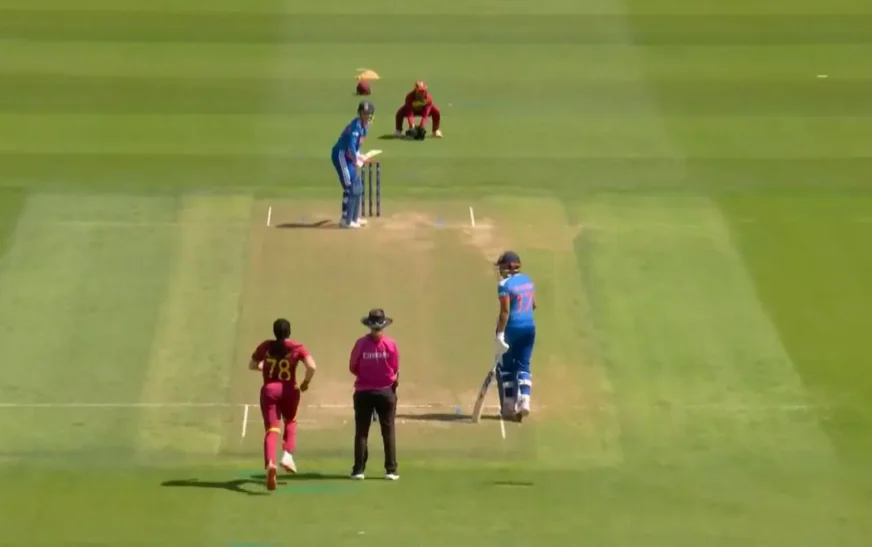
India vs West Indies: T20 World Cup Warm-up Match 2026.Get live scores, match highlights, key moments, player performances, and the latest cricket updates.


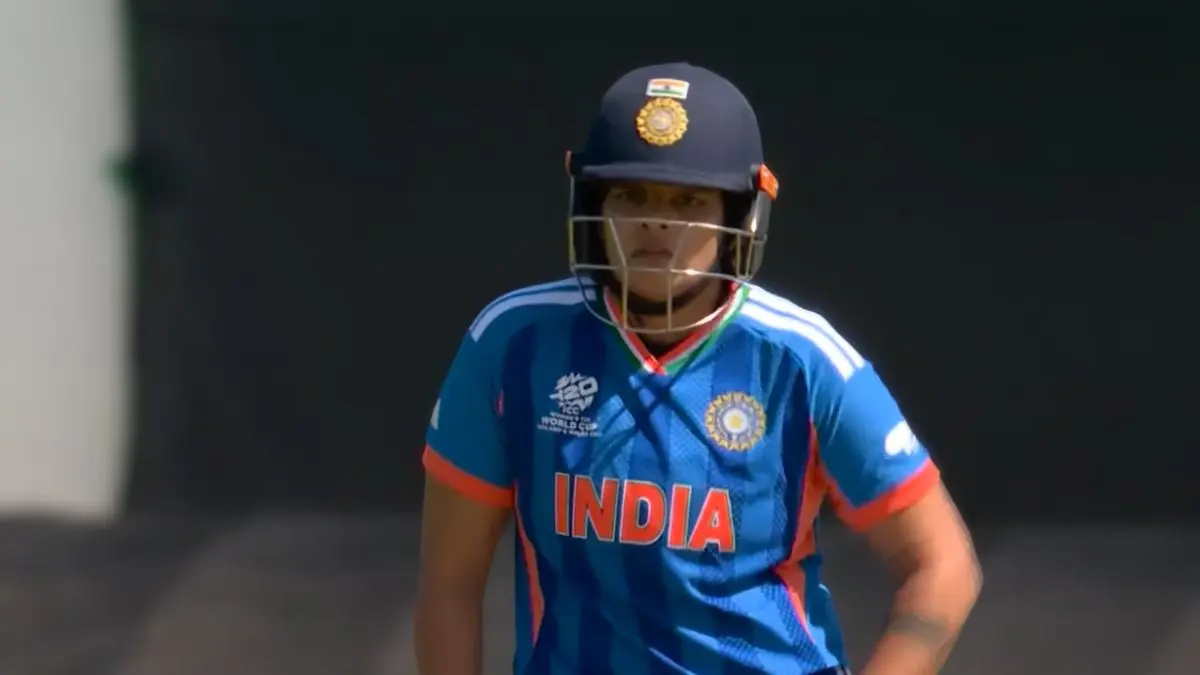
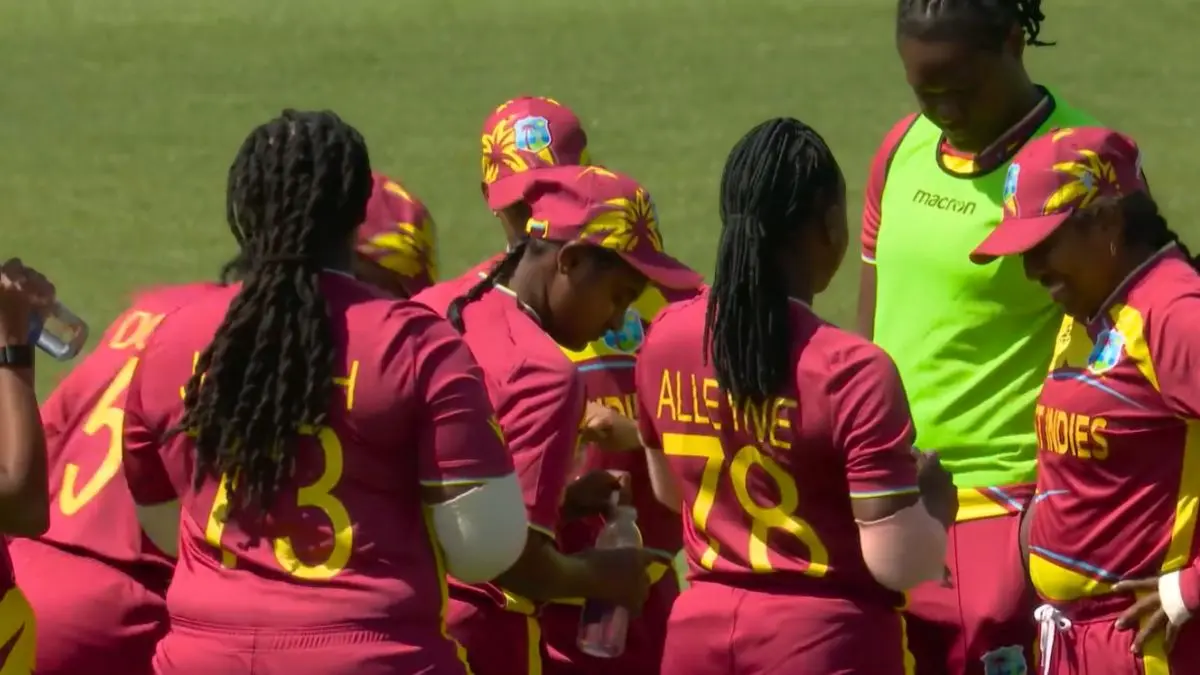
In the finely balanced ecosystem of Twenty20 cricket, the difference between victory and defeat often resides not in the grand sweep of boundaries but in the narrow straits of middle-over consolidation and death-over execution. The scorecards from this particular women’s T20 international fixture offer a compelling case study in how a team can post a formidable total, only to see the opposition’s chase derailed by a familiar combination of disciplined bowling, catastrophic clusters of wickets, and the peculiar weight of a “retired out” dismissal. The final arithmetic is simple: one side finished at 179 for 8 in their 20 overs, while the other, in reply, managed 153 for 8 from the same allocation, losing by 26 runs. Yet beneath that clean numerical surface lies a turbulent narrative of aggressive starts, middle-order recalibrations, bowling changes that worked like clockwork, and a chase that promised much but delivered only intermittent thrills.
First Innings: The Architecture of 179
The batting side, whose innings was meticulously documented in the first image, approached their 20 overs with an unmistakable philosophy: attack from the outset, absorb minimal dot-ball pressure, and leverage the powerplay to such an extent that even a middle-order stutter would not derail the final total. This strategy yielded a run rate of nearly nine per over, yet the innings was far from a monotonous slog; it was a nuanced performance featuring two distinct gears—an explosive start, a mid-innings wobble, a recovery led by an unlikely hero, and a late flurry of cameos.
The Powerplay Blitz: Mandhana and Verma’s Brief Fury
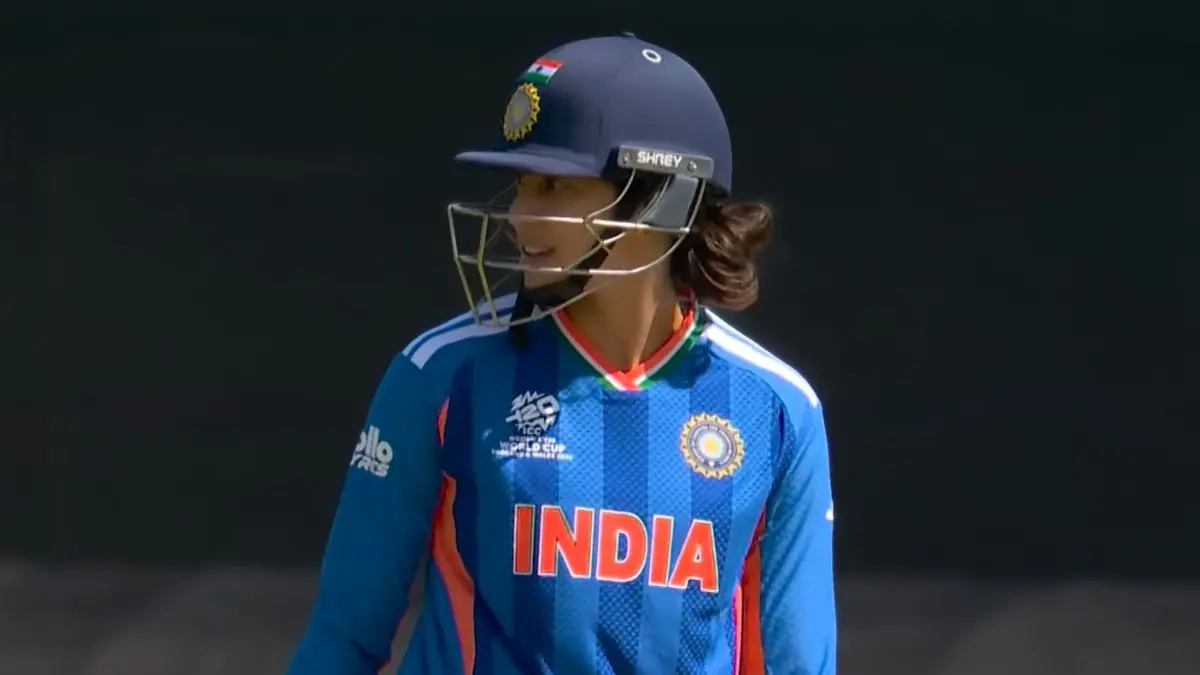
The opening partnership between Shafali Verma and the captain Smriti Mandhana was a masterclass in power-hitting without gratuitous risk. In just 5.2 overs, they raced to 59, losing only Mandhana in the process. Verma’s 29 runs came from a mere 13 balls, a strike rate of 223.08 that was fuelled by five boundaries. Her method was simple: if the ball was in her arc, it disappeared through the off-side with brutal efficiency. Mandhana, ever the stylist, was even more prolific in terms of boundary frequency—8 fours in her 23-ball 39, striking at 169.57. The fall of Mandhana (c Jannillea Glasgow b Aaliyah Alleyne) at 59 for 1 was a blow, but not a fatal one, given Verma’s presence. However, when Verma fell just one over later (c Ashmini Munisar b Karishma Ramharack) at 71 for 2, the innings entered a delicate phase. The scoreboard read 71 for 2 after 6.2 overs—a magnificent platform that required only sensible accumulation.
The Middle-Order Squeeze: Rodrigues and the Bhatia Anomaly
Jemimah Rodrigues, walking in at number three, managed only 7 runs from 7 balls before she became Afy Fletcher’s first victim (c Ashmini Munisar). At 85 for 3 after 7.6 overs, the rate had not yet dipped, but the fall of established batters in quick succession—three wickets between the 5th and 8th overs—threatened to squander the powerplay advantage. This is where Yastika Bhatia’s innings becomes a statistical curiosity. Bhatia scored 36 runs from 26 balls, striking at 138.46, with six fours. By any measure, a contribution of 36 at better than a run-a-ball is valuable. Yet her dismissal is recorded in the most unusual manner: “retired out.” In modern T20 cricket, where batters retire hurt due to injury, a “retired out” is a tactical or strategic departure, often implying that the team management felt she was not accelerating sufficiently or that a harder hitter was required. Bhatia walked off at 145 for 4 after 14.6 overs, having added 60 runs for the fourth wicket with the next batter. But the manner of her exit—neither bowled, caught, nor run out—suggests a clinical, almost ruthless, pursuit of a higher total. The innings was being treated not as a collection of individual milestones but as a finite resource of deliveries.
The Fulmali Rescue Act: 56 Not Out from Relative Obscurity
With Bhatia retiring out at the start of the 15th over, the score was 145 for 4. The ideal scenario would have been for Richa Ghosh, the wicketkeeper-batter known for her finishing prowess, to launch an assault. Instead, Ghosh fell for a golden duck (0 off 1 ball, c Qiana Joseph b Afy Fletcher) at 146 for 5. Radha Yadav followed for 1 (c Ashmini Munisar b Afy Fletcher) at 148 for 6. In the space of three deliveries (15.2 to 15.5), Afy Fletcher had turned the innings on its head. The score had crawled from 145 to 148, and the batting side had lost three wickets for three runs. This was the classic T20 collapse. Enter Bharti Fulmali. Her final score of 56 not out from 40 balls, with six fours and one six, is the anchor of this innings. But context is everything. Arriving at the crease most likely during the Bhatia partnership, she witnessed the carnage of Ghosh, Yadav, and then Shreyanka Patil (2 off 5, c Jannillea Glasgow b Afy Fletcher). From 148 for 6, Fulmali shepherded the tail. Kranti Gaud’s cameo of 4 off 2 (b Deandra Dottin) and Shree Charani’s 2 not out off 2 ensured that the innings did not subside below 170. Fulmali’s strike rate of 140.00, in the context of a crumbling middle order, was heroic. She found the boundary regularly, rotated strike with the lower order, and ensured that the last five overs (overs 15-20) produced 34 runs despite the loss of four wickets. That is a testament to her temperament.
Bowling Analysis: A Mixed Bag for the Fielding Side
The bowling figures from the first innings are incomplete in the provided image—bowlers’ names are missing from the header row, but the data shows Zaida James (1 over, 13 runs, econ 13.00) and Jahzara Claxton (2 overs, 19 runs, econ 9.50) being expensive. Aaliyah Alleyne, Karishma Ramharack, and Deandra Dottin are mentioned in the dismissals, but their full figures are not tabulated. What is clear is that Afy Fletcher was the destroyer-in-chief, claiming four wickets—Rodrigues, Ghosh, Radha Yadav, and Shreyanka Patil—and effectively ending any hope of the batting side reaching 190. Her economy, though not explicitly stated, must have been exemplary given her wicket haul across the middle and late overs. The fall of wickets list reveals the narrative of two mini-collapses: 59/1 to 71/2 (loss of set openers), then 145/4 to 148/6 (loss of Bhatia, Ghosh, Yadav) and then 162/7 to 173/8. Without Fulmali’s unbeaten half-century, the total would have been distinctly subpar. As it stood, 179 for 8 was a challenging, defensible score.
Second Innings: The Chase That Faltered at Every Turn
The chasing team’s innings, chronicled in the second image, began with ambition but was slowly suffocated by a combination of accurate bowling and untimely retirements—again, the “retired out” of Shemaine Campbelle proving to be a turning point. Their final total of 153 for 8, falling 26 runs short, tells a story of a lone top-order batter carrying the innings, a middle-order that failed to launch, and a lower-order that showed spirit when the game was already lost.
Dottin’s Lone War: 49 at Nearly a Run a Ball
Deandra Dottin, an undoubted power-hitter, anchored the chase with 49 runs from 44 balls, including eight fours. Her strike rate of 111.36 was respectable for a T20 anchor, but in the context of chasing 180, it was insufficient. She consumed nearly a quarter of the innings’ deliveries for only a quarter of the required runs. The scoreboard pressure was evident: at the fall of her wicket (lbw b Radha Yadav) at 97 for 4 in the 13.1 over, the required rate had climbed above ten. Dottin’s problem was not her intent but the lack of a sustained partner. She opened the batting and watched as Shemaine Campbelle (25 off 22, retired out) played a supporting role. The pair added 63 for the first wicket in 8.6 overs—a steady but unspectacular start. Then came the catastrophic sequence that mirrored the first innings’ collapse but with even less recovery.
The Middle-Order Meltdown: Three Wickets for Six Runs
From 63 for 0 after 8.6 overs, the chase unraveled with startling speed. Campbelle’s “retired out” at that juncture is baffling. She was scoring at 113.64, the partnership was solid, and there was no indication of injury. A tactical retirement at 63 for 0 in the ninth over of a 180-run chase is highly unconventional; it suggests either a team management overthinking or a complete misreading of the required rate. After her departure, Qiana Joseph (5 off 4, b Shreyanka Patil) fell at 75 for 2. Jahzara Claxton (6 off 4, c Bharti Fulfali b Shreyanka Patil) followed immediately at 81 for 3. Within two overs (10.2 to 10.6), the score had moved from 75 to 81, and two new batters were back in the pavilion. Dottin was now the last recognised batter. When she fell to Radha Yadav at 97 for 4, the chase was effectively over. Aaliyah Alleyne (13 off 7, c Yastika Bhatia b Radha Yadav) and Chinelle Henry (1 off 2, c Shree Charani b Radha Yadav) fell in quick succession—97 to 103 for 6 in the space of three deliveries (13.1 to 13.6). Radha Yadav had taken three wickets in the space of two overs, mirroring Afy Fletcher’s earlier heroics.
Lower-Order Flickers: Hector and Glasgow’s Late Flourish
With the game all but lost at 103 for 6, the lower order played without pressure. Jannillea Glasgow (19 off 18, c Bharti Fulfali b Shreyanka Patil) and Zaida James (1 off 2, b Shreyanka Patil) offered little resistance, falling at 113 for 7. Shabika Gajnabi (not listed in the playing XI but appears in the scorecard as “Shawnisha Hector” – likely a typographical variation or a debutant) scored a brisk 19 not out off 11 balls with a six and a four, striking at 172.73. Afy Fletcher added 7 not out off 6. Their unbroken 9-run partnership for the ninth wicket was cosmetic. The chase ended at 153 for 8, 26 runs adrift. The required run rate had ballooned to over 12 in the last five overs, and the batting side had simply run out of wickets and overs.
Bowling Analysis: The Patil-Yadav Axis
The bowling card for the defending side was a study in contrast. Shafali Verma, the opener, bowled two tidy overs for just 9 runs (econ 4.50) – an economical cameo. Renuka Singh bowled four overs for 30 runs (econ 7.50), maintaining pressure without being spectacular. Kranti Gaud was expensive (4-0-43-0, econ 10.75), conceding boundaries at crucial junctures. But the match-winners were Radha Yadav and Shreyanka Patil. Radha Yadav’s figures, though not fully displayed in the truncated bowling table, include the wickets of Dottin (lbw), Alleyne (caught), and Henry (caught) – three critical middle-order scalps. Shreyanka Patil claimed four wickets: Joseph, Claxton, Glasgow, and James. Her ability to strike in the middle overs—between the 10th and 16th overs—broke the back of the chase. The two spinners combined for seven of the eight wickets to fall, exploiting the slowing pitch and the mounting required rate.
Key Contrasts and Tactical Lessons
Several thematic contrasts emerge from these two scorecards. First, the handling of the “retired out” phenomenon. The batting side used it on Bhatia at 145 for 4, arguably to inject a harder hitter, but that backfired as Ghosh fell immediately. The chasing side used it on Campbelle at 63 for 0, a decision that remains inexplicable and likely lost them any chance of building a platform. Second, the distribution of wickets. Both teams lost eight wickets, but the batting side’s fall of wickets was spread across the innings, with Fulmali providing a terminal anchor. The chasing side lost 4 for 28, 3 for 6, and 4 for 40 in distinct clusters, preventing any partnership from gaining momentum beyond Dottin and Campbelle. Third, the role of the sixth bowler: Shafali Verma’s two economical overs were a bonus for the fielding side, whereas the chasing side had no such part-time option that could contain.
In conclusion, this match was decided not by the number of boundaries—both teams hit plenty—but by the timing of wickets and the strategic use of retirements. The defending side’s total of 179 was built on a strong powerplay, a middle-over recovery, and a late-order cameo. The chasing side’s reply was built on a single partnership, shattered by two devastating spells from Radha Yadav and Shreyanka Patil, and undermined by a baffling tactical retirement. The 26-run margin is a fair reflection: one team understood the tempo of a 20-over innings, while the other, despite flashes of individual brilliance, never quite solved the equation of when to accelerate and, more critically, when to simply stay at the crease.
Footnotes
References