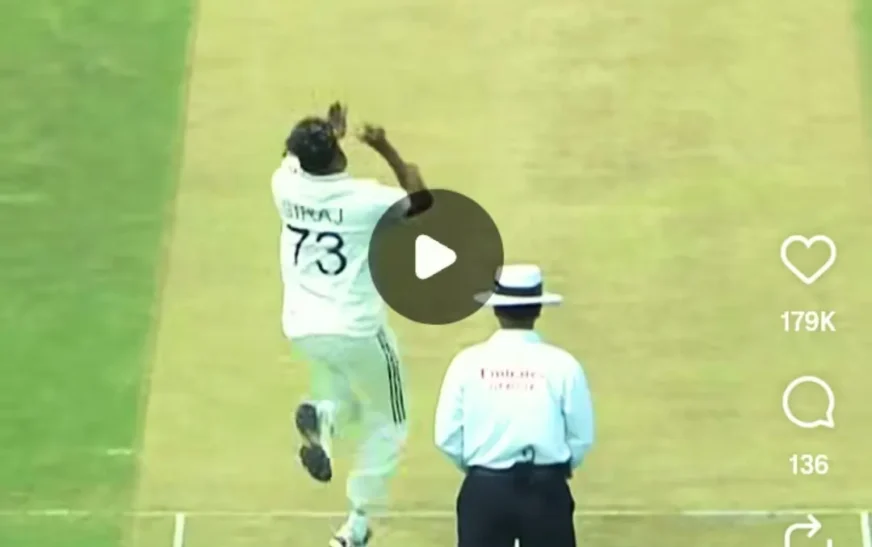
India vs Sri Lanka 2026 1st Test Day 3
Sri Lanka’s lower-middle order staged a spirited fightback on the third day of the series opener against India at the Galle International Stadium, with Sonal Dinusha and Niroshan Dickwella putting on an unbeaten sixth-wicket stand to steer the hosts to 215 for 5 at the close, still trailing India’s mammoth first-innings total of 462 by 247 runs. After India’s top order, led by a maiden Test century from the returning Devdutt Padikkal, had piled on the runs across the first two days, Sri Lanka’s top and middle order buckled under sustained pressure before Dinusha and Dickwella dug in to prevent further damage.
A Test Match Steeped in History
This was no ordinary contest. The first Test of India’s tour of Sri Lanka in 2026 also happened to be India’s 600th Test match overall, and the fiftieth Test staged at the historic Galle International Stadium, a ground synonymous with sharp turn, unpredictable bounce, and dramatic twists. Both teams arrived at Galle knowing exactly what was at stake. Stranded in the middle of the World Test Championship table, India and Sri Lanka each needed a clean 2-0 sweep of the two-match series to keep alive any realistic hope of qualifying for the WTC final. That context lent an extra edge to what was always going to be a tense, tactical battle on a surface expected to spin from the very first day.
Shubman Gill, leading the side in only his ninth Test as captain, won just his third toss in that time and had no hesitation in choosing to bat first on what appeared to be a good surface with little assistance for the seamers. The team combinations reflected the conditions: India fielded a top order of KL Rahul, Yashasvi Jaiswal, Devdutt Padikkal, Gill, Rishabh Pant, Dhruv Jurel, and Ravindra Jadeja, backed by a bowling attack built around Manav Suthar and Kuldeep Yadav’s spin, with Mohammed Siraj and Prasidh Krishna sharing the pace-bowling duties. Sri Lanka, under Dhananjaya de Silva, went in with Nishan Madushka and Lahiru Udara at the top, Dinesh Chandimal and Kamindu Mendis in the middle order, Niroshan Dickwella returning behind the stumps after three years out of the side, and a spin-heavy bowling unit featuring debutant off-spinner Keshara Nuwantha alongside the experienced Prabath Jayasuriya.
Padikkal’s Fairytale Return
The story of the first two days belonged emphatically to Devdutt Padikkal. Playing his first Test since November 2024, and having endured a difficult comeback attempt on a green Perth pitch two years earlier, Padikkal walked out at number three and produced the innings of his career. He used his feet superbly against Sri Lanka’s spinners, found the gaps with precise placement on both sides of the wicket, and grew increasingly assured as his innings progressed.
Early in the innings, India lost Rahul to a needless mix-up: he pushed debutant Nuwantha to deep mid-on and set off for a single, only for Jaiswal to end up stranded at the non-striker’s end after a mid-pitch collision, gifting Sri Lanka a soft run-out. It was a sloppy passage of play but one India would barely notice for the rest of the innings.
Padikkal added exactly 150 runs for the second wicket, batting alongside Rahul, who himself later fought through cramp before being forced to retire hurt in the final session of Day 1. Undeterred, Padikkal accelerated smoothly alongside his captain, striking successive boundaries off Lahiru Kumara before finally reaching his maiden Test century in the 57th over with a driven boundary off Nuwantha towards mid-off. The milestone carried extra significance: Padikkal became the first Indian left-hander since Sourav Ganguly in 2002 to score a Test century batting at number three, and it ended a two-year wait for India to register a hundred from that position since Gill’s own century against Bangladesh in Chennai. He walked off unbeaten on 131 from 178 balls, an innings studded with twelve fours and a six, as bad light and intermittent rain repeatedly interrupted play across the opening day.
Padikkal carried his form deep into Day 2, continuing to bat with the same control and calm that had defined his century, ensuring Sri Lanka’s bowlers found no easy rewards even as the innings wore on. India kept accumulating steadily through the middle overs, and despite occasional flurries of wickets, the scoreboard kept ticking towards a genuinely daunting total. By the time India’s innings finally folded on the third morning, having resumed from 460 for 9 overnight, the total read 462 in 116.4 overs — comfortably India’s highest total in a Test at Galle and a platform that immediately put Sri Lanka under pressure before a ball had even been bowled in their reply.
For Sri Lanka, the bowling effort with the ball was earnest but ultimately expensive, with the spin pairing of Nuwantha and Jayasuriya doing the bulk of the containing work while the pace bowlers Kumara and Asitha Fernando toiled for limited reward across two full days in the field.
Sri Lanka’s Top Order Stumbles
Chasing a lead of that magnitude was always going to be a monumental task, and Sri Lanka’s reply began disastrously. Opener Nishan Madushka lasted just two balls before edging Mohammed Siraj through to a catch, leaving the hosts 0 for 1 inside the very first over of the innings — as chastening a start as any team could suffer against a total in excess of 460.
Lahiru Udara and Dinesh Chandimal tried to repair the damage, but neither found any fluency against the moving new ball and the probing spin that followed. Chandimal fell early, caught behind off Manav Suthar for just 4, edging a length delivery through to Rishabh Pant to leave Sri Lanka reeling at 27 for 2 inside the eighth over. Udara held firm longer, striking six fours in a watchful innings of 27 from 44 balls that briefly threatened to settle the innings, before he too was undone by Suthar, this time caught by Yashasvi Jaiswal, with the total on 53 for 3.
Kamindu Mendis, one of Sri Lanka’s most dependable middle-order batters in recent times, could not build on a promising start either. He struck a four and a six in a compact 14 off 25 balls before falling to Kuldeep Yadav, caught by his own captain Shubman Gill, as Sri Lanka slipped to 59 for 4 inside 17 overs. With half the recognised batting order back in the pavilion and the score still shy of 60, India were firmly in control and Sri Lanka’s hopes of avoiding the follow-on, let alone competing for a first-innings lead, looked increasingly remote.
Captain Dhananjaya de Silva then attempted to steady the innings with the same composure and range of strokeplay that has made him one of the side’s most reliable performers. He struck four boundaries in a fluent 21 from 41 balls and briefly found support as Sri Lanka edged past the 90-run mark. But Ravindra Jadeja, introduced into the attack and immediately extracting turn and bounce from a wearing surface, had de Silva caught behind by KL Rahul with the total on exactly 90, ending a stand that had offered Sri Lanka their first real sign of resistance. Five wickets down, still trailing by well over 350 runs at that stage, and with the deficit growing by the over, Sri Lanka’s innings appeared to be teetering on the brink of complete collapse.
Dinusha and Dickwella Turn the Tide
What followed was arguably the most significant passage of play on the third day. With Sri Lanka staring down the barrel at 90 for 5, Sonal Dinusha and the returning Niroshan Dickwella came together and simply refused to give India any further encouragement. Where the top order had looked hurried and uncertain against the moving ball and sharp turn, Dinusha and Dickwella settled into a rhythm built on watchful defence punctuated by calculated aggression whenever the bowlers strayed even fractionally off length.
Dinusha, in particular, showed remarkable maturity for a player still establishing himself at this level, grinding his way to an unbeaten 62 off 116 balls, an innings built on discipline and patience rather than eye-catching strokeplay, though he did find the boundary three times and cleared it once. At the other end, Dickwella, playing his first Test in three years, looked every bit the seasoned campaigner his experience suggested he should be. He was fluent from early in his innings, timing the ball beautifully through the off side and finishing the day unbeaten on 72 from just 101 balls, an innings that included six boundaries and a strike rate well in excess of 70 that stood out sharply against the more circumspect approach around him.
Together, the pair added an unbroken 125 runs for the sixth wicket, comfortably the most substantial partnership of the Sri Lankan innings and one that fundamentally changed the complexion of the day. What had threatened to become a rout by the lunch interval turned, by the close of play, into a position from which Sri Lanka could at least dream of avoiding an innings defeat, provided the resistance could be extended into the fourth morning.
India’s Bowling Effort
India’s attack, so dominant in the morning and early afternoon session, found the surface offering diminishing returns as the day wore on and the Dinusha-Dickwella stand took hold. Mohammed Siraj was the pick of the bowlers in terms of control, conceding just 29 runs from his nine overs at an economy rate of 3.22 to finish with figures of 1 for 29, his solitary wicket coming in the very first over of the innings. Manav Suthar was the most productive of the Indian bowlers, claiming both Chandimal and Udara to finish with 2 for 53 from his fifteen overs, continually asking questions of the Sri Lankan batters with subtle variations in flight and pace.
Kuldeep Yadav accounted for Kamindu Mendis, finishing the day with figures of 1 for 51 from his twelve overs, while Ravindra Jadeja’s introduction into the attack paid immediate dividends with the crucial wicket of captain Dhananjaya de Silva, breaking what had been Sri Lanka’s most threatening partnership of the innings at that point. Prasidh Krishna, by contrast, endured a frustrating day with the ball, going wicketless from his nine overs at a cost of 36 runs, unable to find the same rewards that had come his way earlier in the match.
With extras contributing 15 to Sri Lanka’s total, including eight byes, three no-balls and two wides apiece, there were occasional signs of untidiness in the Indian effort as well, though nothing that seriously dented what remains a position of overwhelming dominance heading into the fourth day.
Where the Match Stands
As things stand, India remain firmly in the driving seat. A first-innings total of 462, built on the back of Padikkal’s historic century and useful contributions through the order, has given Sri Lanka a mountain to climb, and despite the resistance shown by Dinusha and Dickwella through the closing session of Day 3, the hosts still require a further 247 runs simply to avoid conceding a first-innings lead, with five second-innings wickets already down. Should Dinusha and Dickwella extend their stand deep into Day 4, Sri Lanka could yet threaten to bat India out of any realistic chance of forcing an innings victory. But with Keshara Nuwantha, Prabath Jayasuriya, Lahiru Kumara and Asitha Fernando still to come, the tail offers considerably less assurance, and India’s spin attack, having already demonstrated its potency across the day, will fancy wrapping up the innings relatively quickly once the recognised batters are separated.
For India, the priority on the fourth morning will be simple: break the Dinusha-Dickwella stand as early as possible, bowl Sri Lanka out for as cheap a total as the situation allows, and enforce a substantial batting effort in the second innings to set up a result on a pitch that is only expected to deteriorate further as the Test progresses. For Sri Lanka, the equation is just as clear — Dinusha and Dickwella must continue where they left off, and whoever emerges from the tail will need to find something extra to drag the deficit down to a more manageable level. With two full days of play still to come at a venue with a long history of producing dramatic finishes, this opening Test of the series is far from settled, even with India holding all the aces after three days of largely one-sided cricket punctuated by a spirited final-session fightback from the hosts.