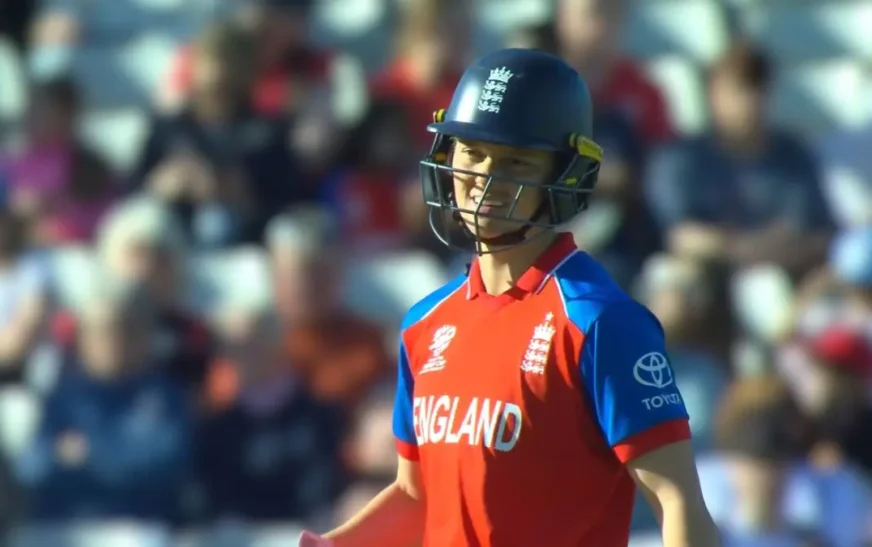
SL W vs ENG W Result Today in Match 1, Group 2 of the ICC Women’s T20 World Cup 2026 at Edgbaston, Birmingham.
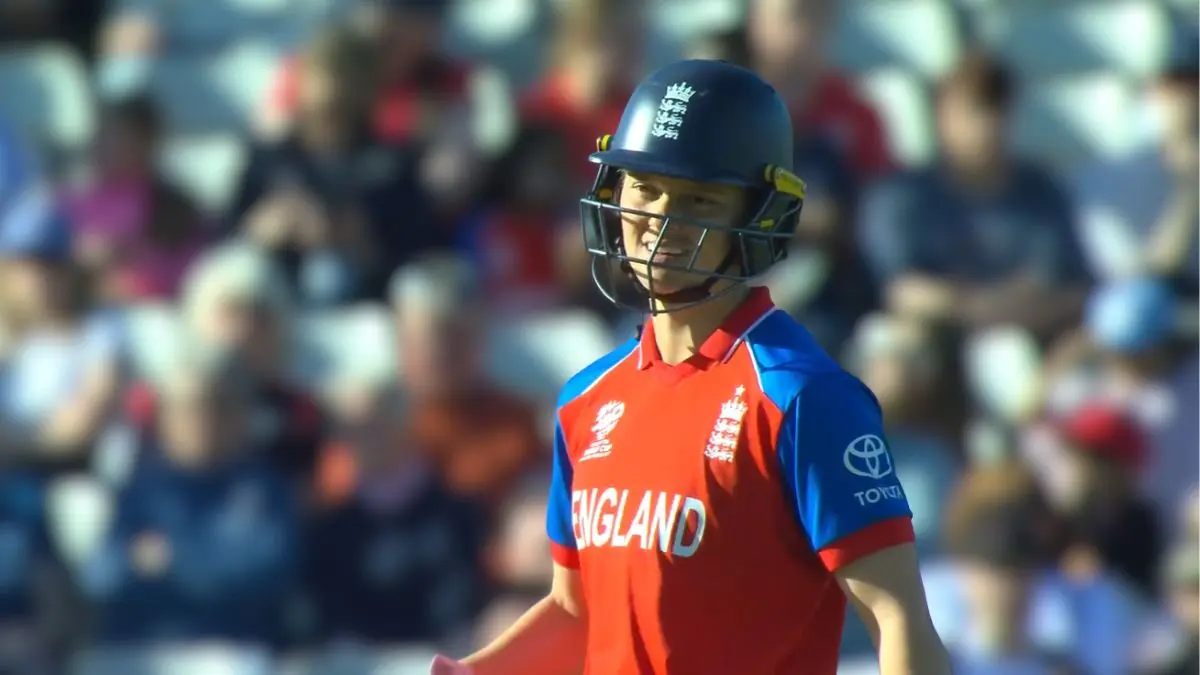
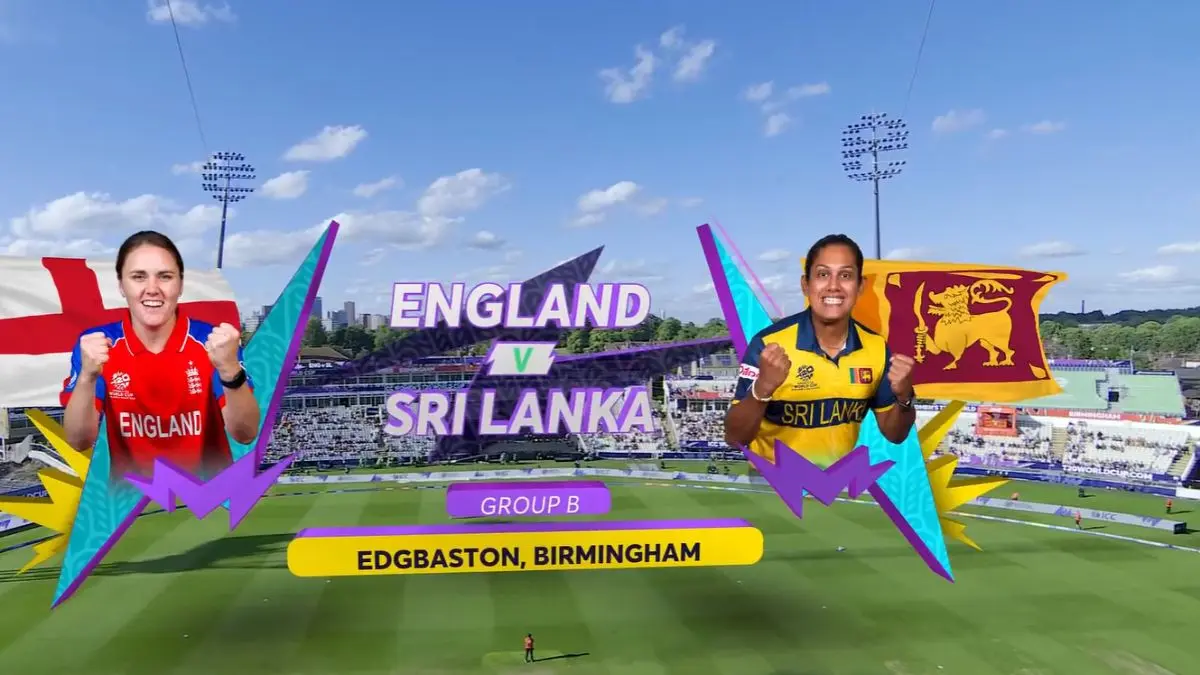
There are cricket matches that are closely contested, tied on the final delivery, decided by a single wicket or a scrambled bye — and then there are matches like this one. A match that starts with the crack of the bat and ends with the silence of a dressing room that knows, long before the final over is bowled, that the mountain set before them was simply too tall. England’s 20-over total of 219 for the loss of just one wicket was not merely a good score. It was a declaration of intent, a comprehensive statement of batting superiority, and a platform from which Sri Lanka never had the slightest possibility of mounting a challenge.
When Sri Lanka were eventually bowled out for 132 in exactly 20 overs, the margin of defeat — 87 runs — felt almost understated given how lopsided the contest appeared throughout. England had, in truth, won this game long before the final Sri Lankan wicket tumbled. The question was never whether England would win, but by how much, and whether the Sri Lankan batters could find the dignity of a score that minimised the gap. They partially succeeded in the latter — at least they weren’t bowled out for 80 — but the final scoreline still tells the story of a match that had only one team in it from the moment Danni Wyatt-Hodge and Amy Jones walked out to open the batting.
England’s Innings: The Architecture of 219
England’s 219 for 1 from their 20 overs was built on three distinct contributions — one extraordinary, one excellent, and one brief but blazing — knitted together by efficient running, clean ball-striking, and the sort of batting approach that prioritises both scoreboard pressure and minimal risk.
The Opener Who Set the Tone
Amy Jones, keeping wicket and opening the batting, set the platform with a measured but effective innings. Her 53 runs off 38 balls, featuring four boundaries and a six, gave England the launchpad they needed in the early overs. A strike rate of 139.47 is, by any measure, an innings that is doing its job at the top of an order in a Twenty20 match. It is not flashy, not reckless, but purposeful and precise.
Jones was dismissed for 53, caught by Chamari Athapaththu off the bowling of Malki Madara — the only wicket to fall across England’s entire 20 overs. That she was caught in the deep, presumably trying to accelerate even further, tells its own story about England’s intent. The opener had done her work, providing the foundation, and the dismissal hardly mattered because what came next was exceptional.
What must not be overlooked about Jones’s innings is the context it provided. An opener’s job in T20 cricket is to give the middle order a platform — to prevent the dreaded powerplay collapse that can cripple even the most talented batting lineup. Jones did that and more. She contributed 53 runs in a manner that kept the scoreboard ticking and the pressure on the fielding side without resorting to the sort of high-risk shots that might have triggered an early collapse. When she eventually departed, England were already well-placed, and the player who replaced her, or more accurately the player who had been batting with her, was about to take the game entirely away from Sri Lanka.
The Hundred That Changed Everything
Danni Wyatt-Hodge’s 105 not out from 62 balls is the heart of this scorecard. A century in Twenty20 international cricket is a remarkable achievement. To score one while remaining not out, meaning the innings was never cut short, and to do so at a strike rate of 169.35 — meaning every run was accumulated at a pace that kept Sri Lanka perpetually on the back foot — elevates this performance beyond mere statistical excellence into something genuinely special.
The numbers are worth lingering on: 105 runs, 62 balls, 13 fours, 1 six. Thirteen boundaries from a bat. A player who found the gaps with such regularity, who read the field so well and timed the ball so cleanly, that the Sri Lankan bowlers were rendered largely helpless. The single six suggests this was not a slogger’s innings; this was a batter who hit the ball along the ground, found the rope repeatedly through timing and placement rather than brute force, and constructed something that was as technically correct as it was devastating.
Wyatt-Hodge’s century came against a Sri Lanka bowling attack that, in fairness, had limited resources. The highest wicket-taker in the match, Freya Kemp for England, demonstrated in the second innings what disciplined bowling looks like. Sri Lanka, by contrast, could not replicate that discipline. Their economy rates are not visible in the batting scorecard, but the total of 219 against them, combined with the extras figure of 15 — which included 11 wides — tells its own story about a bowling unit that struggled with line, length, and the relentless pressure of facing a batter who was in complete command.
The Captain’s Cameo
Nat Sciver-Brunt’s contribution of 46 not out from 22 balls, at a strike rate of 209.09, is perhaps the most explosive innings of the three, proportionally speaking. To score 46 runs from just 22 deliveries with 6 fours and a six is to average more than two runs per ball — a scoring rate that belongs to the closing overs of a T20 innings when the field is up, the bowlers are under pressure, and every full delivery is a boundary waiting to happen.
The captain came in, presumably, with a licence to attack. With Wyatt-Hodge already anchoring the innings and the total already in a commanding position, Sciver-Brunt’s role was to maximise the final flourish. She executed that role with clinical efficiency. Her 46 off 22 is the kind of cameo that doesn’t always grab headlines — it lacks the century milestone, the half-century landmark — but it is the innings that pushed England from a very good total to an exceptional one. There is a meaningful difference between 180 and 219, and much of that difference can be attributed to the captain’s destruction of the Sri Lankan bowling in the latter stages.
Together, the three batters who faced deliveries — Jones, Wyatt-Hodge, and Sciver-Brunt — scored 204 of England’s 219 runs. The remaining 15 came from extras. No other batter was required. The lower order, from Alice Capsey to Lauren Bell, sat in the pavilion watching their teammates do something rather special.
The Extras and the Bowling
Sri Lanka’s difficulty was reflected in the extras column. England’s extras of 15 — comprising 2 no-balls, 11 wides, 0 leg-byes, and 2 byes — indicate a bowling attack that, while not catastrophic, was sufficiently wayward in its line and length to gift England more than half a dozen free deliveries. Eleven wides is a meaningful number in a Twenty20 match. Each wide represents a missed opportunity to apply pressure, a gift of a delivery to the batting side, and — crucially — an extra run on the board. When you are defending a competitive total, those 11 wides seem inconsequential. When you are chasing 219 and desperately trying to build momentum, knowing your own bowlers gifted the opposition 11 free runs stings considerably.
The sole wicket-taker on the Sri Lanka side was Malki Madara, who removed Amy Jones for 53. It was a catch taken by Chamari Athapaththu — the Sri Lanka captain — suggesting the dismissal came from a top-edge or a mistimed shot to an outfield position. Madara’s wicket is a footnote in the context of the match, but it deserves acknowledgement. To take a wicket in a match where England scored 219 for 1 is no small thing.
Sri Lanka’s Chase: Hope, Brief Resistance, Collapse
Sri Lanka’s chase of 220 from 20 overs was always going to be the longest of long shots. Requiring exactly 11 runs per over from the outset, and doing so against an England bowling attack that proved to be disciplined, varied, and penetrating, the Sri Lankan batters faced a task that bordered on impossible even before they had faced a single ball.
The final score of 132 all out — a run rate of 6.60 runs per over against a required rate of 11 — tells the story of a side that never truly threatened the target and instead spent most of the innings simply trying to survive. The collapse of wickets throughout the innings, with no batter reaching 40 and only three reaching 20, speaks to the consistent pressure applied by England’s bowlers.
The Top Order Folds
The Sri Lankan top order set the tone for what was to come. Opener Vishmi Gunarathne scored just 6 off 9 balls before falling leg before wicket to Lauren Bell. A strike rate of 66.66 from an opener in a run-chase requiring 11 an over is immediately catastrophic — it means the required rate was climbing from the first ball, and Sri Lanka’s batters never had the tempo to arrest that deterioration.
Captain Chamari Athapaththu could manage only 4 from 7 balls before being caught by Danni Wyatt-Hodge off the bowling of Charlie Dean. For a captain who had taken the catch to dismiss Jones in England’s innings, there is a certain poetic symmetry in being dismissed off a catch taken by the very same batter she had dismissed. But Athapaththu’s performance — 4 off 7 at a strike rate of 57.14 — was far below what her team required. A side chasing 220 needs its best player to go big from the very first over, to counterattack, to take the game on. A score of 4 makes no such statement.
Imesha Dulani contributed 7 from 9 balls before being caught by Freya Kemp off Linsey Smith — yet another batter dismissed for a single-figure score at a run rate far below what the chase demanded.
With three wickets down and barely 17 runs on the board, Sri Lanka’s challenge was effectively over. The required rate had escalated into the mid-teens per over, and the batters to come, while not without talent, were not going to pull off the kind of miraculous recovery that such a deficit demands.
Brief Resistance in the Middle Order
The one moment of genuine promise in Sri Lanka’s innings came from Harshitha Samarawickrama, who struck 29 from 18 balls with 3 fours and a six — a strike rate of 161.11 that, in isolation, looks like the innings Sri Lanka needed. But 29 is not 80, and a single batter going at the required rate while others are dismissed cheaply does not constitute a partnership capable of threatening a total of 219. Samarawickrama was eventually bowled by Freya Kemp, whose four wickets in the match proved decisive.
Nilakshika Silva offered Sri Lanka their highest individual score of the innings with 39 from 33 balls — patient, workmanlike accumulation, featuring 2 fours and a six at a strike rate of 118.18. It was a creditable innings in the context of a team in crisis, but the strike rate of 118 during a chase requiring 11 per over means that every over Silva batted, the required rate grew rather than shrank. She was not so much building a chase as managing a damage limitation exercise.
Kavisha Dilhari added 19 from 15 and Hansima Karunaratne chipped in with 11 from 8, the latter dismissed leg before wicket by Charlie Dean. But these were contributions that extended the innings rather than threatening England. The lower order — Kaushini Nuthyangana, Sugandika Kumari, and Malki Madara — could contribute almost nothing. Nuthyangana was bowled by Freya Kemp for a duck, Kumari bowled by the same bowler for another duck, and Madara was caught by Amy Jones off Sophie Ecclestone for 5 from 15 balls. Only Mithali Ayodhya remained unbeaten at the end, scoring 1 off 3.
England’s Bowling: Kemp’s Four-Wicket Masterclass
If England’s batting innings was the story of three exceptional individual performances, the bowling innings was, in many ways, the story of one. Freya Kemp’s 4 wickets from 4 overs, conceding just 22 runs at an economy rate of 5.50, was as fine a spell of T20 bowling as the figures suggest and then some.
Kemp dismissed Harshitha Samarawickrama — the one Sri Lankan batter who was genuinely threatening — bowled her for 29. She also removed Kaushini Nuthyangana and Sugandika Kumari, taking two of the lower-order wickets that sealed Sri Lanka’s fate. The fourth wicket, Kavisha Dilhari caught by Linsey Smith, removed a batter who had made 19 and was looking to build a meaningful partnership. In short, Kemp’s wickets were not tail-end gifts; they were match-turning dismissals that broke whatever resistance Sri Lanka could muster.
An economy rate of 5.50 in a Twenty20 match is outstanding. When chasing a total of 220, batters must attack from ball one. Kemp’s ability to concede fewer than six runs per over while also taking four wickets means she was simultaneously depriving Sri Lanka of runs and removing their best scoring options. It is the combination — wicket-taking with parsimony — that defines elite T20 bowling, and Kemp demonstrated it in this match.
Sophie Ecclestone’s contribution of 2 wickets for 27 runs from 4 overs at an economy of 6.75 was excellent in its own right. As a specialist spinner, Ecclestone applied pressure through flight and turn, dismissing Nilakshika Silva — caught by Alice Capsey for 39 — and Malki Madara, caught by Amy Jones for 5. The wicket of Silva was particularly important; had the Sri Lanka number seven been allowed to continue building her innings toward a half-century, the final margin of defeat might have been somewhat smaller.
Charlie Dean took 2 wickets for 18 from 3 overs at a miserly economy of 6.00 — dismissing the Sri Lanka captain Chamari Athapaththu and Hansima Karunaratne. Removing the opposition captain in a T20 run-chase is always a moment of significance, and Dean did so early, when Sri Lanka were already in trouble at the top of the order.
Linsey Smith’s 1 wicket from 4 overs — Imesha Dulani caught by Freya Kemp — at an economy of 6.00 was steady and controlled. Lauren Bell’s 1 wicket from 3 overs at an economy of 5.00 was the most economical spell of the match, setting the tone early when she dismissed opener Vishmi Gunarathne leg before wicket in the opening stages of the chase.
The one slight blemish in England’s bowling figures was Danielle Gibson’s spell of 2 overs for 20 runs, an economy of 10.00, without a wicket. Gibson was the only England bowler to go at above 7 per over, and her spell coincided with what little momentum Sri Lanka could generate. However, in the context of a match that was already won, two expensive overs from one bowler is hardly a cause for concern.
The Numbers That Define the Match
The difference between the two sides in this match is captured in the extras column alone: England’s 15 extras versus Sri Lanka’s 11. England were slightly more disciplined in their bowling, but the real difference was in the batting. England’s three batters who faced deliveries averaged 68 runs each in those 20 overs. Sri Lanka’s eleven batters averaged 11 runs each. That is the gulf in class that this result represents.
The partnership between Wyatt-Hodge and Sciver-Brunt, which produced somewhere in the region of 105 to 110 runs from the final overs based on the individual contributions, was the match-defining phase of play. Once Jones departed for 53 and those two batters were together, Sri Lanka’s bowlers had no answer. The combination of Wyatt-Hodge’s boundary-hitting through the off side and Sciver-Brunt’s brutal acceleration meant that every over produced double-digit returns, pushing the total from merely very good into the extraordinary.
For Sri Lanka, the match will be remembered as a lesson in what happens when a batting lineup fails to provide partnerships. Their highest partnership of the match was, at best, in the region of 40-45 runs based on the progression of their batting order, and none of those partnerships came in the powerplay where the field restrictions might have offered opportunity. By the time the field spread to its defensive alignment in the middle and death overs, Sri Lanka needed boundaries from batters who were already under pressure, and the England spinners and seamers ensured that those boundaries remained rare and the wickets kept falling.
Conclusion: A Performance to Remember
England’s victory by 87 runs — total 219 for 1 from 20 overs, Sri Lanka bowled out for 132 — was a complete team performance in the truest sense of the phrase. The batters — Jones, Wyatt-Hodge, and Sciver-Brunt — ensured an imposing total. The bowlers — Kemp, Ecclestone, Dean, Smith, and Bell — ensured Sri Lanka never came close to challenging it.
Danni Wyatt-Hodge’s 105 not out will be the headline, and rightly so. A T20 century is the batting summit, and she reached it with something to spare, finishing unbeaten against a bowling attack that had simply run out of solutions. Her 13 boundaries tell a story of placement and timing; her composure in reaching the milestone without giving her wicket away tells a story of temperament and class.
Freya Kemp’s four wickets tell a different but equally important story: that England’s bowling depth, all the way down to the sixth and seventh bowler, is formidable. Every batter who was dismissed in this match fell to a different England bowler — Lauren Bell, Linsey Smith, Charlie Dean, Sophie Ecclestone — and when Kemp came on to take her four wickets through the middle and lower order, there was nowhere left for Sri Lanka to hide.
This was not a close match. It was a dominant, decisive, comprehensive victory — the kind that announces to the cricketing world that England Women are a team at the top of their game, capable of scoring 219 from 20 overs and then defending it with the same level of authority. Sri Lanka fought where they could — Samarawickrama’s 29, Silva’s 39 offered brief glimpses of what might have been — but on this day, against this England team, it was never going to be enough.
The final scoreline reads England 219/1, Sri Lanka 132 all out. The gulf between those two numbers — 87 — is not just a margin of victory. It is the distance between two teams at very different points of their development, measured in runs and wickets across 40 overs of international cricket.
Footnotes
https://www.icc-cricket.com/tournaments/womens-t20-worldcup-2026/matches/262318/england-vs-sri-lanka
References
https://www.icc-cricket.com/tournaments/womens-t20-worldcup-2026/matches/262318/england-vs-sri-lanka
External links
England Women’s National Cricket Team vs Sri Lanka Women T20 World Cup 2026