Cricket, in its purest form, is a theatre of patience, skill, and psychological warfare. But when it is played in the subcontinent, particularly in the cauldron of Dhaka, it transforms into something else entirely: a test of endurance against not just an opponent, but against the very elements of dust, humidity, and noise. In June 2026, the Sher-e-Bangla National Stadium in Mirpur will host a series that carries the weight of history, anticipation, and a fifteen-year hiatus. For the first time in a decade and a half, Australia will tour Bangladesh for a One Day International series.
The narrative is poetic. On one side stands Bangladesh, a cricketing nation that has evolved from perpetual underdog to a formidable fortress at home. On the other side stands Australia, the titans of World Cricket, arriving on hostile turf where their historical dominance means little against the turning ball and the roaring crowds. According to the schedule released, the three-match ODI series is set to run from June 9 to June 14, 2026. It marks Australia’s first bilateral ODI tour to the nation in fifteen years—a gap long enough for entire careers to begin and end.
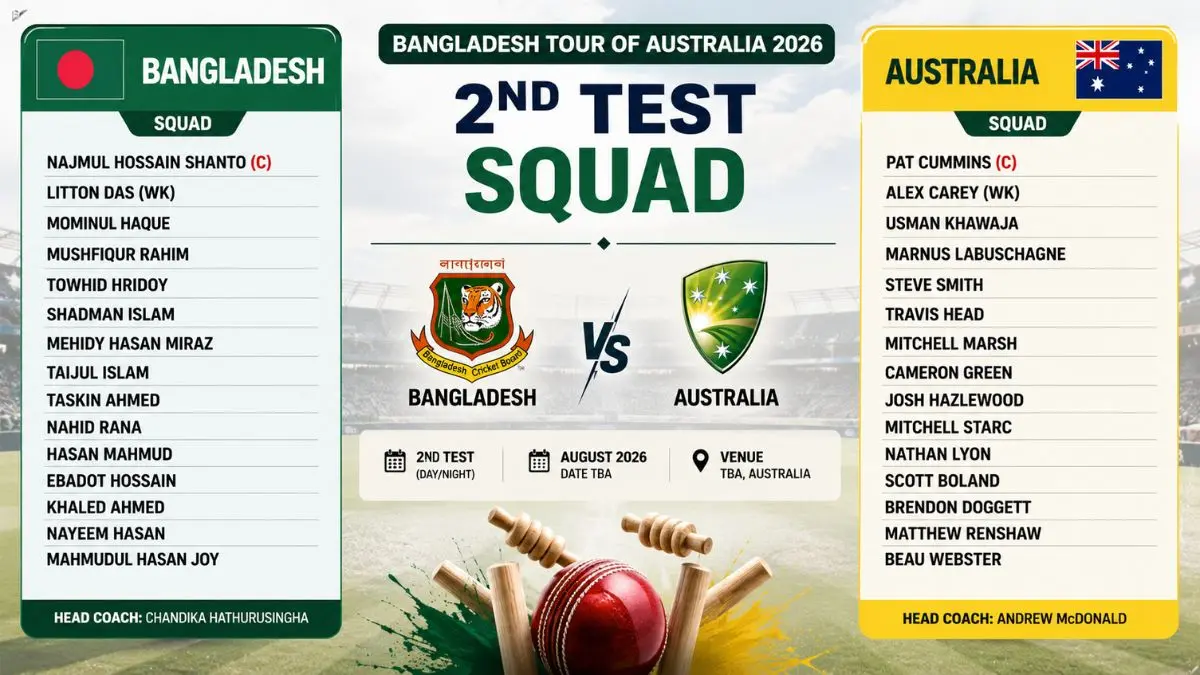
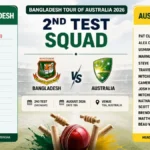
Bangladesh vs Australia ODI Series 2026 Player List
Australia
Bangladesh
Mitchell Marsh (c)
Nurul Hasan (wk)
Adam Zampa
Mosaddek Hossain
Travis Head
Taskin Ahmed
Alex Carey (wk)
Soumya Sarkar
Ben Dwarshuis
Litton Das (wk)
Matthew Kuhnemann
Najmul Hossain Shanto
Matt Renshaw
Mehidy Hasan Miraz (c)
Marnus Labuschagne
Mustafizur Rahman
Josh Inglis (wk)
Saif Hassan
Xavier Bartlett
Shoriful Islam
Cameron Green
Tanvir Islam
Nathan Ellis
Towhid Hridoy
Tanveer Sangha
Rishad Hossain
Liam Scott
Tanzid Hasan
Cooper Connolly
Nahid Rana
Bangladesh vs Australia 1st ODI Series 2026
The Long Road Back: Context of the Tour
To understand the gravity of this series, one must look at the calendar. The world of cricket in 2026 is a frenetic cycle of bilateral series and multi-national tournaments, but this particular rubber feels different. The pause in the schedule—fifteen years without an Australian ODI visit to Bangladesh—is not merely an administrative gap; it is a reflection of the changing power dynamics in international cricket.
For Bangladesh, hosting Australia is a validation of their status as a top-tier cricketing nation. For Australia, however, this is a mission of discomfort. The Australians are known for their pace, bounce, and aggressive fielding. Bangladesh offers none of that. The pitches at Mirpur are historically slow, low, and conducive to left-arm finger spin and wrist spin. The scheduling of these matches as Day-Night fixtures, starting locally at 3:00 PM (10:00 PM AEST / 6:30 PM IST), adds another layer of complexity. The twilight period in the subcontinent often brings dew, which alters the grip for bowlers, and a change in visibility that can turn a controlled chase into a lottery.
The series is not an isolated event. The schedule indicates a tight window: three ODIs packed into six days, followed by a rapid transition to a three-match T20I series in Chattogram beginning June 17. This compact itinerary suggests that squad depth, rather than just starting eleven quality, will be the deciding factor.
The Hosts: Bangladesh – The Spin Fortress
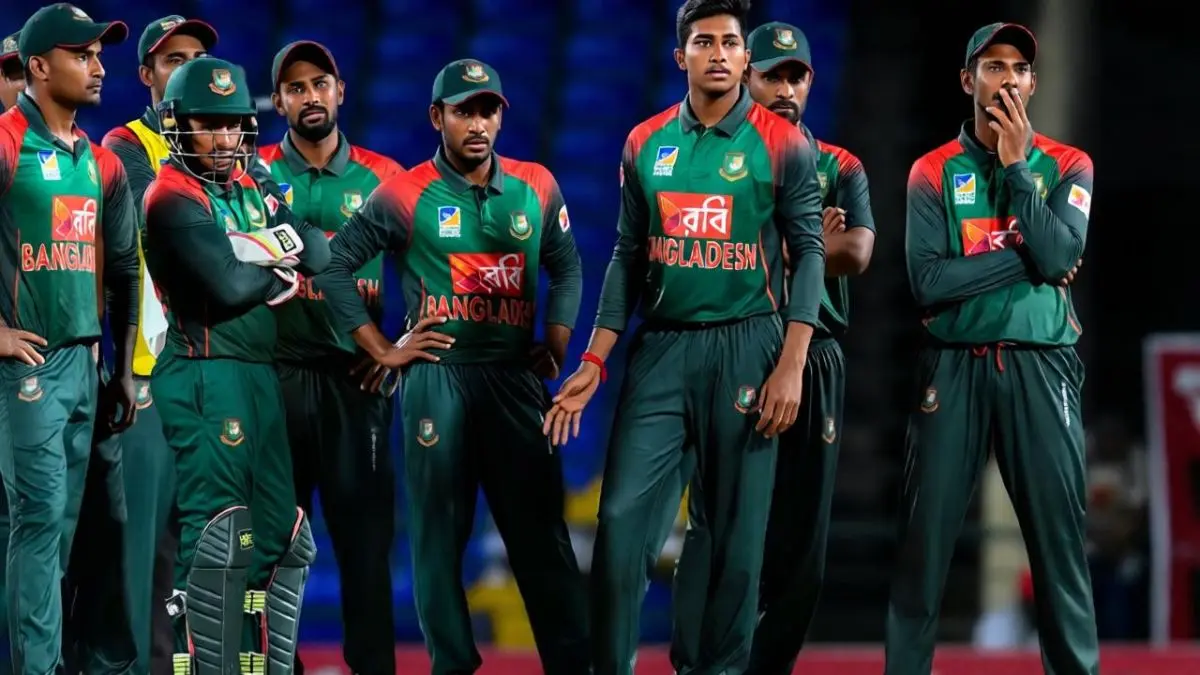
Led by the unassuming yet tactically sharp Mehidy Hasan Miraz, the Bangladesh squad is a fascinating blend of explosive youth and grizzled veterans. The image of the squad reveals a unit specifically curated to strangle the Australian batting lineup.
Captaincy and Leadership: Mehidy Hasan Miraz
Miraz has been appointed captain, a decision that signals a move away from the flamboyant stroke-makers of the past toward a more cerebral, bowling-first mentality. As an off-spinner who can bat in the top seven, Miraz embodies the modern Bangladeshi cricketer: gritty, technically improved, and deeply familiar with home conditions. His captaincy will likely be defensive in the middle overs, placing rings of fielders to cut off singles and force the Australians into risky big shots against the turning ball.
The Batting Core: Experience at the Top
The squad features a robust top order designed to handle Australia’s pace battery. Najmul Hossain Shanto, a player who has matured into a reliable anchor, will likely hold the innings together. Alongside him, Litton Das and Soumya Sarkar provide the flash. Litton, with his ability to cut and pull even on slow pitches, is the man Australia will fear most in the power play.
The middle order sees the return of Mosaddek Hossain, a street-smart cricketer whose off-breaks and lower-order hitting provide crucial balance. Towhid Hridoy and Tanzid Hasan represent the new generation—fearless, athletic, and capable of clearing the ropes when the dew sets in during the second innings. Rishad Hossain, a leg-spinning all-rounder, adds further depth, potentially allowing Bangladesh to field five bowling options without weakening the batting.
The Wicketkeeping Conundrum
Bangladesh boasts two quality glovemen: Nurul Hasan and Litton Das. Nurul Hasan, who has been brought back into the fold, is a destructive finisher. The presence of two wicketkeepers in the squad suggests flexibility. If Litton keeps, Nurul can play as a pure batter. If the pitch is a rank turner, Litton can focus on batting while Nurul handles the difficult low catches behind the stumps.
The Bowling Attack: Variations and Left-Arm Heat
The pace attack is headlined by Taskin Ahmed, who has transformed from a raw speedster into a wily operator capable of extracting bounce from dead tracks. Mustafizur Rahman, with his cutters and off-cutters, is the ultimate ODI weapon in Dhaka; his slower balls become virtually unplayable on a sticky surface. Shoriful Islam provides the left-arm angle, which is traditionally troublesome for Australian right-handers, while Nahid Rana offers raw pace as a point of difference.
But the real threat lies in the spin department. Mehidy Hasan Miraz (off-spin), Tanvir Islam (left-arm orthodox), and potentially Rishad Hossain (leg-spin) create a trio of varied trajectories. On a typical Mirpur pitch, where the average first innings score hovers around 220-240, this spin trio could roll through Australia’s middle order.
The Visitors: Australia – The Adaptable Giants
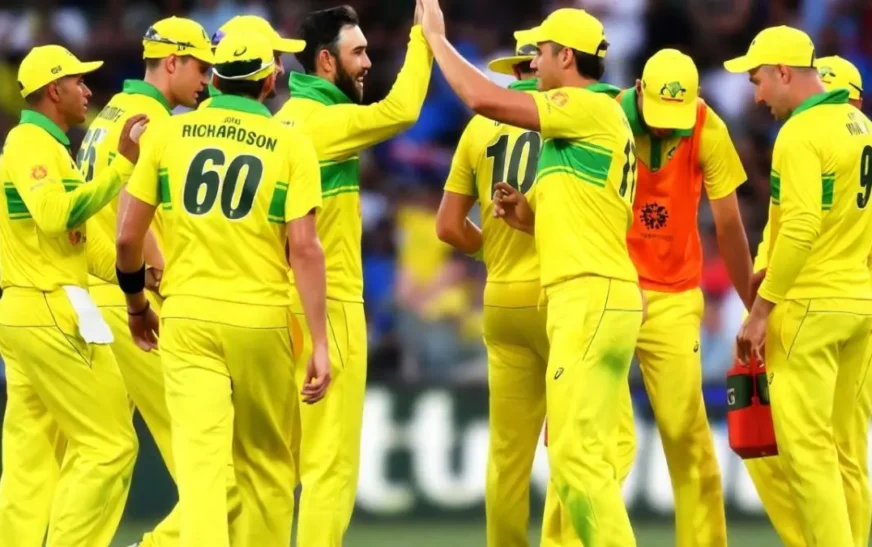
The Australian squad, captained by Mitchell Marsh, is a study in contrast. It is a team in transition, moving away from the ultra-aggressive “Bazball” style of white-ball cricket toward a more pragmatic, condition-adaptive approach. The squad list reveals a startling amount of spin bowling resources for an Australian touring party, suggesting they have learned the harsh lessons of previous subcontinental tours.
Leadership: Mitchell Marsh
Marsh steps into a lion’s den. His captaincy will be defined by how he manages his bowlers. In Australia, he can rely on bounce and pace. In Mirpur, he must trust drift and turn. Marsh, a powerful middle-order batter against pace, is historically vulnerable to quality spin. How he handles the first ten overs against Mehidy and Tanvir will set the tone for his captaincy tenure.
The Batting Spine: Head, Labuschagne, and Green
Australia’s hopes rest heavily on three men.
Travis Head is the enforcer. As an opener or a floater, Head’s aggressive approach against spin—using his feet and sweeping—has dismantled attacks in India before. He is the X-factor. If he survives the first fifteen overs, Bangladesh’s spinners will be under immense pressure to bowl defensively.
Marnus Labuschagne is the technician. While his T20 stocks have fluctuated, his value in ODIs on difficult pitches is immeasurable. Labuschagne manufactures runs, nudges singles, and rotates the strike. In a chase of 230 on a turning track, he is the ideal anchor. He will likely bat at three, tasked with neutralizing the spin threat.
Cameron Green is the future. At 6’6″, he offers a unique problem for Bangladesh’s bowlers. His reach allows him to smother spin, and his power against pace is generational. If Green clicks, he could single-handedly win a game. However, his technique against high-quality left-arm spin (like Tanvir Islam) is still a work in progress.
Matt Renshaw and Cooper Connolly provide left-handed options in the top order, crucial for disrupting the rhythm of off-spinners like Mehidy Miraz. Josh Inglis and Alex Carey are the two wicketkeepers, both highly capable batters. Carey’s experience and cool head in a crisis might give him the edge over Inglis’s explosiveness, depending on the match situation.
Bangladesh vs Australia ODI Series 2026
The Bowling Puzzle: Zampa, Kuhnemann, and the Quicks
For the first time in a long time, Australia’s bowling attack for the subcontinent does not look one-dimensional.
Adam Zampa is the leader of the attack. As a leg-spinner, he thrives on batsmen being forced to attack him. In Dhaka, where the pitch grips, his googly and slider become lethal. He will likely bowl the middle overs (10-40) in tandem with the left-arm spinner.
Matthew Kuhnemann is the surprise weapon. A left-arm orthodox bowler who relies on subtle variations in flight rather than massive turn, Kuhnemann has proven effective in Pakistan and Sri Lanka. His accuracy means he can bowl dot balls for fun, building pressure that Zampa can then exploit. Tanveer Sangha, another wrist-spinner in the squad, provides backup, suggesting Australia might even play two leg-spinners if the pitch is a dust bowl.
The pace battery is eclectic. Nathan Ellis is a master of the slower ball and the cutters—skills that translate perfectly to Dhaka. Xavier Bartlett offers swing with the new ball, crucial in the first ten overs. Ben Dwarshuis, a left-armer, provides variety. Liam Scott rounds out the options. Notably, there is no express 150kph bowler; Australia has sacrificed raw pace for control and variation, a wise decision for Mirpur.
Tactical Battlegrounds: Where the Series Will Be Won
To forecast the outcome, we must break the game into three distinct phases and analyze how these specific squads match up.
The Powerplay (Overs 1-10)
Bangladesh Batting: Litton Das and Tanzid Hasan will look to attack Xavier Bartlett and Ben Dwarshuis. The new ball might not swing much under the afternoon sun, but the uneven bounce is the danger. If Bangladesh reaches 60/0, they win the phase.
Australia Batting: Travis Head will try to disrupt Taskin Ahmed’s length. The battle is psychological: can Head force Taskin to go short (where he can pull) or full (where he can drive)? If Head falls early, Labuschagne must survive against the moving ball. This phase will determine the run rate ceiling for Australia.
The Spin Web (Overs 11-40)
Bangladesh Bowling: The quartet of Mehidy, Tanvir, Rishad, and Mosaddek will operate in a cluster. They will bowl straight, quick, and into the pitch. Australia’s batters (Marsh, Labuschagne, Green) are excellent drivers, but driving on this pitch leads to edges. The battle is between Australia’s sweep shot and Bangladesh’s googly.
Australia Bowling: Adam Zampa and Matthew Kuhnemann will dominate this phase. Bangladesh’s middle order (Hridoy, Nurul, Mosaddek) are good players of spin, but they are prone to lapses in concentration. If Australia can dry up the singles, the required run rate in the final ten overs becomes a mountain.
The Death (Overs 41-50)
Batting: This is where Mustafizur Rahman (for Bangladesh) and Nathan Ellis (for Australia) earn their salaries.
Mustafizur’s Off-Cutter: On a low pitch, his off-cutter skids. Batsmen expecting pace are left swiping at thin air.
Nathan Ellis’s Slower Ball: He has an array of knuckleballs that are indistinguishable from the seam-up delivery.
The Dew Factor: Being Day-Night fixtures, dew is inevitable. The team bowling second will struggle to grip the ball. Consequently, the toss becomes a massive advantage. The captain who wins the toss will almost certainly bowl first, aiming to restrict the opposition to 230 and chase under lights with the dew neutralizing spin.
Key Player Matchups
Based purely on the squad lists, several individual duels stand out:
Travis Head vs. Tanvir Islam: Head attacks left-arm spin. Tanvir is a left-arm spinner who bowls a heavy ball. If Head tries to hit Tanvir over the top early, he might hole out to long-on. If he defends, Tanvir ties him down.
Marnus Labuschagne vs. Mehidy Hasan Miraz: This is a chess match. Miraz will bowl flat and fast into the stumps. Labuschagne will try to work him to the leg side. The first to blink loses.
Cameron Green vs. Mustafizur Rahman: Green’s long levers are designed to hit length balls out of the park. Mustafizur’s cutters are designed to make long levers look foolish. This will likely be the death-overs clash.
The X-Factors: The Unpredictables
Beyond the star names, the series features “squad” players who could become heroes.
Cooper Connolly (Australia): The young left-hander is a wildcard. If Australia is 150/5, sending in a fearless left-hander against off-spin is a nightmare for Miraz.
Rishad Hossain (Bangladesh): Leg-spinners win matches in Dhaka. If the pitch offers variable bounce, Rishad’s googly becomes a Test match weapon in an ODI.
Josh Inglis (Australia): If Alex Carey fails, Inglis is the most destructive wicketkeeper-batter in Australia. He sweeps well and hits straight. He could be the finisher Australia lacks.
Series Prediction: A War of Attrition
The schedule tells us the matches are on June 9, 11, and 14. Three games in six days. There is no room for error.
Looking at the historical context (Australia’s first tour here in 15 years) and the squad composition, several truths emerge.
Bangladesh’s advantage: Home conditions, a settled spin attack, and a fanatical home crowd. They have played 30 ODIs in Mirpur in the last five years; Australia has played zero.
Australia’s advantage: Superior athleticism, deeper batting (down to number nine), and the psychological edge of having never lost an ODI series to Bangladesh in Bangladesh (historically, though they haven’t played here lately, the aura remains).
However, the 2026 Australian squad is not the invincible unit of 2007. The loss of a genuine pace enforcer and the reliance on part-time spin from Marsh or Green indicate vulnerabilities.
If the pitches are rank turners, Bangladesh wins the series 2-1. The combination of Miraz, Tanvir, and Rishad will simply be too relentless over 150 overs for a batting lineup that, apart from Labuschagne and Head, is largely untested in these specific conditions.
If the pitches are true (rare in June in Dhaka), Australia wins 2-1. Green and Head will blast the Bangladesh pace attack, and Zampa will outbowl the home spinners in the middle overs.
Given the historical data provided—specifically the scheduling of three matches in six days and the fact that the Australian squad has selected four specialist spinners (Zampa, Kuhnemann, Sangha, plus Connolly’s part-time)—it is clear that Australia is planning for a dust bowl. They are not running from the spin; they are trying to match it.
But matching Bangladesh in spin in Dhaka is like trying to outrun a cheetah in the savannah. Prediction: Bangladesh 2, Australia 1. The deciding factor will be the wicketkeeper-batter duo of Litton Das and Nurul Hasan, who are more accustomed to the low bounce than Carey or Inglis.
The Aftermath
Following the conclusion of this ODI series, the narrative shifts but does not rest. The schedule indicates that the two teams will travel to Chattogram for a three-match T20I series beginning June 17.
The ODI series will serve as the litmus test. If Bangladesh wins the ODIs, they will enter the T20s with a psychological stranglehold. If Australia manages to pull off an upset on hostile soil, they will re-establish themselves as the undisputed kings of ICC events, proving that their adaptability has transcended the limitations of their home conditions.
For now, all eyes turn to Mirpur. The dust settles on the practice pitches. Mitchell Marsh tightens his grip on the bat handle. Mehidy Hasan Miraz marks his run-up. In the stands, fifty thousand throats prepare to roar. Fifteen years of waiting end on June 9, 2026. Cricket returns to its most beautiful, ugly, and brutal home: a slow turner in Dhaka, where the difference between a hero and a villain is the thickness of an inside edge. Let the games begin.