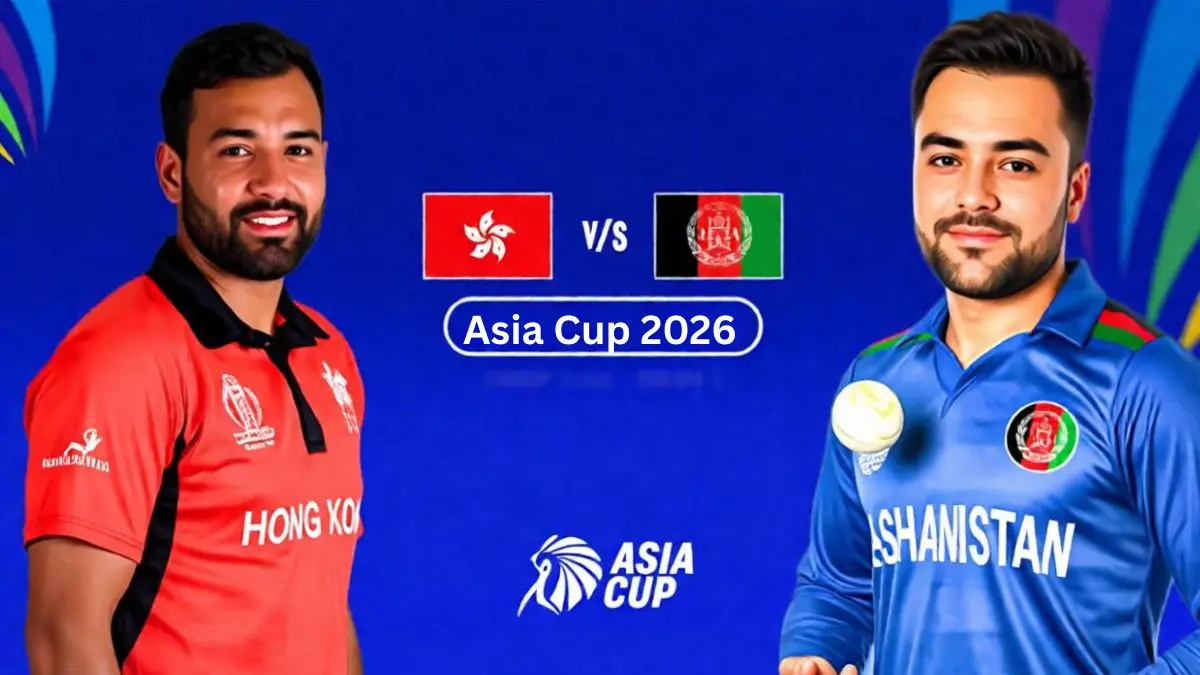
Hong Kong vs Afghanistan Cricket
In the intricate tapestry of world cricket, where history is often written by the game’s traditional powerhouses, the rivalries between associate and emerging nations offer a raw, unfiltered glimpse into the sport’s global soul. One such compelling, if statistically lopsided, narrative unfolds whenever Hong Kong and Afghanistan share a cricket field. While the senior men’s national teams tell a story of Afghan dominance—a narrative of power, pace, and burgeoning consistency—the ‘A’ and developmental encounters reveal a different, more unpredictable beast. This is a rivalry of contrasts: the methodical rise of an Asian giant against the stubborn resilience of a cricketing outpost. Based on the most recent clashes and upcoming tournaments, the relationship between these two sides is far more complex than a simple win-loss column suggests.
At the senior international level, the story is unequivocal. Afghanistan holds a dominant advantage over Hong Kong in senior T20 international cricket, having secured victory in five of their seven total head-to-head encounters. This statistic alone paints a picture of a gulf in class, experience, and firepower. The most recent senior clash, which occurred during the ACC Men’s T20 Asia Cup on September 9, 2025, at the Zayed Cricket Stadium in Abu Dhabi, served as the most emphatic confirmation of this hierarchy.
AFG vs HK T20I Head-to-Head History
Date | Venue | Winner | Margin |
| Sep 9, 2025 | Abu Dhabi | AFG | 94 runs |
| Mar 10, 2016 | Nagpur | AFG | 6 wickets |
| Feb 22, 2016 | Mirpur | AFG | 66 runs |
| Nov 28, 2015 | Abu Dhabi | HK | 4 wickets |
| Jul 21, 2015 | Dublin | HK | 5 wickets |
| Mar 18, 2014 | Chattogram | AFG | 7 wickets |
| Mar 19, 2012 | Sharjah | AFG | 9 wickets |
That September evening was a masterclass in modern Afghan cricket. Batting first, Afghanistan posted a formidable total of 188 runs for the loss of six wickets. The innings was a blend of youthful poise and explosive power. Sediqullah Atal anchored the innings with an unbeaten 73 runs off just 41 deliveries—a knock that combined grace with calculated aggression. But the true devastation came from the blade of Azmatullah Omarzai. Entering the fray as a finisher, Omarzai launched a blistering assault on the Hong Kong bowlers, smashing 53 runs off a mere 21 balls. In doing so, he recorded the fastest T20I half-century for Afghanistan, reaching the milestone off just 20 deliveries. It was the kind of innings that demoralizes opponents before they even walk out to bat.
Hong Kong’s response was a study in survival rather than pursuit. Chasing 189, they crumbled under the weight of clinical, disciplined Afghan bowling, ending their 20 overs at a meager 94 runs for the loss of nine wickets. The margin of victory—94 runs—was a testament to the disparity in resources at the senior level. Gulbadin Naib, with figures of two for eight, and Fazalhaq Farooqi, with two for sixteen, operated with a level of precision and hostility that the Hong Kong batting line-up simply could not counter. Every aspect of the Afghan performance—from Atal’s anchoring to Omarzai’s explosion and Naib’s miserly spell—highlighted why Afghanistan has secured Full Member status and continues to trouble the very best sides in the world.
Yet, to look only at senior T20I history is to miss half the story. The head-to-head log, when examined without prejudice, reveals anomalies. While Afghanistan has won the majority of encounters, including a six-wicket victory in Nagpur on March 10, 2016, a 66-run win in Mirpur on February 22, 2016, a seven-wicket triumph in Chattogram on March 18, 2014, and a nine-wicket drubbing in Sharjah on March 19, 2012, there are two bright red marks on that otherwise clean slate. Hong Kong has beaten Afghanistan before. On November 28, 2015, in Abu Dhabi, Hong Kong secured a four-wicket victory. Even more notably, on July 21, 2015, in Dublin, Hong Kong won by five wickets. These are not mere statistical anomalies; they are proof that on a given day, with the right conditions and a spirit of defiance, the underdog can roar.
However, the senior team’s recent performances have trended so strongly in Afghanistan’s favor that these past Hong Kong victories feel like relics of a different era. The 94-run thrashing in the 2025 Asia Cup was not a close contest; it was a statement. It signaled that Afghanistan has moved into a tier of cricket where encounters with Hong Kong are no longer seen as potential banana skins, but as opportunities to fine-tune net run rates. The current Afghan generation, buoyed by exposure to global franchise leagues and a robust domestic structure, has developed a ruthless efficiency that smaller nations struggle to contain.
But cricket is not played solely in the senior national arena. It is in the fertile grounds of developmental and ‘A’ team tournaments that the sport’s future is forged, and here, the narrative becomes fascinatingly volatile. Outside of senior international status, the two cricket boards frequently match up in developmental tournaments, and the results have been anything but predictable. In these contests, where young players are fighting for recognition and where the pressure of senior caps does not yet exist, Hong Kong has often punched well above its weight.
Consider the ACC Asia Cup Rising Stars tournament in November 2025, held in Doha. In a match between Afghanistan ‘A’ and Hong Kong, the Afghan developmental side posted 140 runs for the loss of six wickets. It was a modest total, one that suggested a close contest. In response, Hong Kong was successfully restricted to 116 for nine, handing Afghanistan ‘A’ a 24-run victory. On the surface, this seems like a natural extension of senior-level dominance. But delve deeper into the calendar of ‘A’ team clashes, and the picture becomes muddier.
Just a month earlier, in October 2024, during the ACC Men’s T20 Emerging Teams Asia Cup, a different story unfolded. In that encounter, Hong Kong pulled off a stunning five-wicket victory against Afghanistan ‘A’, chasing down the target with three balls to spare. This was not a fluke or a result of Afghan complacency; it was a defeat forged through exceptional individual brilliance from Hong Kong. The Hong Kong bowlers bundled out the Afghan ‘A’ side cheaply, and the architect of that demolition was Anas Khan, who produced a sensational six-wicket haul. Six wickets in a T20 match by a single bowler is a rarity at any level, and to achieve it against Afghanistan ‘A’—a team known for its aggressive batting even at developmental levels—was a monumental achievement. This victory proved that Hong Kong’s cricketing system, despite fewer resources, can produce match-winners capable of dismantling stronger opponents on their day.
The volatility does not end there. In November 2025, the two sides also met in the Hong Kong International Sixes, a shorter, more explosive format of the game that often reduces matches to a lottery of big hitting. In this tournament, during the Plate Semi-Final stage, Hong Kong turned the tables once again, defeating Afghanistan by five wickets. The Sixes format, with its reduced fielders and high-scoring nature, can be an equalizer, but it also requires skill and nerve. Hong Kong’s ability to beat Afghanistan in this specific setting, even after the ‘A’ team loss earlier that month, underscores a peculiar psychological dynamic: Hong Kong does not fear Afghanistan in the same way that other associate nations might. They have tasted victory in multiple formats and at multiple levels within a short span.
This back-and-forth creates a fascinatingly complex rivalry. At the senior level, Afghanistan is the tiger—powerful, feared, and overwhelmingly dominant. But at the ‘A’ and developmental levels, Hong Kong is something of a phoenix, repeatedly rising from the ashes of expected defeat to snatch unlikely victories. The 2024 Emerging Teams Asia Cup win, followed by the 2025 Sixes triumph, suggests that Hong Kong’s younger generation possesses a unique combination of tactical acumen and fearlessness. Anas Khan’s six-wicket haul, in particular, will be remembered as one of the great individual bowling performances in associate-level cricket, a spell that single-handedly changed the outcome of a match against a Full Member’s second string.
What explains this divergence between senior and ‘A’ team results? Several factors are at play. First, the depth of talent in Afghanistan is extraordinary. Their senior team can call upon players with hundreds of T20 franchise matches of experience. Their ‘A’ team, while talented, is more volatile; it consists of players on the cusp of stardom who may lack the consistency of their senior counterparts. Hong Kong, by contrast, has a smaller player pool. The gap between their senior team and their ‘A’ team is narrower. As such, when Hong Kong’s best young players face Afghanistan’s second-tier players, the quality gap closes significantly.
Second, there is a psychological element of pressure. For Afghanistan ‘A’, matches against Hong Kong are often expected wins. For Hong Kong, these matches are opportunities to make a name for themselves. They play with the freedom of underdogs, while the Afghan youngsters may feel the weight of national expectation. This dynamic was clearly visible in the 2024 Emerging Teams Asia Cup, where Anas Khan’s aggression with the ball caught the Afghan batters off guard. They were not prepared for such a hostile, high-quality spell from an opponent they may have underestimated.
Third, the formats themselves matter. The senior matches are full T20 internationals played on neutral or major grounds with full international scrutiny. The ‘A’ team matches and the Sixes tournament occur in different conditions—Doha’s slower pitches, the chaotic energy of the Sixes—which can favor the adaptable and the brave. Hong Kong has shown remarkable adaptability across these varying conditions, while Afghanistan ‘A’ has shown occasional fragility.
Looking ahead, the rivalry is poised to enter its most intriguing chapter yet. Both teams are currently preparing for the multi-sport Asian Games 2026, to be held in Aichi-Nagoya, Japan. This is not merely another tournament; it is a stage where national pride, medal hopes, and cricketing prestige will collide on a pan-Asian platform. Crucially, the path to that tournament highlights the current structural divide between the two nations. As an ICC Full Member, Afghanistan has already qualified directly for the main draw of the Asian Games. Their place is secure. They will enter the competition in the latter stages, bypassing the early rounds, and will be among the favorites for a medal.
Hong Kong’s journey, by contrast, is one of struggle and qualification. They are currently playing through the regional ACC qualification stages to secure their spot alongside Afghanistan. Every match in those qualifiers is a knockout in spirit; there is no margin for error. Hong Kong must navigate a minefield of other associate nations, all hungry for a chance at multi-sport glory, just to earn the right to stand in the same tournament as Afghanistan. This disparity—direct entry versus grueling qualification—is the most concrete measure of the gap between Full Member and associate status. Yet, if history has taught us anything, it is that Hong Kong thrives when the odds are stacked against it.
The prospect of an Afghanistan vs. Hong Kong clash at the 2026 Asian Games is tantalizing. If they meet in the main draw, it will be a senior international encounter, and on paper, Afghanistan should win comfortably. But cricket is played on grass, not paper. Hong Kong will enter that potential match with memories of their 2024 victory over Afghanistan ‘A’ and their 2025 Sixes win. They will carry the belief that, regardless of Full Member status, they possess the ability to compete. Moreover, the Asian Games environment—with its national anthems, medal ceremonies, and multi-sport atmosphere—can produce extraordinary upsets. Pressure affects favorites differently than underdogs.
For Afghanistan, the goal at the 2026 Asian Games will be to assert its dominance not just over Hong Kong but over the entire continent. They will want to prove that their 2025 Asia Cup performance was no fluke, that they are ready to challenge the Indias and Pakistans of the world on a consistent basis. Matches against teams like Hong Kong, therefore, take on additional importance: they are opportunities to demonstrate the width of the gap between Full Members and the chasing pack. A comprehensive victory over Hong Kong in Japan would reinforce the new world order of Asian cricket.
But if Hong Kong were to pull off an upset—if they were to defeat Afghanistan on the grand stage of the Asian Games—it would send shockwaves through the sport. It would validate the work being done at the developmental level in Hong Kong and would serve as a reminder that the gap between associate and Full Member, while real, is not insurmountable. It would also add another extraordinary chapter to a rivalry that has already produced more than its share of surprises.
As the two teams prepare for Japan, they will look back at the recent clashes for lessons. Afghanistan will analyze the 2024 Emerging Teams Asia Cup defeat and the 2025 Sixes loss, asking themselves why their ‘A’ team and their senior team produce such different results against the same opponent. They will likely conclude that complacency is their greatest enemy. For Hong Kong, the lesson is simpler but harder to execute: replicate the fearlessness and tactical clarity of their ‘A’ team performances on the senior stage. Find another Anas Khan, another six-wicket haul, another chase finished with balls to spare.
The rivalry between Hong Kong and Afghanistan is a microcosm of cricket’s broader global tensions. It is the story of established power versus persistent challenger, of full-member resources versus associate ingenuity, of a tiger that expects to win and a phoenix that refuses to accept defeat. The senior head-to-head record speaks clearly: Afghanistan has won five of seven T20Is, and their most recent victory was a demolition. But the developmental clashes whisper a different truth: in the alleys of ‘A’ team cricket and the chaos of the Sixes, Hong Kong has found ways to fight back.
As the cricketing world turns its eyes toward the Asian Games 2026 in Aichi-Nagoya, one thing is certain. Should Hong Kong qualify through the regional ACC stages to meet Afghanistan on that multi-sport stage, the match will carry more weight than any ranking or record can convey. It will be a contest between two philosophies of cricket development, two visions of the sport’s future in Asia. And if history has proven anything from the data of the last two years—the 2024 Emerging Teams upset, the 2025 Sixes triumph—it is that in this rivalry, the unexpected is not merely possible; it is almost routine. The Afghan tiger remains the favorite. But the Hong Kong phoenix has learned to rise when it matters most.

Check latest article from this author !


Pakistan U19 vs England U19 Pitch Report
August 25, 2026
South Africa vs Zimbabwe 2026 Tri Series
August 22, 2026
Bangladesh vs Australia 2026 2nd Test Squad, Pitch Report
August 21, 2026