England Tour of South Africa 2026-27 Pitch Reports, Full Squad, Wanderers to Newlands pitch reports, IST timings and projected squads for both sides.
England head into a landmark southern-hemisphere assignment in December 2026, touring South Africa for a three-Test series followed by a three-match ODI leg. Cricket South Africa (CSA) has confirmed venues and dates for the red-ball and white-ball fixtures, though the previously planned T20I series has been shelved for now due to scheduling clashes between the two boards, with talks ongoing to reschedule it at a later date. The tour arrives at a pivotal moment for both sides — England are still recalibrating after Ben Stokes’ shock retirement from international cricket, while South Africa, the reigning World Test Championship winners, will be defending home turf against a touring side desperate to end a difficult run on South African soil. Here is a complete breakdown of the schedule, IST timings, venue-by-venue pitch analysis, and a projected look at both squads.
Full Schedule: Test and ODI Series
Test Series
| Match | Dates | Venue | City | IST Start Time |
|---|---|---|---|---|
| 1st Test | December 17–21, 2026 | The Wanderers Stadium | Johannesburg | 1:30 PM IST |
| 2nd Test (Boxing Day Test) | December 26–30, 2026 | SuperSport Park | Centurion | 1:30 PM IST |
| 3rd Test (New Year’s Test) | January 3–7, 2027 | Newlands Cricket Ground | Cape Town | 1:30 PM IST |
ODI Series
| Match | Date | Venue | City | IST Start Time |
|---|---|---|---|---|
| 1st ODI | January 10, 2027 | Boland Park | Paarl | 1:30 PM IST |
| 2nd ODI | January 13, 2027 | Mangaung Oval | Bloemfontein | 1:30 PM IST |
| 3rd ODI | January 15, 2027 | Mangaung Oval | Bloemfontein | 1:30 PM IST |
South African match days generally begin around 10:00 AM local time, which converts to roughly 1:30 PM IST for fans following the tour from India. As with any tour scheduled well in advance, minor timing adjustments are possible closer to the dates, so it’s worth double-checking start times nearer the series.
A Tour Arriving at a Turning Point for Both Sides
This trip carries extra weight because of the churn both dressing rooms have been through over the preceding months. England‘s talismanic all-rounder and long-serving Test captain announced his retirement from international cricket in mid-2026, a decision that ended one of the most transformative captaincy tenures in the sport’s recent history and closed the chapter on the aggressive “Bazball” era he built alongside his coaching staff. Joe Root has since stepped back into the Test captaincy, with a new head coach also settling into the role during the same window. For South Africa, the picture is far steadier: Temba Bavuma continues to lead a Test side that memorably won the World Test Championship final in 2025, giving the hosts a settled, in-form core heading into a home summer where fast, bouncy conditions traditionally favour their pace attack.
Pitch Reports: Venue by Venue
The Wanderers Stadium, Johannesburg (1st Test)
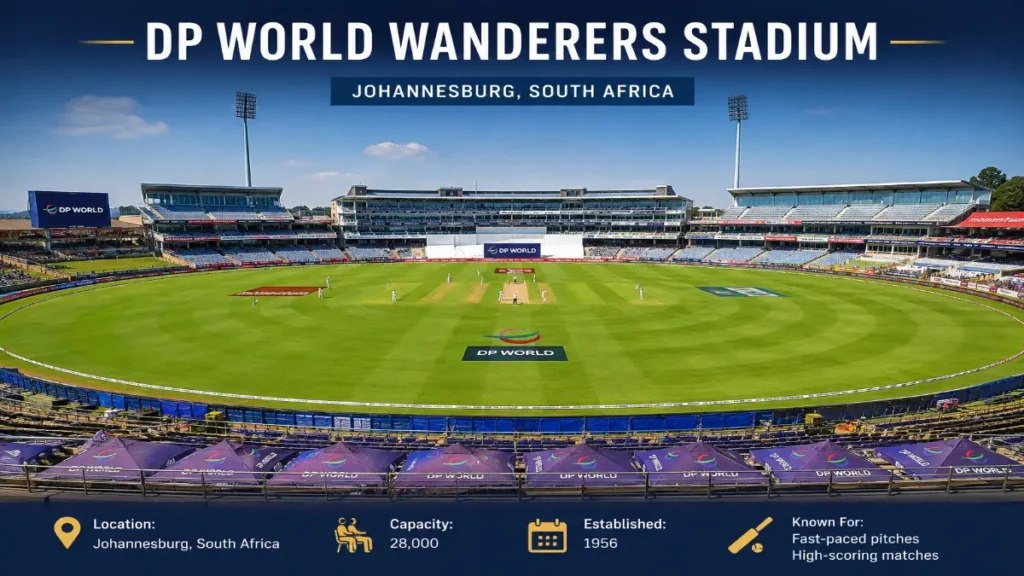
Nicknamed the “Bullring,” the Wanderers sits at altitude, which historically produces a hard, well-grassed surface that offers genuine pace and bounce, particularly under lights or in the first two sessions of a Test. Seam bowlers who can hit a fuller length and use the extra carry tend to thrive here, and the pitch has a reputation for keeping the contest lively through all five days rather than flattening out. Expect the toss to matter — sides bowling first under overcast Highveld skies with some cloud cover have historically enjoyed early assistance, though this ground can also produce big totals once batters get in, given the fast outfield and true bounce later in an innings.
SuperSport Park, Centurion (2nd Test — Boxing Day)
Centurion is generally regarded as one of the better batting surfaces in South Africa, with even bounce and less lateral movement than the Wanderers, though the pitch tends to offer something for pace bowlers with the new ball, especially in the traditional Boxing Day slot when conditions can be overcast. As the match progresses, the surface typically settles into a good batting track, rewarding well-set batters, before occasionally beginning to take slow turn on days four and five. This has historically been a venue where South Africa’s top order piles on runs, so England’s seam attack will need discipline and reverse-swing skills in the back half of the Test.
Newlands Cricket Ground, Cape Town (3rd Test — New Year’s Test)
Set against the backdrop of Table Mountain, Newlands is famous for its picturesque setting but also for a pitch that can be genuinely tricky in the first innings, with the notorious Cape Town breeze aiding seam and swing bowlers early on. The surface has historically had a tinge of green and can produce some of the most bowler-friendly conditions of any South African venue, particularly on the opening morning. As the match wears on, batting tends to get easier, though cracks can open up and offer some assistance to spinners by the fourth and fifth days. A low-scoring, tightly fought New Year’s Test would not be a surprise if the weather brings its usual overcast start.
Boland Park, Paarl (1st ODI)
Boland Park is a compact ground with short straight boundaries that has increasingly become a venue for high-scoring white-ball cricket. The pitch tends to offer good pace and carry for the quicks with the new ball before flattening out, making it a ground where totals in excess of 300 are common. Dew can play a factor in the evening depending on scheduling, which typically nudges captains toward bowling first if the match extends into twilight hours.
Mangaung Oval, Bloemfontein (2nd and 3rd ODI)
Bloemfontein sits at altitude similar to Johannesburg, and the thinner air historically helps the ball fly further, making Mangaung Oval another venue associated with big totals in one-day cricket. The surface is usually true and good for stroke play once the shine is off the new ball, though there can be some early movement for bowlers who hit a full length. With two matches here inside three days, surface behaviour in the second fixture will likely depend heavily on how much the pitch is used and prepared between games.
England Squad: Projected and Transitioning
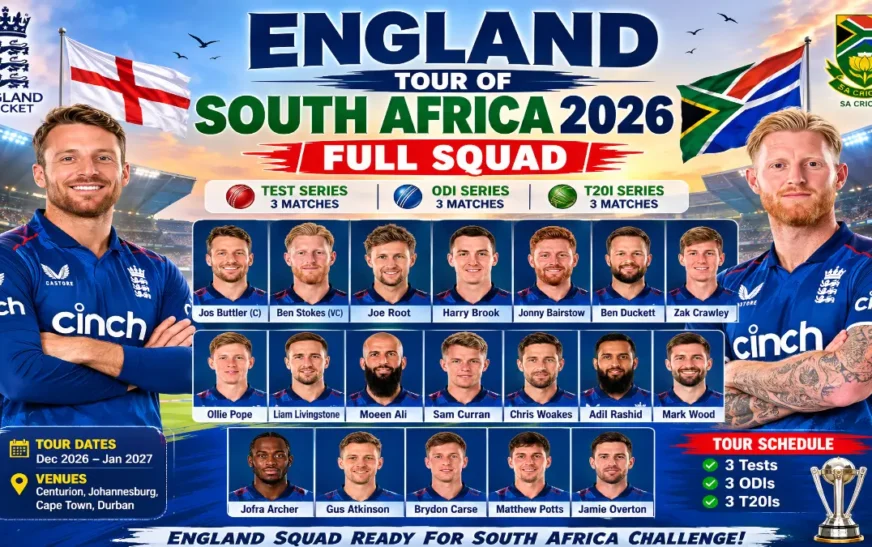
England have not yet announced their squad for the South Africa tour, and it would be premature for any outlet to publish a confirmed list this far out — the party will likely be named only a few weeks before departure, once red-ball form from the closing weeks of the English season and the ongoing Test series against Pakistan is assessed. Based on current form, fitness and recent selection patterns, the following is a projected core group rather than an official squad, and readers should treat all names as informed speculation pending CSA and ECB confirmation:
- Likely captain: Joe Root, having resumed Test captaincy following Ben Stokes’ retirement
- Probable top order: Ben Duckett, Zak Crawley, Ollie Pope, Jordan Cox
- Middle order: Joe Root, Harry Brook, Jacob Bethell (subject to fitness), Dan Lawrence
- Wicketkeeping options: Jamie Smith, James Rew
- Pace bowling pool: Gus Atkinson, Josh Tongue, Matthew Potts, Mark Wood, Sonny Baker, Matt Fisher
- Spin options: Shoaib Bashir, Rehan Ahmed
England’s white-ball squad for the ODI leg is expected to lean on a younger core built around Harry Brook, who has already taken over as ODI and T20I captain, alongside senior figures such as Jos Buttler continuing in a specialist finishing role. Official confirmation for both the Test and ODI parties is expected closer to the tour, and any names here are subject to change based on injuries, form, and selection decisions made by the new coaching setup led into the winter by the incoming Test head coach.
South Africa Squad: A Settled, Confident Core
South Africa go into the series with considerably more continuity. Temba Bavuma remains Test and ODI captain, with Aiden Markram his deputy and the team’s T20I leader. Based on recent squads named for South Africa’s 2025-26 assignments, the likely core for the home summer includes:
- Captain: Temba Bavuma
- Top order: Ryan Rickelton, Tony de Zorzi, Aiden Markram
- Middle order: Temba Bavuma, David Bedingham, Tristan Stubbs, Wiaan Mulder
- Wicketkeeper: Kyle Verreynne
- Pace attack: Kagiso Rabada, Marco Jansen, Gerald Coetzee, Anrich Nortje, Lungi Ngidi
- Spin options: Keshav Maharaj, Simon Harmer, Senuran Muthusamy
For the white-ball leg, South Africa are expected to call on a squad featuring Quinton de Kock (following his reversal of ODI retirement), Aiden Markram, Reeza Hendricks, Matthew Breetzke and the exciting young batter Dewald Brevis, backed by Rabada and Ngidi with the new ball. As with England’s group, none of this should be read as an official squad — CSA typically names its party roughly three to four weeks out from the first Test, and selection will depend on domestic form through South Africa’s early-summer fixtures.
Head-to-Head Context
England’s recent record in South Africa has been a mixed bag, with the hosts traditionally tough to beat at home thanks to conditions that suit their pace-heavy attacks. South Africa’s WTC final triumph in 2025 has only added to the belief within Bavuma’s group, and Rabada in particular has a strong record against England, having troubled the top order in previous series with his ability to extract bounce and reverse swing. For England, this tour represents an early opportunity for the post-Stokes group to prove they can win consistently away from home under Root’s renewed captaincy, a test that will be watched closely given the transitional period the side finds itself in.
Historically, series between these two sides in South Africa have been closely contested rather than one-sided. England have managed to win series on South African soil before, but rarely comfortably, and the hosts’ recent depth in fast bowling — with Rabada, Nortje, Jansen and Coetzee all capable of featuring across a five-Test-match window — gives them a clear structural advantage in home conditions. England, for their part, have tended to travel best when their top order gets starts against the new ball and their spin options, whether Bashir or Rehan Ahmed, can play a containing role once the shine goes. With both boards fielding sides in some transition, this series is unlikely to follow old form lines exactly, adding an extra layer of unpredictability to what is traditionally one of the most competitive bilateral fixtures in Test cricket.
Key Players to Watch
Joe Root returns to Test captaincy for the first time since 2022, and how he balances leadership duties with his own famously prolific batting form will be one of the defining stories of the tour. Root has scored heavily in South Africa before, and English hopes of competing in Johannesburg and Centurion will lean heavily on runs from his bat.
Kagiso Rabada remains the standard-bearer for South Africa’s pace attack. His ability to swing the new ball and extract steep bounce off a length makes him a threat at every venue on this itinerary, but particularly at the Wanderers, where extra carry plays directly into his strengths.
Harry Brook, already captain of England’s white-ball sides, will be under scrutiny both as a middle-order batter in the Tests and as the leader tasked with building a new-look ODI unit for the series in Paarl and Bloemfontein.
Temba Bavuma carries the weight of expectation as a World Test Championship-winning captain defending home turf, and his own form at the top of South Africa’s order — often under pressure in the position — will be closely watched by a home crowd expecting a straightforward series win.
Gus Atkinson and Marco Jansen, as the leading seam-bowling all-rounders in their respective sides, could well be the difference-makers with both bat and ball across a five-day contest, particularly on the more even surfaces at Centurion and Newlands.
What to Watch For
Beyond the results, several sub-plots make this tour worth following. How England’s new-look top order copes with the pace and bounce of the Wanderers and Centurion will be an early marker for the post-Bazball era. Root’s captaincy return after handing the reins to Stokes back in 2022 adds a fascinating leadership angle, while South Africa will want to use home conditions to press their case as the form Test side in world cricket following their WTC success. On the white-ball side, the ODI series doubles as an audition for players hoping to nail down places ahead of future white-ball assignments, with both Brook and Bavuma using the series to shape their squads further out.
Disclaimer: Squads listed above are projected based on current player form, fitness, and recent national-team selection patterns as of publication. Official Test and ODI squads for both England and South Africa had not been announced at the time of writing and will be confirmed by the ECB and Cricket South Africa closer to the tour. Readers should check official board channels nearer the series for confirmed squads, playing XIs and any changes to fixture timings.