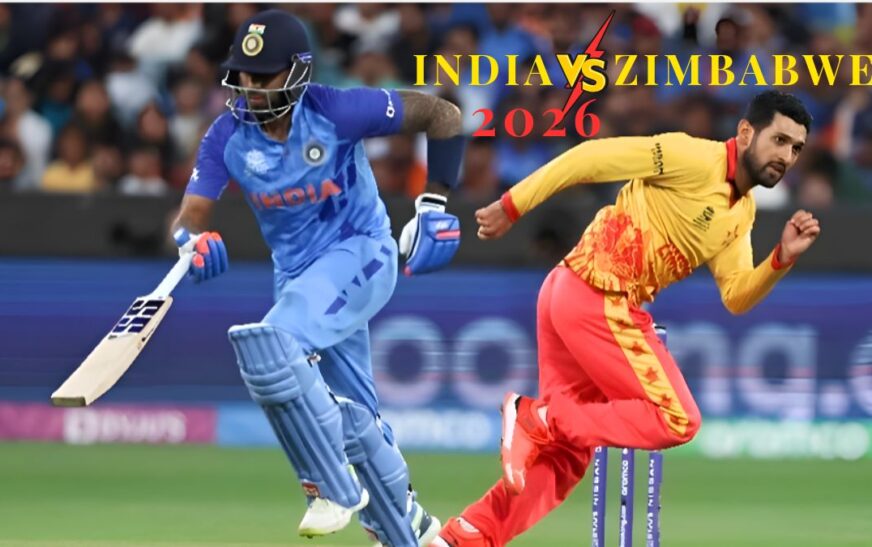
India vs Zimbabwe Standings 2026: Check the latest India-Zimbabwe head-to-head record, T20 World Cup Super 8 points table, and full series history across Tests, ODIs & T20Is.
ICC Men’s T20 World Cup 2026 – Super 8s (Group 1) Final Standings
| Team | Matches | Won | Lost | Points | (NRR) | |
| 1 | South Africa (Q) | 3 | 2 | 1 | 4 | +1.096 |
| 2 | India (Q) | 3 | 2 | 1 | 4 | -0.798 |
| 3 | West Indies | 3 | 2 | 1 | 4 | -0.125 |
| 4 | Zimbabwe (E) | 3 | 0 | 3 | 0 | -3.415 |
ICC Men’s T20 World Cup 2026 – Super 8s (Group 1) Final Standings
Cricket fans across India are once again turning their attention to the India–Zimbabwe fixture list, and for good reason. The two sides shared the field only months ago at the ICC Men’s T20 World Cup 2026, and they are now set to lock horns again in a bilateral series in Harare later this month. With India’s dominant historical record against Zimbabwe, a memorable World Cup encounter still fresh in memory, and a new three-match T20I series on the horizon, this is the perfect moment to look back at how the rivalry has evolved and what fans can expect next.
A Rivalry Built Over Four Decades
India and Zimbabwe have been crossing paths on the cricket field since the early 1980s, and while the contest has rarely been billed as a marquee rivalry in the way India-Pakistan or India-Australia clashes are, it has produced its share of memorable cricket. The two nations first met in the 1983 Prudential World Cup in England, a tournament India went on to win in stunning fashion. Since that first encounter, India has built a commanding head-to-head advantage across all three formats of the game.
In Test cricket, the two teams have met 11 times, with India winning 7 of those contests, Zimbabwe claiming 2, and 2 matches ending in draws. Some of India’s most one-sided Test wins have come against Zimbabwe, including an innings victory built on a career-defining double century, and comprehensive innings wins during India’s tours of Zimbabwe in the mid-2000s. Test cricket between the two sides has become increasingly rare in recent years as bilateral calendars have shifted toward white-ball cricket, but the historical numbers still tell the story of a lopsided rivalry on the biggest stage of the format.
The one-day international record follows a similar pattern. Across roughly 66 ODIs, India has won the vast majority of encounters, with a win tally in the mid-fifties compared to Zimbabwe’s ten victories, and a couple of matches ending in ties. Some of the most iconic moments in Indian cricket history have unfolded against Zimbabwe in this format, including one of the most famous World Cup innings ever played, when India’s captain rescued his side from a dire position early in the innings to post a match-winning total. Zimbabwe, for its part, has occasionally punched above its weight in ODIs against India, particularly during the 1990s and early 2000s when the Zimbabwean side, led by the Flower brothers, was a genuinely competitive unit in world cricket.
T20 International cricket between the two nations is a more recent phenomenon, having begun only in 2010. Since then, India has continued its dominance, winning the large majority of matches played, with Zimbabwe managing only a handful of victories, almost all of which have come on home soil in Harare. Zimbabwe’s T20I wins against India are often remembered fondly by their fans precisely because they are rare and hard-fought, including a narrow two-run victory defended superbly by the home bowlers, and a spirited chase-defense at a T20 World Cup in Melbourne a few years back that briefly threatened one of the tournament’s biggest upsets.
The T20 World Cup 2026 Meeting: A Super Eight Statement
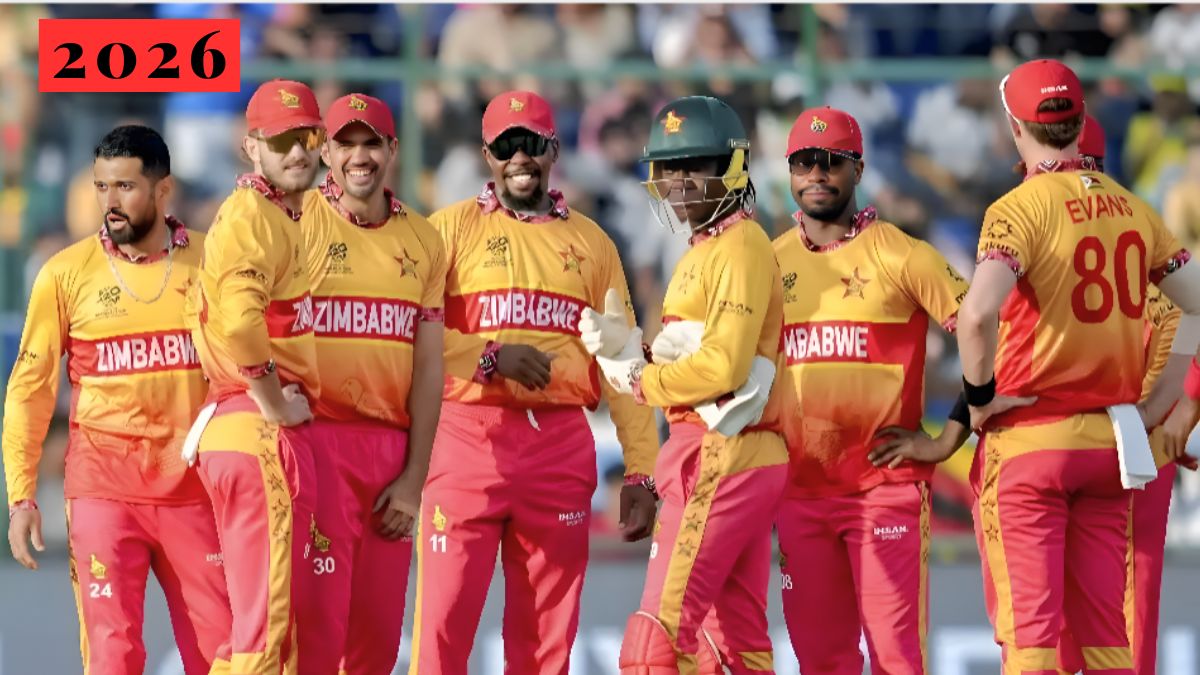
The two sides’ most recent and most significant meeting came during the ICC Men’s T20 World Cup 2026, which was jointly hosted by India and Sri Lanka. Zimbabwe enjoyed a fairytale run through the group stage of the tournament, topping a pool that included Australia, Sri Lanka, Ireland and Oman without losing a single match. Their group-stage win over Australia, in particular, was hailed as one of the biggest upsets in T20 World Cup history and instantly elevated expectations for the Zimbabwean side heading into the knockout rounds.
That unbeaten run earned Zimbabwe a place in the Super Eight stage, in Group 1 alongside co-hosts India, South Africa and the West Indies. It was here, on 26 February 2026, that India and Zimbabwe met at the iconic MA Chidambaram Stadium in Chennai in what turned out to be a high-scoring, absorbing contest. Batting first, India posted a formidable total near the 250-run mark, powered by contributions from the top and middle order. In reply, Zimbabwe’s chase was kept alive deep into the innings by a superb unbeaten knock from opener Brian Bennett, who fell agonisingly short of what would have been a remarkable century in a run chase, finishing unbeaten in the nineties. Despite Bennett’s heroics, Zimbabwe fell short, and India completed a comfortable 72-run victory to keep their own semifinal hopes firmly alive.
That result proved crucial in the context of the group. It meant Zimbabwe, despite their extraordinary group-stage form, were eliminated from Super Eight contention after subsequent results went against them, while India’s win kept them in the hunt in a tightly contested Group 1 that also featured South Africa and the West Indies. India went on to navigate the remainder of the Super Eight stage, eventually beating the West Indies in what amounted to a virtual quarterfinal at Eden Gardens to progress to the knockout rounds.
From there, India’s tournament campaign only got stronger. The team advanced through the semifinals and went on to face New Zealand in the final, played on 8 March 2026. India completed a memorable triumph in that final, becoming the first team in the tournament’s history to win two consecutive T20 World Cup titles, and also the first host nation ever to lift the trophy on home soil. For Zimbabwe, despite the group-stage elimination, the 2026 World Cup will be remembered as a landmark campaign — one that saw the Chevrons beat a major cricketing nation in Australia and establish themselves as a side capable of competing with the very best in world cricket, even if the result against India in Chennai went the way recent history suggested it would.
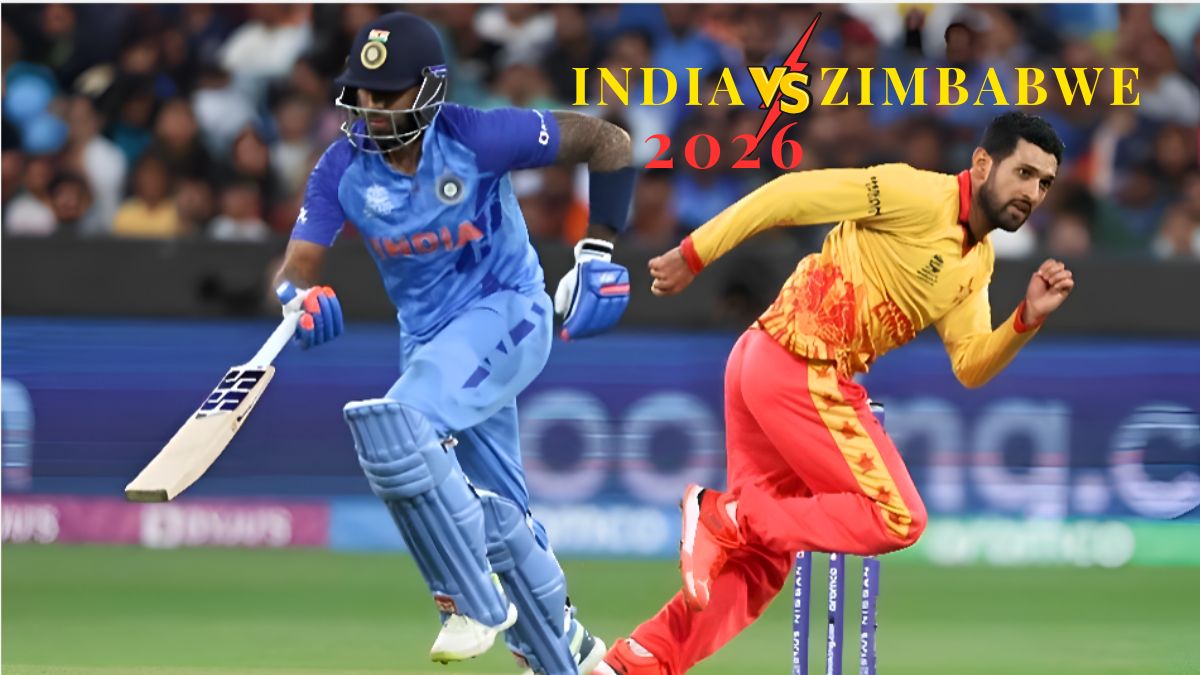
Setting the Stage: India’s Tour of Zimbabwe, July 2026
With the World Cup now behind both sides, attention turns to a fresh bilateral assignment. India are scheduled to tour Zimbabwe for a three-match T20I series later this month, marking the two nations’ first bilateral series since India’s five-match tour of Zimbabwe in July 2024, which the visitors won 4-1. All three matches of the upcoming series will be played at the historic Harare Sports Club, a venue with a reputation for offering something for everyone — early assistance for fast bowlers under overcast conditions, turn for the spinners as matches progress, and a fast outfield that can produce high-scoring contests in the middle overs.
The series is scheduled to begin on Thursday, 23 July 2026, with the second and third matches following on consecutive days, 25 and 26 July. All three fixtures are set to be played in the afternoon local time slot, which translates to a 4:30 PM IST start for viewers following the action from India, making it a convenient viewing window for fans back home.
This tour comes at an interesting point in the calendar for the Indian team, arriving shortly after a demanding assignment in England. As has often been the pattern with short, standalone bilateral tours outside major ICC events, India are widely expected to use the Zimbabwe series as an opportunity to test bench strength and give game time to emerging players who have impressed on the domestic circuit and in the ongoing edition of the Indian Premier League. This approach mirrors India’s strategy during their previous tour of Zimbabwe in 2024, which introduced several new faces to the senior international setup, some of whom have since gone on to establish themselves as regular members of India’s white-ball squads.
For Zimbabwe, the series represents a different kind of opportunity. Buoyed by their remarkable run at the T20 World Cup earlier in the year, Zimbabwe Cricket has welcomed the chance to host India again, viewing it as a vital step in the continued development of their senior team on home soil. Head coach and board officials have spoken about the significance of facing a top-tier opponent in a bilateral context, framing it as valuable exposure for a squad that has shown genuine growth in white-ball cricket over the past couple of years. Interestingly, this tour is also part of a broader deepening of cricketing ties between the two boards — Zimbabwe are separately scheduled to make a historic tour of India in January 2027 for a three-match ODI series, which will mark their first bilateral visit to India since 2002, over two decades ago.
What to Watch For in the Series
Given India’s overwhelming historical advantage over Zimbabwe across formats, and particularly in T20 cricket in recent years, the upcoming series will likely be viewed through the lens of individual performances and player development rather than a genuinely open contest for the series scoreline. Zimbabwe’s recent form, however, suggests they should not be dismissed lightly. The core group that inspired their unbeaten run to the Super Eight stage of the World Cup — including the likes of Brian Bennett, Sikandar Raza and other experienced campaigners — will be eager to carry that momentum into a home series against one of the game’s most powerful sides.
For India, the series offers a chance to continue building depth across their T20 squad in the aftermath of a triumphant World Cup campaign. Selectors are likely to rest several senior, all-format players, opening the door for younger talent to make an impression in international colours. Fans can expect the series to double as an audition of sorts for places in India’s broader T20 plans looking ahead.
The historic conditions at Harare Sports Club, known for rewarding both disciplined seam bowling early on and prising out turn for spinners later in the innings, should ensure competitive cricket across all three matches, even if the head-to-head numbers continue to favour the visitors heavily.
Conclusion
The India-Zimbabwe cricketing relationship, while historically one-sided on the scoreboard, continues to produce moments of genuine drama and significance — from Zimbabwe’s stunning World Cup run and their spirited chase against India in Chennai, to India’s eventual march to a second consecutive T20 World Cup title. As the two sides prepare to meet again in Harare this July, followed by Zimbabwe’s landmark tour of India in early 2027, the rivalry looks set to remain a fixture on the international cricket calendar, offering fans on both sides fresh chapters to look forward to even as the historical record continues to tilt firmly in India’s favour.