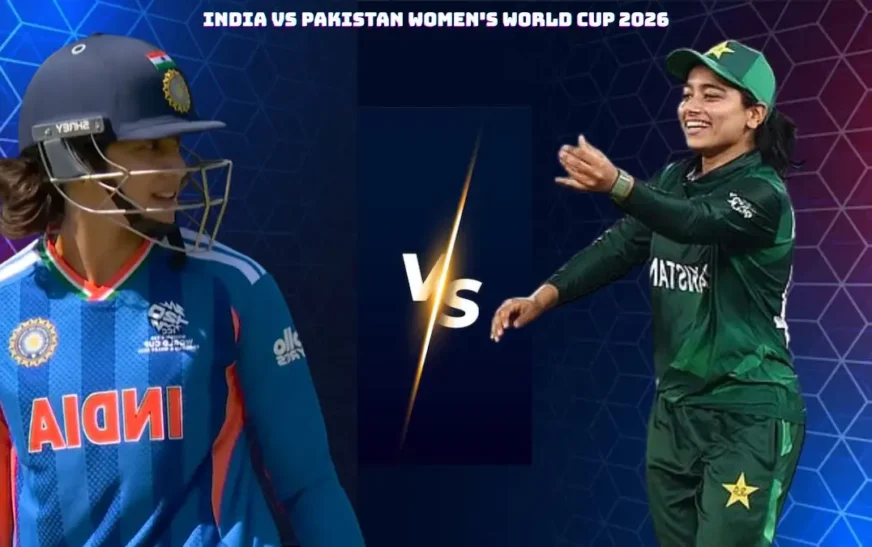
India vs Pakistan Women’s World Cup 2026 | Group stage clash at Edgbaston on June 14. Watch live on Star Sports & JioHotStar. India lead 12–3 head-to-head.
A Meeting of Giants on the Grand Stage of Birmingham
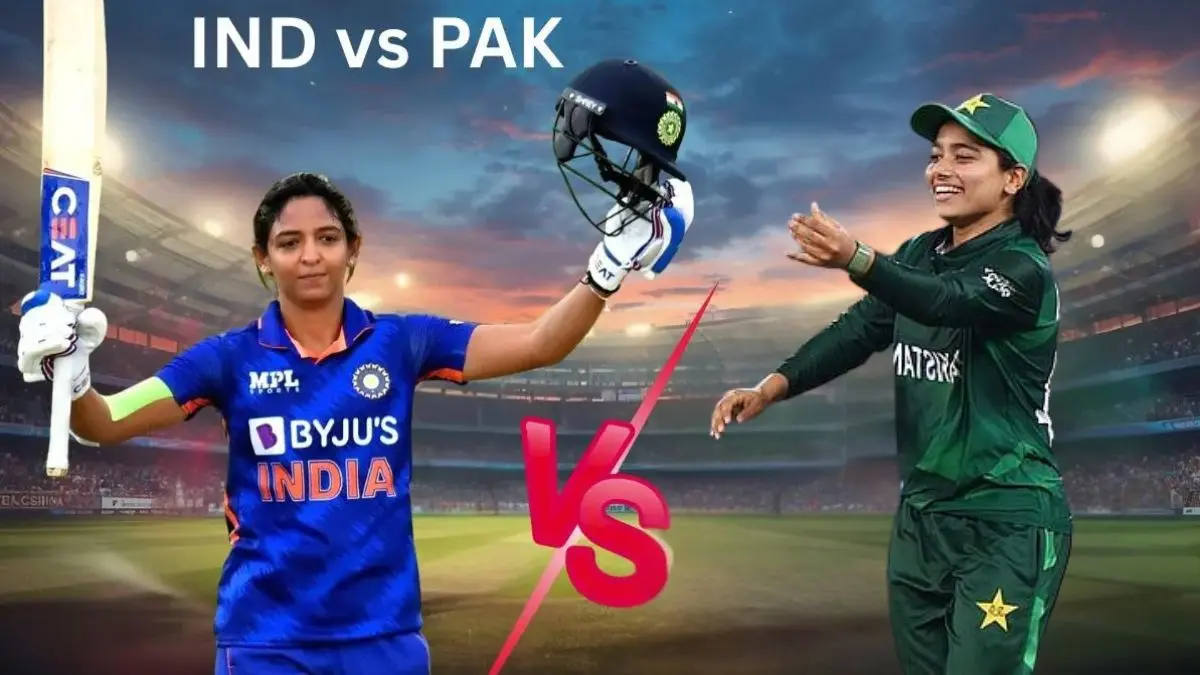
There are cricket matches, and then there are cricket events. The Group 1 encounter between India Women and Pakistan Women at the ICC Women’s T20 World Cup 2026 falls squarely into the second category. Scheduled for Sunday, 14 June 2026, at the historic Edgbaston Stadium in Birmingham, United Kingdom, this contest is more than a group stage fixture. It is a collision of histories, aspirations, regional pride, and cricketing excellence, bundled into twenty overs of high-stakes sport. When these two sides walk onto the Edgbaston turf, the eyes of an entire subcontinent — and indeed the broader cricketing world — will be watching with an intensity that few sporting contests can match.
The match is set to begin at 7:00 PM Indian Standard Time, which corresponds to 14:30 BST local time in Birmingham and 18:30 Pakistan Standard Time. For millions of fans in South Asia, the evening hours will be dominated by this one fixture. Families will gather around screens, tea will be brewed, and conversations will be paused as bat meets ball in the English Midlands. The scheduling alone signals the significance the organisers have placed on this encounter — an evening slot, prime broadcasting time, and one of the most storied cricket venues on the planet as its backdrop.
India vs Pakistan Women’s World Cup 2026 Player
| # | India | Pakistan | ||
|---|---|---|---|---|
| 1 | Harmanpreet Kaur (c) | Fatima Sana (c) | ||
| 2 | Smriti Mandhana (vc) | Tuba Hassan | ||
| 3 | Bharti S Fulmali | Iram Javed | ||
| 4 | Jemimah Rodrigues | Eyman Fatima | ||
| 5 | Shafali Verma | Natalia Pervaiz | ||
| 6 | Shreyanka Patil | Saira Jabeen | ||
| 7 | Sree Charani | Ayesha Zafar | ||
| 8 | Kranti Gaud | Aliya Riaz | ||
| 9 | Deepti Sharma | Diana Baig | ||
| 10 | Nandani Sharma | Gull Feroza | ||
| 11 | Richa Ghosh (wk) | Muneeba Ali (wk) | ||
| 12 | Yastika Bhatia (wk) | Sadia Iqbal | ||
| 13 | Arundhati Reddy | Tasmia Rubab | ||
| 14 | Radha Yadav | Rameen Shamim | ||
| 15 | Renuka Singh | Nashra Sundhu |
The 2026 Edition: History in the Making
The ICC Women’s T20 World Cup 2026 is, by multiple measures, the largest edition in the tournament’s history. With 12 teams participating across two groups, the scale and ambition of the event represent a landmark in the ongoing growth of women’s cricket. The expansion of the field speaks to the increasing depth of talent across the globe and the determination of the ICC to give more nations a platform at the sport’s highest level.
The tournament’s group stage is structured around two groups of six teams each. Group 1 has been widely described as the “group of death” — a phrase that captures the extraordinary concentration of cricketing quality within it. India, Pakistan, Australia, South Africa, Bangladesh, and the Netherlands find themselves competing for qualification from the same pool. Australia, perennial powerhouses and one of the dominant forces in the women’s game, share the group with the two South Asian giants. South Africa, a team that has steadily improved to become a genuine contender, add further menace. Even Bangladesh and the Netherlands, while perhaps perceived as the underdogs, are entirely capable of springing surprises at this level. The competition within Group 1 is as fierce as it gets in the women’s game.
Group 2, by contrast, features England, New Zealand, West Indies, Sri Lanka, Ireland, and Scotland — a group with its own compelling contests but one that lacks the subcontinental intensity that makes Group 1 so compelling to audiences in India and Pakistan.
India’s Journey to the Main Stage
The Indian women’s team arrives at this match having already tasted both success and near-failure during the warm-up phase of the tournament. In their preparatory campaign, they recorded a victory over the West Indies, demonstrating their capability to control matches and execute their plans. However, they also experienced the sting of a narrow defeat to England, falling short by just five runs in a closely contested encounter. That margin of defeat — five runs — is one that will no doubt have been dissected at length in team meetings, with video reviews of the closing overs studied in detail.
The significance of these warm-up results lies not in the points they carry, but in the information they provide. The five-run loss to England, in particular, offers a useful psychological baseline. It reveals that India is competitive against top-tier opposition but that there remain areas — likely the death overs, either with bat or ball — where marginal improvements could be the difference between winning and losing tight games. Against Pakistan, tight games are always a possibility, irrespective of head-to-head records or relative rankings. The occasion tends to override form.
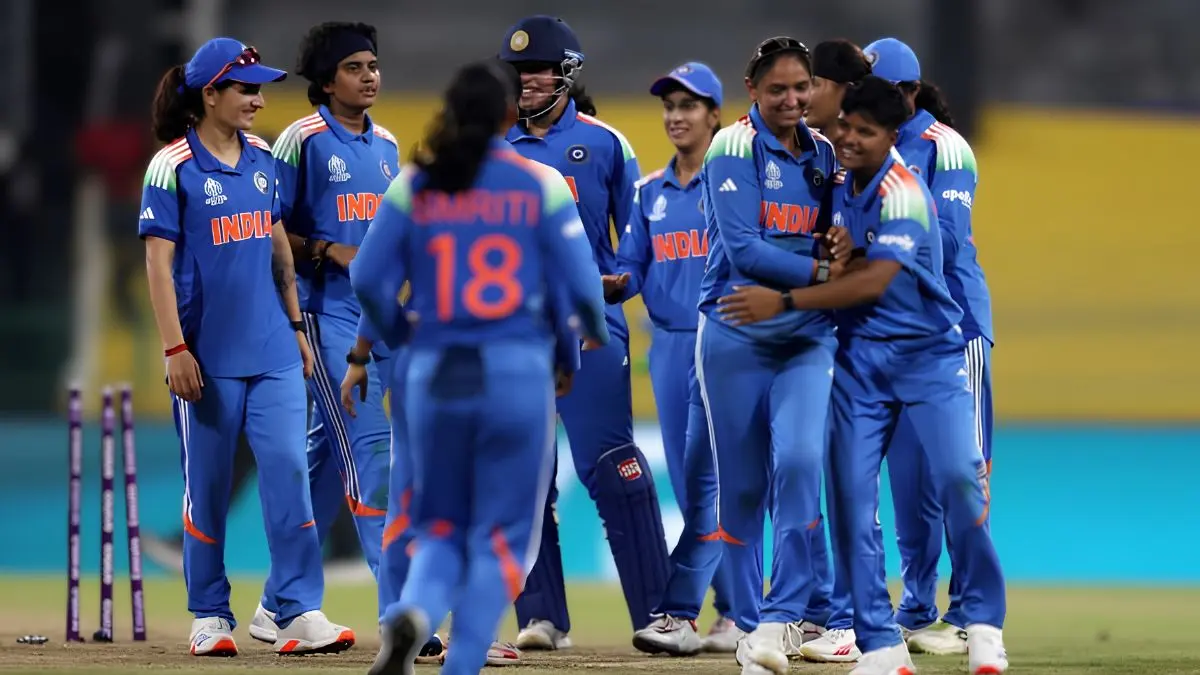
The India squad assembled for this tournament reflects depth, experience, and tactical flexibility. At its helm is Harmanpreet Kaur, who captains the side, bringing to the role a wealth of T20 experience and a composure under pressure that makes her one of the most respected leaders in the women’s game. Alongside her as vice-captain is Smriti Mandhana, an opening batter whose elegance and power make her one of the most watchable cricketers on the planet in any format. When Mandhana is in full flow — driving through the covers, pulling short deliveries with disdain — she is capable of dismantling opposition bowling attacks almost single-handedly.
The batting unit extends beyond the top two. Shafali Verma brings explosive hitting at the top of the order, a player who takes the attack to the opposition from the very first delivery. Jemimah Rodrigues, known for her nimble footwork and inventive strokeplay, offers balance and the ability to accelerate at critical junctures. Deepti Sharma provides the crucial link between batting and bowling, capable of playing a composed innings in the middle order and then contributing overs with her off-spin. Yastika Bhatia and Richa Ghosh — the latter carrying wicketkeeping duties — round out a batting lineup that has both solidity and the ability to shift gears.
The bowling attack offers genuine variety. Renuka Singh is the pace spearhead, capable of generating movement and extracting pace from any surface. Arundhati Reddy adds further seam bowling options, while Deepti Sharma and Nandani Sharma provide the spin dimension that is so critical in T20 cricket. Radha Yadav’s wrist spin adds an additional layer of unpredictability. Shreyanka Patil, Bharti Fulmali, Kranti Gaud, and Shree Charani offer further options in a squad that appears well-balanced across all three departments.
Pakistan’s Ambitions and Preparations
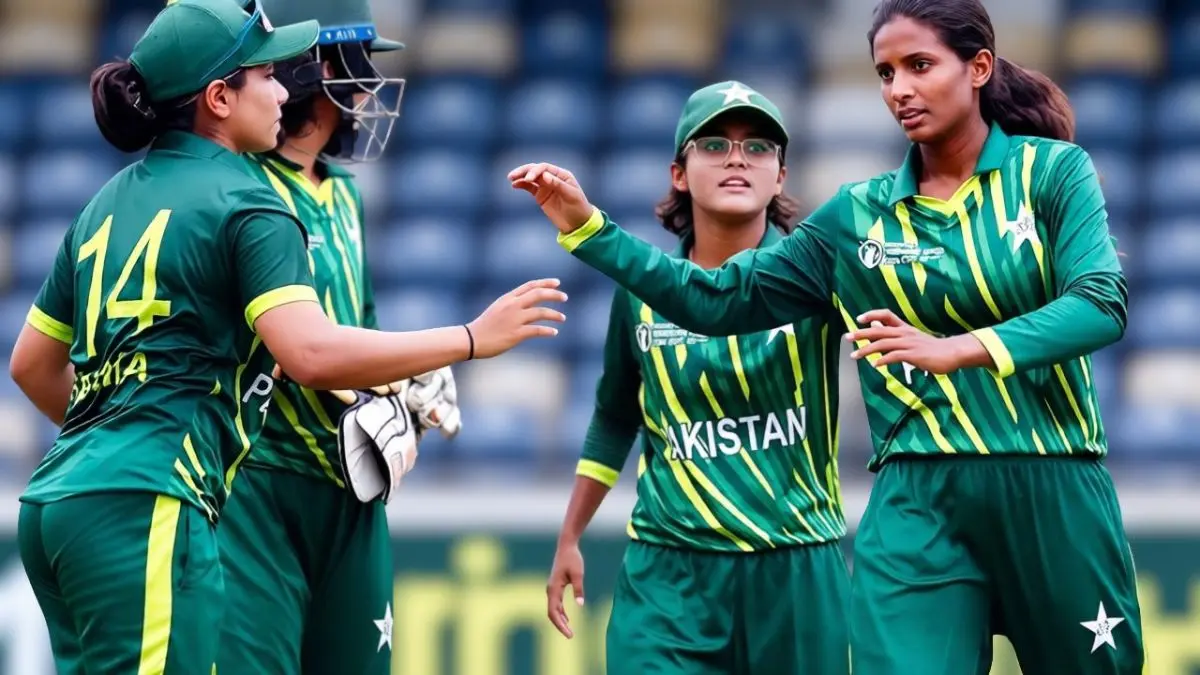
For Pakistani women, this tournament represents an enormous opportunity. Women’s cricket in Pakistan has grown considerably in recent years, and the appetite for success is matched by an increasingly professional infrastructure. The squad that arrives at this World Cup is led by Fatima Sana, a captain who leads with both her words and her actions as one of the team’s key bowling options. Her leadership will be tested extensively in a group that offers no easy opponents.
The batting lineup carries significant experience and potential. Muneeba Ali, who also takes on wicketkeeping duties, is among the more combative batters at the top of the order. Gull Feroza, Ayesha Zafar, and Iram Javed provide the middle-order depth that Pakistan will rely upon when pressure builds. Eyman Fatima, Aliya Riaz, and Natalia Pervaiz offer additional batting options, while Saira Jabeen, Tuba Hassan, Rameen Shamim, Sadia Iqbal, Nashra Sandhu, Diana Baig, and Tasmia Rubab ensure that the squad is comprehensive in scope.
The bowling unit, anchored by Fatima Sana’s pace and the spin options within the squad, will need to find ways to contain India’s attacking batting lineup while also creating dismissal opportunities. Against batters of the quality of Mandhana, Harmanpreet, and Shafali, there is little margin for error. Length, line, and field placement will all require meticulous planning. Any loose deliveries are likely to be punished emphatically.
Pakistan’s key challenge will be containing the powerful Indian batting lineup while simultaneously posting or chasing a competitive total. The pressure of the occasion — Indo-Pak matches carry a weight that transcends cricket — tends to create moments where technique alone is insufficient and temperament becomes the determining factor.
The Head-to-Head Record: A Story of Indian Dominance
Historically, the head-to-head record between these two sides in Women’s T20 Internationals tells a clear story. India holds a dominant 12–3 record against Pakistan, a numerical advantage that reflects the sustained excellence India has brought to these encounters over multiple years. That record means that statistically, Pakistan enters as an underdog. But in cricket — and especially in T20 cricket, where the margins are finest and the variables most numerous — statistics can only tell part of the story.
The most recent meeting between the two teams at a T20 World Cup occurred in October 2024 and produced a six-wicket victory for India. That result, a convincing one in terms of margin, reinforced India’s psychological ascendancy. However, Pakistan will point out that they are a different team now, that conditions will be different in England, and that every World Cup encounter is its own unique contest.
The psychological dimension of this fixture cannot be overstated. Both sets of players are acutely aware of what the match means beyond its group stage implications. A win for India would reinforce the established hierarchy and provide significant momentum heading into the rest of the group stage. A win for Pakistan would represent a watershed moment — not just for the team but for women’s cricket in Pakistan more broadly — and would send a message to every other team in Group 1 that they are a force to be reckoned with.
Edgbaston: The Perfect Theatre
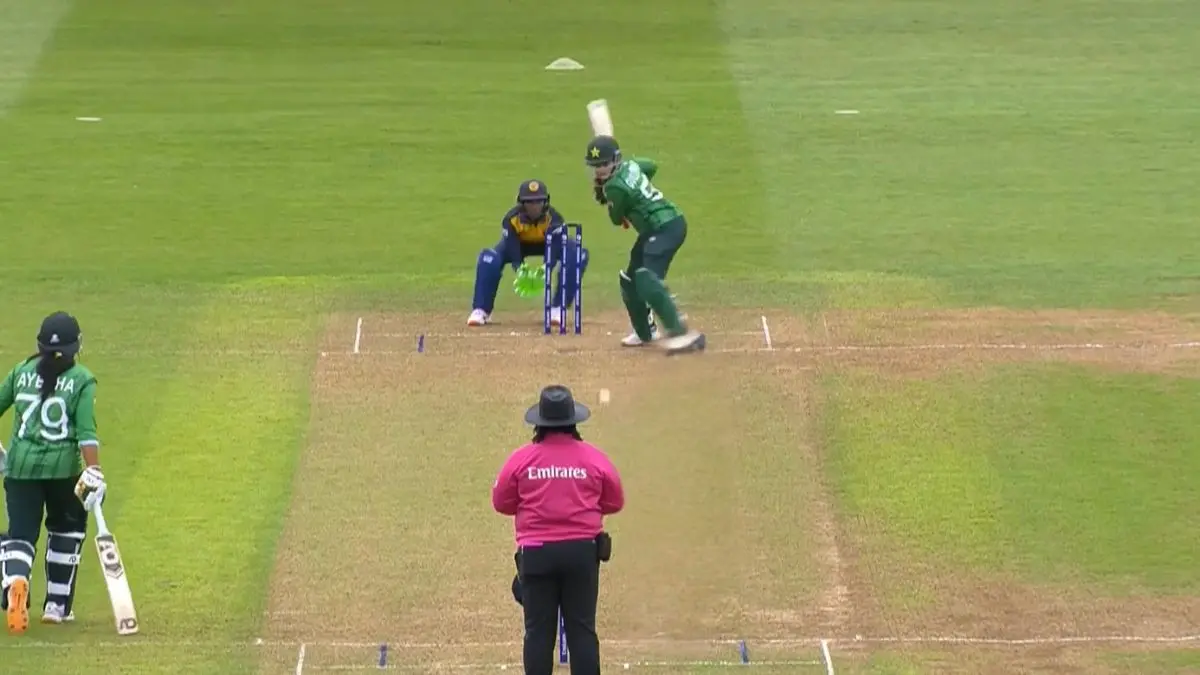
The choice of Edgbaston Stadium as the venue for this match is fitting in every sense. Situated in Birmingham, a city with substantial South Asian communities that have made it one of the most vibrant cultural hubs in the United Kingdom, the ground provides a setting where the atmosphere on match day will be extraordinary. The stands are likely to be filled with fans waving flags, singing songs, and generating the kind of decibel level that is more commonly associated with Test match arena cricket than group stage T20 fixtures.
Edgbaston has a rich history as a venue for high-pressure cricket. It has hosted Ashes Tests, World Cup knockout matches, and countless memorable moments over its long history. The pitch at Edgbaston traditionally offers early assistance to seam bowlers, particularly when there is cloud cover, before settling into a surface that allows batters to express themselves. In English conditions in June, the possibility of overhead conditions favoring swing bowling cannot be dismissed. Both Renuka Singh for India and Fatima Sana for Pakistan are capable of exploiting such conditions, which adds another layer of tactical intrigue to what is already a rich contest.
The ground’s capacity and its proximity to Birmingham city centre mean that the atmosphere on the day will be generated not just by traveling fans but also by the large British-South Asian population that calls the region home. For many of them, this fixture carries the kind of emotional weight that goes beyond sport — it is a connection to heritage, family conversations, and a sense of collective identity that cricket uniquely enables.
Broadcast and Viewing: A Global Audience
The match will reach audiences across the world through multiple broadcast and streaming platforms. In India, the telecast will be live on the Star Sports Network, while digital viewers will be able to access live streaming via JioHotStar. Together, these platforms represent reach into hundreds of millions of homes across the Indian subcontinent and the diaspora.
In Pakistan, the match will be broadcast on PTV Sports and Geo Super, with streaming available through Myco, Tamasha, and ARY Zapp. These platforms ensure that Pakistani fans, regardless of whether they are at home or following proceedings from abroad, will have access to every ball.
The combined broadcast reach of this single group stage match likely rivals that of major sporting events elsewhere in the world. Women’s cricket has seen extraordinary growth in its viewership over recent years, and the India-Pakistan fixture — regardless of the format or the stage of the competition — consistently delivers among the highest audience numbers in the sport. That commercial reality, in turn, drives investment, sponsorship, and the broader development of the women’s game.
The Broader Stakes: What This Match Means for Women’s Cricket
Beyond the immediate contest, the India-Pakistan fixture at the 2026 ICC Women’s T20 World Cup carries significance for the trajectory of women’s cricket in South Asia and globally. Women’s cricket in the region has long been in the shadow of the men’s game, operating with smaller budgets, less media coverage, and fewer commercial opportunities. The transformation of recent years — driven by better domestic structures, increased broadcasting deals, and the growing profile of players like Mandhana, Harmanpreet, and Fatima Sana — represents a genuine shift in this dynamic.
Matches like this one are central to sustaining and accelerating that momentum. When a women’s India-Pakistan fixture attracts audiences in the tens of millions, when it fills a historic Test ground like Edgbaston, and when it is discussed with the same intensity as any other major sporting occasion, it changes the conversation about what women’s cricket is and what it can become. Young girls watching from homes in Mumbai, Lahore, Karachi, Delhi, and Birmingham see in these players not just athletes but possibilities — evidence that sport offers pathways that were once considered inaccessible.
For the players themselves, the scale of the occasion is both a privilege and a responsibility. They carry with them not just their own ambitions and their team’s hopes but the aspirations of an entire generation of fans who look to them for inspiration. The pressure of an India-Pakistan match is immense. The grace with which both sets of players handle that pressure — and the excellence they produce under it — is itself a form of leadership that extends well beyond the boundary rope.
A Contest to Define the Group Stage
As Group 1 encounters go, this is the fixture that could define the shape of the group stage. With Australia, South Africa, Bangladesh, and the Netherlands all in the same pool, points are precious from the very first match. India, playing their opening game of the main tournament following the warm-up phase, will be acutely conscious that beginning with a win establishes both a points platform and a psychological foundation for the games to follow. A loss, meanwhile, would not be fatal — the group is large enough that recovery is possible — but it would place additional pressure on subsequent fixtures, particularly those against Australia and South Africa.
For Pakistan, their opening match is always about more than just two points. A strong performance against India — whether or not it results in a win — communicates to the group and to the cricketing world at large that Pakistan is a team to be respected in 2026. It builds belief within the squad for the challenging encounters that follow.
Both teams will walk onto the Edgbaston pitch on Sunday, 14 June 2026, aware of all of this and more. The history, the rivalry, the stakes, the stadium, the watching millions — all of it will be present in every delivery, every stroke, every caught-and-bowled opportunity, and every boundary. That is the nature of this fixture. It transcends the ordinary and enters the realm of the unforgettable.
Conclusion: Cricket at Its Most Compelling
The India Women versus Pakistan Women group stage match at the ICC Women’s T20 World Cup 2026 is precisely the kind of occasion that reminds the world why cricket occupies a unique place in the sporting culture of South Asia. It is not merely a game. It is a conversation between two nations conducted through the medium of bat and ball, watched by more people than most events can dream of attracting, played at one of the world’s great cricket grounds, and carrying within it the weight of history, head-to-head records, squad ambitions, and the dreams of generations.
India’s 12–3 head-to-head advantage, their experienced squad anchored by Harmanpreet Kaur and Smriti Mandhana, and the memory of a six-wicket victory in October 2024 position them as favorites. But Pakistan, led by the capable Fatima Sana and supported by a squad with genuine quality across all three departments, will not arrive at Edgbaston simply to make up the numbers. They will arrive believing, as every team must in T20 cricket, that twenty overs are all the time in the world to rewrite the record books.
When the first ball is bowled at 14:30 BST on Sunday, 14 June 2026, what unfolds will be watched, debated, celebrated, and remembered across the length and breadth of the subcontinent — and far beyond. That is the magic and the weight of this match. And it is precisely why, in a tournament already billing itself as the largest in history, the India versus Pakistan encounter stands apart as the marquee clash.
Footnotes
References
External links