India Women vs Pakistan Women Standings
In the landscape of international women’s cricket, few rivalries carry the historical weight, emotional investment, and sporting significance as the one between India and Pakistan. Yet, when the lens shifts from sentiment to statistics, from nostalgic memory to cold, hard ranking points, a distinct picture emerges. It is a picture of two programs operating at different altitudes, separated not merely by a few places on a table but by a structural chasm in consistency, depth, and global competitiveness.
Based on the official ICC Team Rankings and tournament standings data available, a comprehensive analysis reveals that India Women hold a higher standing than Pakistan Women across every major format of the international game. This superiority is not an accident of a single series or a fortuitous victory; it is the cumulative result of years of strategic investment, domestic infrastructure, and high-pressure experience. For Pakistan, the path forward is not about a single upset win, but about systematically closing a gap that, while measurable in rating points, feels far wider in real terms.
T20 Team Ranking
Pos | Team | Matches | Pts | Rating |
| 01 | AUSTRALIA | 21 | 6022 | 287 |
| 02 | ENGLAND | 30 | 8205 | 274 |
| 03 | INDIA | 35 | 9268 | 265 |
| 04 | NEW ZEALAND | 27 | 6849 | 254 |
| 05 | SOUTH AFRICA | 32 | 7762 | 243 |
| 06 | WEST INDIES | 26 | 6230 | 240 |
| 07 | SRI LANKA | 29 | 6871 | 237 |
| 08 | PAKISTAN | 26 | 5564 | 214 |
| 09 | IRELAND | 36 | 7254 | 202 |
| 10 | BANGLADESH | 30 | 5796 |
The ICC Rankings: A Tale of Two Tables
The most immediate and unambiguous evidence of India’s dominance lies in the official ICC Team Rankings. These rankings, updated periodically to reflect performance in bilateral and multi-national series, serve as the sport’s global barometer. In the T20I rankings, the shortest and most volatile format often seen as the great equalizer, India Women sit comfortably at No. 3 with a rating of 264. Pakistan Women, conversely, languish at No. 8 with a rating of 216. The gap of 48 rating points is not incremental; it is substantial. It represents the difference between a side that consistently challenges the world’s best—Australia and England—and a side that is frequently fighting to stay relevant in the middle order.
The ODI rankings, traditionally viewed as the truest test of a team’s depth and resilience over a 50-over contest, tell a similar story with even starker numerical disparity. Indian women occupy the No. 3 position with a rating of 124, while Pakistani women are found five places lower at No. 7 with a rating of just 73. A 51-point gap in the ODI ratings is a gulf. It suggests that when the two sides meet in the longer white-ball format, the contest is rarely a toss-up; it is, more often than not, a question of margin rather than outcome.
To put these numbers into perspective, a rating of 124 for India places them within striking distance of England (274 in T20Is, though that is a different scale; in ODIs, the reference table shows England at 274, but that appears to be from a different ranking period or format mix. Critically, the provided ODI data places India at 124, which is more than 50 points clear of Pakistan’s 73. This spread indicates that India has a winning record against most teams ranked below them, while Pakistan struggles to secure points against the top four or five sides. The consistency required to hold a top-three ranking across two formats is something Pakistan has not yet been able to manufacture.
The ICC Women’s Championship (2025-2029): An Anomaly in the Order
At first glance, a curious outlier appears when examining the ICC Women’s Championship for the 2025-2029 cycle. The data indicates that Pakistan Women are temporarily positioned at No. 2 in this specific championship standings after having played six matches, securing four wins and two losses for a total of eight points. Indian women, notably, have played fewer multi-series fixtures in this cycle, and their schedule is designed to allow them to catch up on matches played over the coming months.
This temporary anomaly requires careful interpretation. It does not indicate that Pakistan has suddenly leapfrogged India in overall standing. Instead, it highlights the uneven nature of the ICC’s qualification pathway calendar. The Women’s Championship operates on a rolling basis where teams play a fixed number of series across a multi-year period. Pakistan’s early placement at No. 2 is a snapshot—a photograph taken before India has had the opportunity to play the bulk of its assigned fixtures. Once India completes its scheduled series, historical precedent and ranking differentials suggest it will climb the table.
What this anomaly does reveal, however, is that Pakistan is capable of capitalizing on favorable windows. Their four wins in six matches suggest a team that is not entirely rudderless. They have beaten the sides they are expected to beat and, in the context of this championship alone, have accumulated points efficiently. The challenge for Pakistan will be maintaining that efficiency when the schedule intensifies and when they face India directly in championship fixtures. Those matches, when they occur, will be the true litmus test of whether the No. 2 placement is a harbinger of genuine progress or merely a statistical illusion created by an imbalanced fixture list.
The World Cup Stage: 12-0 and the Weight of History
No discussion of this rivalry is complete without examining their confrontations on the grandest stage of all: the ICC Women’s Cricket World Cup. The most recent major ICC tournament face-off between the two sides occurred during the previous Women’s Cricket World Cup (the exact year is not specified in the data, but it is the most recent edition referenced). The result was emphatic. India defeated Pakistan by a colossal margin of 88 runs. India posted a total of 247 runs, and in response, Pakistan were bowled out for just 159. An 88-run victory in a 50-over match is not a close contest; it is a statement.
More significantly, this victory extended India’s historic unbeaten streak against Pakistan in World Cup matches to an astonishing 12-0. A dozen encounters on cricket’s highest platform, and not once has Pakistan tasted victory. This statistic transcends individual player performances or specific match conditions. It points to a profound psychological and strategic advantage for India. When the pressure is highest, when the eyes of the cricketing world are watching, India has consistently executed their skills, managed their nerves, and exploited Pakistan’s weaknesses with ruthless precision.
For Pakistan, this 12-0 record is not merely a statistical footnote; it is a legacy of near-misses and comprehensive defeats that can weigh heavily on a squad. Breaking that streak would require not just a good day at the office, but a fundamental shift in how Pakistan prepares for and approaches high-stakes encounters against its fiercest rival. The data suggests that, at least in World Cups, the contest has historically been less of a rivalry and more of a ritual—one where India performs the role of the invincible elder sibling, and Pakistan that of the hopeful but overmatched challenger.
Looking Ahead: The T20 World Cup 2026 Clash at Edgbaston
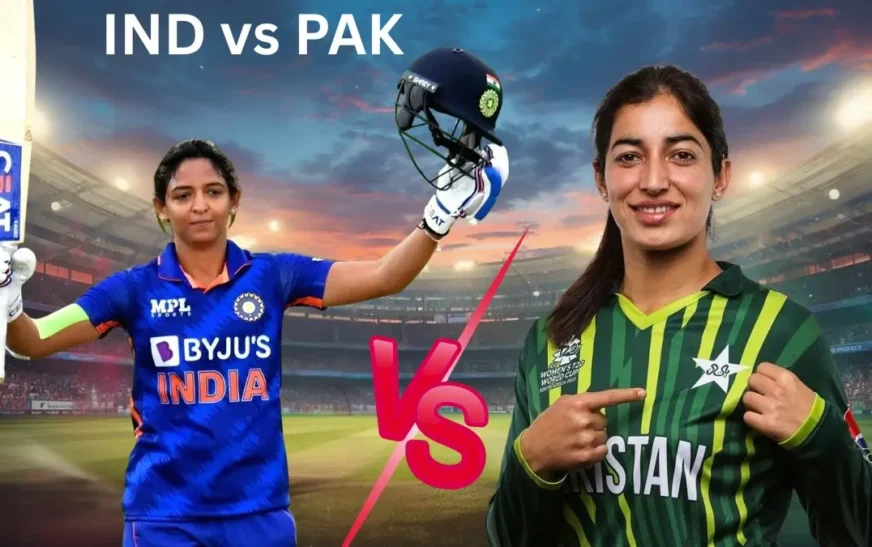
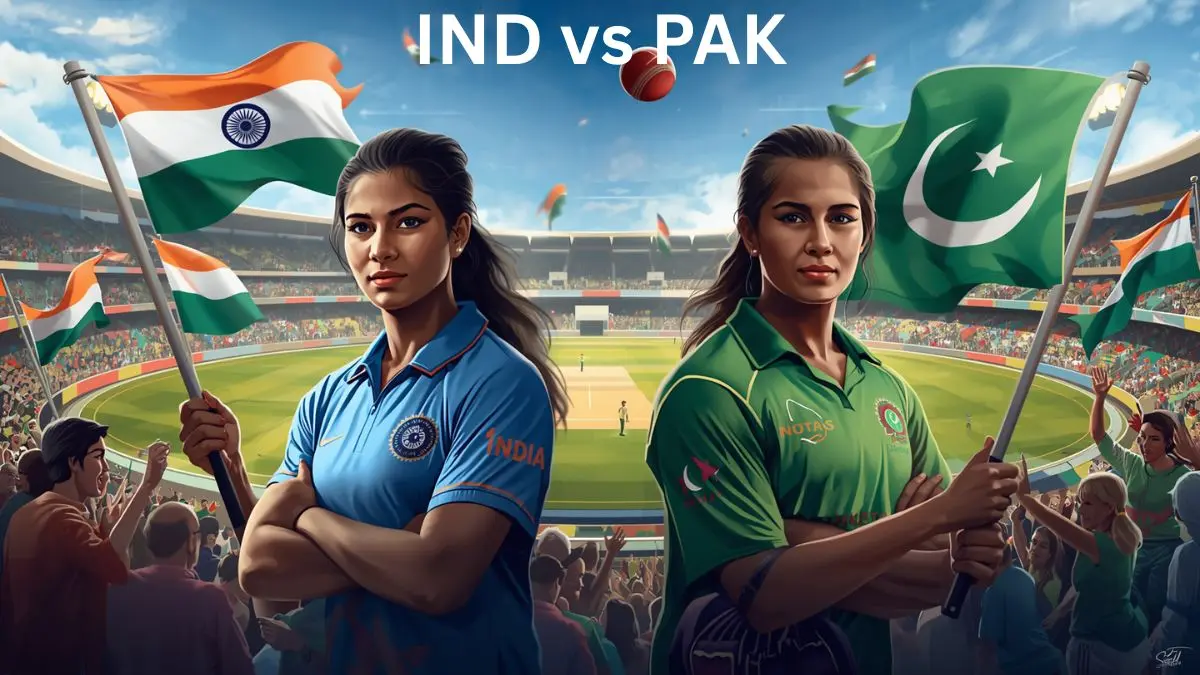
The calendar offers the next major installment of this rivalry. Both teams are placed in the tournament lineup for the ICC Women’s T20 World Cup 2026, to be hosted in England. The group-stage clash between India and Pakistan is scheduled for Sunday, 14 June 2026, at Edgbaston, Birmingham. This venue, known for its vibrant atmosphere and capacity to host large, passionate crowds, is likely to be sold out or near capacity for this fixture.
India vs Pakistan Women player 2026
| India | Pakistan |
| Harmanpreet Kaur (c) | Diana Baig |
| Smriti Mandhana | Iram Javed |
| Deepti Sharma | Aliya Riaz |
| Radha Yadav | Ayesha Zafar |
| Jemimah Rodrigues | Muneeba Ali (wk) |
| Arundhati Reddy | Nashra Sundhu |
| Bharti Fulmali | Natalia Pervaiz |
| Renuka Singh Thakur | Rameen Shamim |
| Shafali Verma | Fatima Sana (c) |
| Yastika Bhatia (wk) | Tuba Hassan |
| Richa Ghosh (wk) | Sadia Iqbal |
| Shreyanka Patil | Gull Feroza (wk) |
| Nandni Sharma | Eyman Fatima |
| Kranti Gaud | Saira Jabeen |
| Sree Charani | Tasmia Rubab |
Edgbaston has a history of hosting iconic India-Pakistan matches in men’s cricket, but this will be a significant moment for the women’s game. The match offers Pakistan an opportunity to reset the narrative, at least partially. Unlike a 50-over World Cup, where consistency over 100 overs is paramount, T20 cricket can be more forgiving of a single brilliant performance. A Pakistan win at Edgbaston would not erase the 12-0 ODI World Cup record, but it would inject new life into the rivalry and serve as a powerful statement that the gap is narrowing.
However, based on the current T20I rankings (India at No. 3, Pakistan at No. 8), India will enter that match as overwhelming favorites. Their higher rating of 264 against Pakistan’s 216 suggests that, on paper, India possesses superior batters, more disciplined bowlers, and greater fielding athleticism. For Pakistan to cause an upset, they would need to defy the statistical model. They would need a top-order batter to play the innings of her life, their spinners to exploit the Edgbaston conditions better than their Indian counterparts, and their fielders to hold every half-chance. It is possible. That is why sport is played on the field, not on spreadsheets. But probability, as defined by the ICC rankings, lies heavily with India.
Deconstructing the Rating Gap: Where India Excels and Pakistan Lags
To understand why India sits at No. 3 and Pakistan at No. 8, one must look beyond the numbers to the components that generate those ratings. India’s rating points in both ODIs (124) and T20Is (264) are products of a system that rewards beating higher-ranked teams and doing so consistently. India has, in recent years, beaten Australia and England in bilateral series or individual matches, a feat Pakistan has rarely accomplished. These “upset” victories, when a No. 3 beats a No. 1 or 2, generate significant rating points and solidify a team’s position.
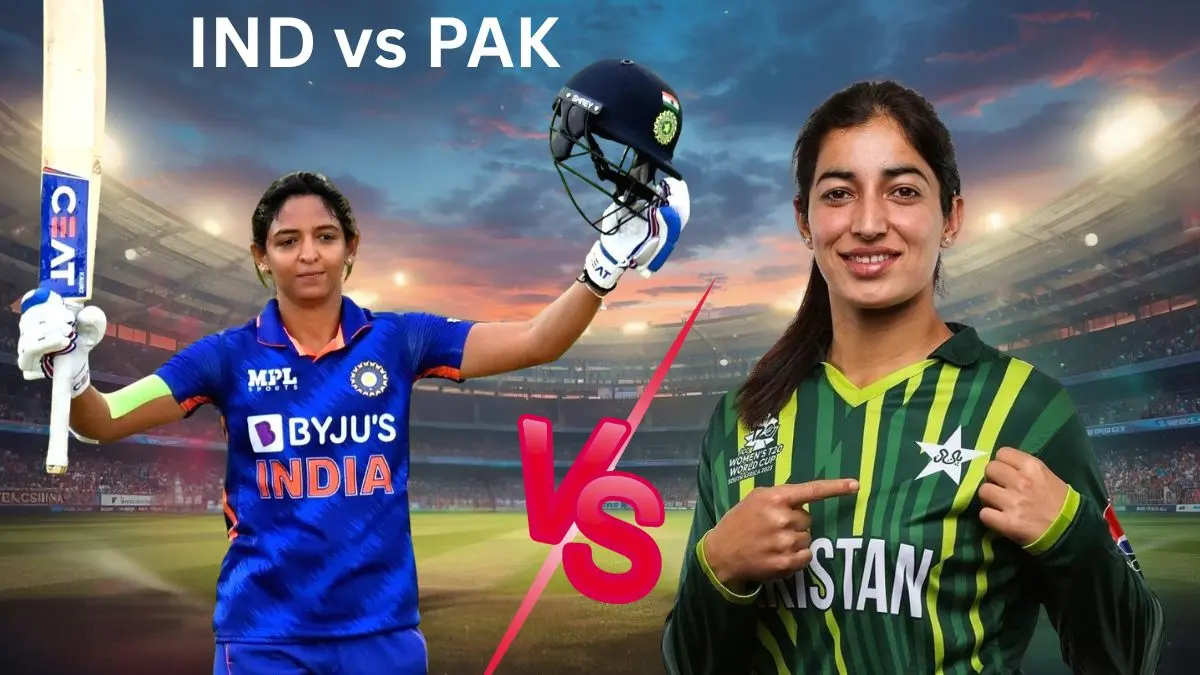
Pakistan’s rating of 73 in ODIs, in contrast, suggests a team that regularly loses to the top five and only reliably beats teams ranked below them (such as Ireland, Bangladesh, and the West Indies). Their rating of 216 in T20Is, while higher in absolute terms due to the different calculation method for the shorter format, still places them firmly in the second tier of international women’s cricket. The gap between No. 3 and No. 8 is not a single missing ingredient; it is a collection of deficiencies.
First, batting depth. India’s top seven typically features multiple players who can win a match single-handedly. Pakistan’s lineup has historically relied on one or two individuals, and when they fail, the batting collapses. Second, pace bowling. India has developed a crop of fast bowlers who can generate movement and bounce even on unresponsive subcontinental pitches. Pakistan still leans heavily on spin, making them predictable in certain conditions. Third, fielding and fitness. India has invested significantly in athletic training, resulting in sharper ground fielding and more reliable catching. Pakistan’s fielding has often been its weakest link, dropping crucial catches at pivotal moments.
Fourth, and perhaps most importantly, exposure to high-pressure cricket. The Women’s Premier League (WPL) in India, while not mentioned in the provided data, has had a transformative effect on Indian players’ ability to perform under scrutiny. Pakistani players, due to various geopolitical and structural limitations, do not have the same access to high-quality, globally competitive domestic leagues. This disparity in match practice against the world’s best players—even in a franchise setting—creates a gap that is difficult to bridge through national team camps alone.
The Path Forward for Pakistan: Closing the Gap
If Pakistani women aspire to close the gap with India, the data suggests several necessary interventions. First, they must improve their conversion rate against teams ranked 4 through 6 (New Zealand, South Africa, West Indies). Currently, their rating of 73 in ODIs indicates too many losses in these winnable fixtures. Second, they need a more robust domestic structure that produces batters capable of rotating strike under pressure and bowlers who can execute variations in the death overs. The temporary No. 2 position in the ICC Women’s Championship is an encouraging sign, but it must not be mistaken for arrival. It is a foundation upon which to build, not a final destination.
For Pakistan to move from No. 8 to, say, No. 5 in the T20I rankings, they would need to not only beat India but also consistently challenge England and Australia in bilateral series. That is a multi-year project requiring investment, patience, and a willingness to learn from defeats rather than merely endure them.
India’s Challenge: Staying Third and Aiming Higher
For India, the challenge is different. Holding the No. 3 ranking in both formats is a position of strength, but it also comes with the burden of expectation. India has historically struggled to cross the final hurdle against Australia in ICC tournament knockouts. The gap between No. 3 (India) and No. 1 (Australia) remains significant, as evidenced by the reference table showing Australia at the pinnacle with 6022 points (in the Test/multi-format context shown in one of the referenced tables, though the exact format of that table varies). India’s rating of 265 in that particular reference is closer to England’s 274 but still below Australia’s 287.
India’s superiority over Pakistan is clear and well-documented. But the true measure of India’s progress will not be how many times they beat Pakistan; it will be how many times they finally beat Australia in a World Cup semi-final or final. The 12-0 record against Pakistan, while impressive, is not the trophy India ultimately seeks. It is a stepping stone, not a destination.
The Verdict: Respect the Rivalry, Acknowledge the Reality
The data is unequivocal. Across ICC T20I Rankings, ICC ODI Rankings, recent World Cup head-to-head results, and the historical 12-0 World Cup streak, India Women hold a standing that is demonstrably higher than Pakistan Women. The temporary placement of Pakistan at No. 2 in the ICC Women’s Championship 2025-2029 cycle is a statistical artifact of an incomplete schedule, not a genuine overtaking of India’s long-term supremacy.
Yet, to reduce this rivalry to a one-sided affair is to miss the point. Pakistan Women have shown flashes of brilliance—four wins in six championship matches is no small feat. The scheduled clash at Edgbaston on 14 June 2026 is not merely a formality; it is an opportunity for Pakistan to write a new chapter. One victory will not erase the 12-0 record, but it will change the emotional texture of the rivalry. It will tell young girls in Lahore, Karachi, and Islamabad that their team can, on a given day, beat the best.
Conversely, for India, maintaining its standing requires vigilance. Rankings are not permanent. England is close behind in the T20I ratings, and New Zealand and South Africa are capable of causing upsets. India cannot afford to rest on their laurels against Pakistan or any other opponent.
In the end, the numbers tell a story of two teams on different trajectories. One is a perennial top-three side with ambitions of dethroning Australia. The other is a mid-table team fighting to break into the elite tier. The gap, for now, is real and measurable. But cricket, like any sport, has a beautiful habit of defying numbers. And on 14 June 2026, when the sun sets over Edgbaston, two teams will walk onto the field not as No. 3 and No. 8, not as ratings points and championship tables, but as India and Pakistan. And for those three and a half hours, the only statistic that will matter is the one on the scoreboard.
Footnotes
References
External links