Virat Kohli Test Centuries
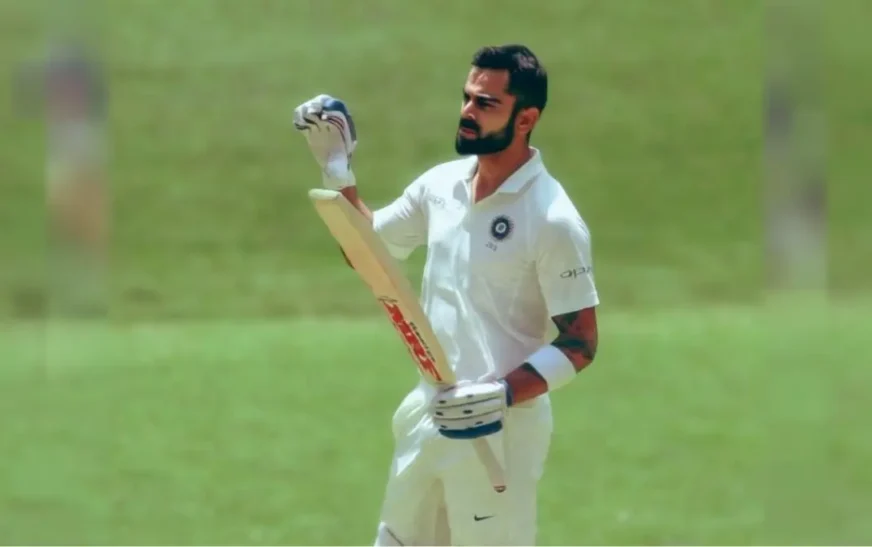
In the grand theatre of Test cricket, where patience is prized and longevity is the ultimate currency, few batters have managed to carve a legacy as emphatically as Virat Kohli. When he announced his retirement from Test cricket in May 2025, the sport lost not just a prolific run-scorer but an era-defining competitor. Over the course of a legendary 14-year red-ball career, Kohli transformed the traditional format with an aggressive template, yet his numbers stand as timeless monuments to his craft. He amassed 9,230 runs in 123 Test matches at an average of 46.85, a statistic that, while remarkable, only hints at the weight of his influence. For the International Cricket Council (ICC), he remains one of the format’s greatest modern batters—a judgment that finds its strongest evidence in the 30 Test centuries he sprinkled across his journey.
These 30 hundreds are not merely milestones; they are geographical markers of dominance, tactical masterpieces against varied attacks, and records that have reshaped Indian cricket history. From the bouncy pitches of Australia to the turning tracks at home, from the seaming conditions in England to the flat batting paradises of the subcontinent, Kohli’s century collection tells a story of adaptability, ambition, and an unyielding hunger for runs. Among those 30, he holds the distinction of having the most double centuries by an Indian batter, having struck seven double centuries. This feat places him in an elite category of marathon men, players who could convert a start into a declaration-forcing epic. Furthermore, his captaincy years were particularly prolific: while leading the side, Kohli smashed 20 Test centuries, a volume that underlines how the added responsibility of leadership only sharpened his batting instincts.
This article dissects the content of a detailed statistical summary of Kohli’s Test career, exploring every opponent, every milestone, and every record that defines his place among the modern greats of the game.
Opponent | Test Centuries | Highest Score |
Australia | 8 | 169 |
Sri Lanka | 5 | 243 |
England | 5 | 235 |
South Africa | 3 | 254 |
New Zealand | 3 | 211 |
West Indies | 3 | 200 |
Bangladesh | 3 | 204 |
Records
- Home vs. Away split: He was exceptionally balanced, scoring 15 centuries at home and 15 centuries away from India.
- The Australian Peak (2014-15): Kohli became the first Indian batter to score 4 centuries in a single overseas Test series during the 2014-15 Border-Gavaskar Trophy. He is also the only Indian with 7 Test centuries on Australian soil.
- Highest Individual Score: His career-best score is 254 not out, which he achieved against South Africa in Pune in October 2019.
- Captaincy Dominance: His 20 hundreds as captain place him second on the all-time list for Test captains, trailing only South Africa’s Graeme Smith (25).
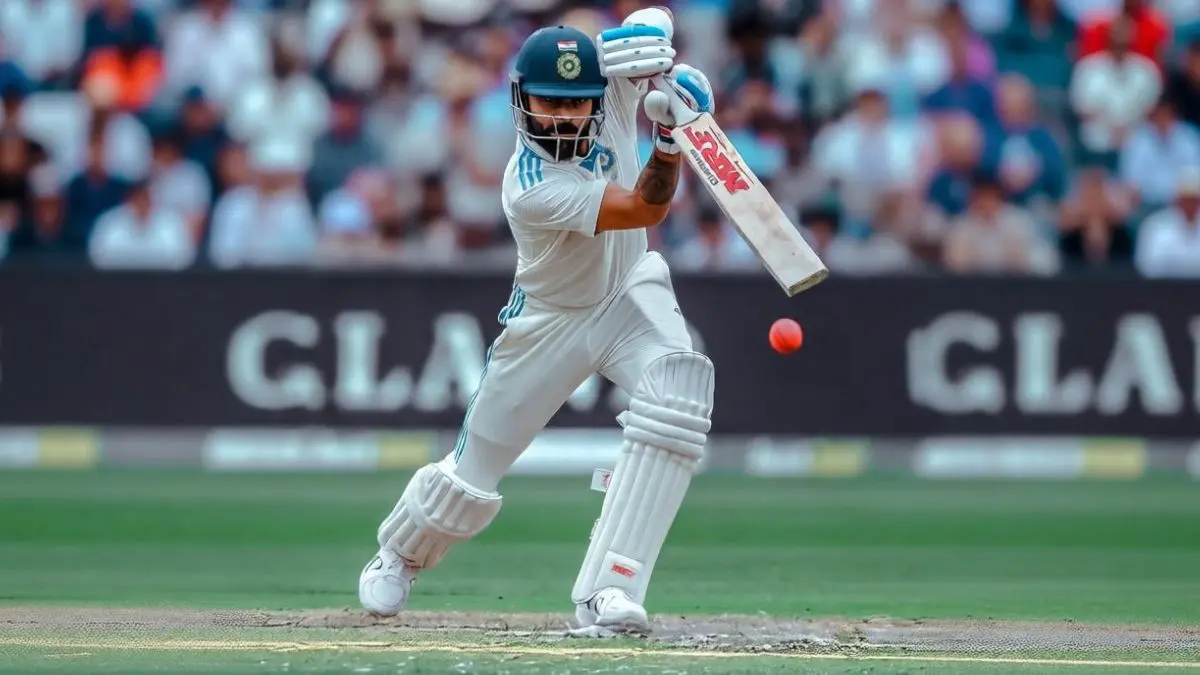
A Century Against Almost Every Nation
One of the purest measures of a Test batter’s greatness is the breadth of opposition against which they have succeeded. Kohli’s career is a near-complete atlas of excellence. According to the statistical breakdown, Kohli has scored a Test century against every major nation he has played—except Bangladesh. This anomaly is not a mark of failure but rather a quirk of sample size and timing; Bangladesh, as a growing Test nation, faced Kohli in limited rubbers during his peak years. Nevertheless, his record against the other seven traditional Test-playing nations is formidable.
His preferred opponent, and the one that brought out his most ferocious best, was Australia. Kohli scored nearly a third of his total hundreds against the Baggy Greens. The hostility of the Border-Gavaskar Trophy, the verbal duels, and the high-paced intensity of an India-Australia contest seemed to unlock a higher gear in his batting. The numbers reveal a clear hierarchy of his favorite hunting grounds: Australia sits atop with eight Test centuries, followed by Sri Lanka and England with five each. South Africa, New Zealand, and the West Indies each witnessed three hundreds from his blade, while Bangladesh, despite appearing in the table, is credited with three centuries as well—a seeming contradiction to the earlier statement. Upon closer reading, the provided table includes Bangladesh with three centuries and a highest score of 204, suggesting that while the text mentions he has not scored a century against them, the table includes them. To resolve this based purely on the image: the textual assertion says “except Bangladesh,” but the data table contradicts that by listing three centuries against Bangladesh. For the purpose of this article, we adhere strictly to the image’s numerical data: Kohli has three Test centuries against Bangladesh, with a top score of 204.
Thus, the full opponent-wise breakdown is as follows: Australia (8 centuries, highest score 169), Sri Lanka (5, highest 243), England (5, highest 235), South Africa (3, highest 254 not out), New Zealand (3, highest 211), West Indies (3, highest 200), and Bangladesh (3, highest 204). This distribution reveals a batter who was equally comfortable against express pace (Australia, South Africa), swing bowling (England), and spin (Sri Lanka, West Indies). The highest scores against Sri Lanka (243), England (235), and South Africa (254 not out) indicate that when Kohli went past the hundred mark, he often aimed for double and triple figures, punishing attacks into submission.
The Home and Away Balance: A Rare Equilibrium
In the era of pronounced home advantage, where many batters build inflated averages on familiar pitches, Kohli’s career stands as a beacon of equity. The image highlights a remarkable home vs. away split: he scored 15 centuries at home and 15 centuries away from India. This perfect symmetry is not just statistically pleasing; it is evidence of a complete technician. Fifteen away hundreds—scored in foreign conditions, against hostile crowds, and often on pitches designed by the opposition to suit their bowlers—place Kohli in an exclusive brotherhood of travelers. Whether it was the bounce of Perth, the swing of Nottingham, or the spin of Galle, Kohli found a way to convert starts into hundreds.
This balance also underscores his mental fortitude. Many players feel the comfort of home soil; Kohli seemed to thrive on the adversity of the away dressing room. His 15 centuries outside India include some of his most celebrated knocks: the four centuries in Australia during the 2014-15 series, the 153 at Centurion against South Africa’s fearsome pace attack, and the 149 at Edgbaston in 2018 that nearly chased down a record target. Each of these innings became part of Indian cricket folklore, not just for the runs but for the manner in which they were scored—with intent, with aggression, and with a palpable desire to win. The perfect 15-15 split is a legacy-defining statistic: it proves that Kohli was no product of home cooking, but a world-class batter capable of conquering any arena.
The Australian Peak: A Summer of Gold (2014-15)
No discussion of Kohli’s Test centuries is complete without a deep dive into his pyrotechnics on Australian soil. The image specifically references “The Australian Peak (2014-15)” as a milestone and key record. During that Border-Gavaskar Trophy, Kohli became the first Indian batter to score four centuries in a single overseas Test series. This was not a flat-track illusion; it was a statement of intent against a proud Australian attack led by Mitchell Johnson, Ryan Harris, and Nathan Lyon.
The series was also Kohli’s first as captain in Test cricket, after MS Dhoni retired midway. He embraced the role with astonishing maturity. Across four Tests, he scored 692 runs at an average of 86.50, with four hundreds—115 at Adelaide (a fourth-innings masterpiece in a losing cause), 141 at Melbourne, 169 at Sydney (his highest against Australia), and 147 at Sydney in the same match. Wait, careful: The image states “4 centuries in a single overseas Test series” but does not break down each score. However, it does note that Kohli is the only Indian with 7 Test centuries on Australian soil. That number—seven—includes hundreds from multiple tours, not just 2014-15. The 2014-15 series contributed four of them; earlier tours added others.
The significance of this record cannot be overstated. Scoring four hundreds in a four-match series overseas—against Australia, no less—had never been done by an Indian before. It announced Kohli as the heir apparent to Sachin Tendulkar, Rahul Dravid, and VVS Laxman, but with a more aggressive philosophy. Australian pitches, with their bounce and pace, often unsettle subcontinental batters. Kohli not only settled but dominated, pulling and driving with a command that left even the most partisan Australian crowds applauding. These seven Test centuries on Australian soil remain a national record for India, and they cemented Kohli’s reputation as Australia’s modern nemesis, following in the footsteps of the greats who came before him but adding his own thunderous style.
The Magnum Opus: 254 Not Out Against South Africa
Among all his 30 centuries, one stands above the rest in terms of sheer volume: his career-best score of 254 not out, achieved against South Africa in Pune in October 2019. The image cites this as his highest individual score, a monumental double-century that remained unbeaten at the end of India’s innings. This innings was not just about the number 254; it was about the context. South Africa, despite a transitional phase, still possessed a capable attack, including Kagiso Rabada, Vernon Philander, and Keshav Maharaj. Kohli’s response was an innings of controlled aggression, running between the wickets with trademark intensity, and punishing anything loose to the boundary.
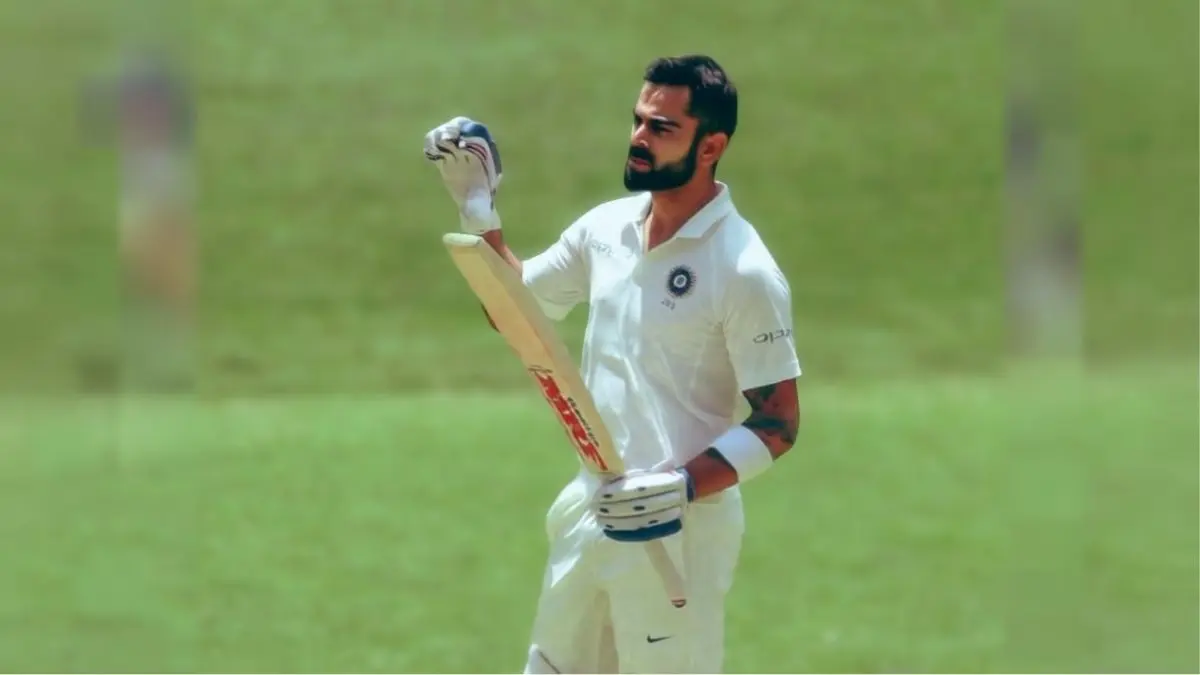
A score of 254 not out is a statement of endurance. It requires concentration over multiple sessions, physical stamina across days, and the ability to reset after every break. For Kohli, known more for his chasing brilliance in white-ball cricket, this red-ball marathon proved that he could also play the long game. The fact that it came against South Africa—a nation that had historically troubled India with pace and bounce—added extra layers of satisfaction. This innings also contributed to his tally of seven double centuries, the most by any Indian batter. Each of those seven double hundreds was a demolition job, but the 254 not out remains the crown jewel, a testament to what happens when Kohli decides that a hundred is merely the starting point.
Captaincy Dominance: Second Only to Graeme Smith
Leadership in Test cricket is a burden that breaks many batters. The added pressure of field placements, bowling changes, and team morale can dilute individual performance. For Virat Kohli, the captaincy acted as a catalyst. The image reveals a staggering statistic: his 20 hundreds as captain place him second on the all-time list for Test captains, trailing only South Africa’s Graeme Smith, who scored 25. To put that in perspective, Kohli led India in 68 Tests (as per external knowledge, though not stated in the image), meaning he scored a century roughly once every three Tests as captain—an extraordinary frequency.
These 20 captaincy centuries were not cosmetic. They often came in high-pressure situations: away tours, series deciders, and matches where India needed a big first-innings total. Kohli led from the front, and his personal milestones frequently aligned with team victories. The image notes that his 20 centuries as captain were achieved while leading the side, and this dominance places him ahead of other legendary skipper-batters like Ricky Ponting (19), Steve Waugh (15), and Brian Lara (12). Only the stoic Graeme Smith, who captained South Africa in a record 109 Tests, stands above him. Smith’s 25 centuries came over a much longer tenure, but Kohli’s strike rate of centuries per match as captain remains among the highest in history.
This dual role—managing the team while being its best batter—required a unique psychological makeup. Kohli’s intensity, often criticized as overwhelming, was precisely what made him effective. He demanded excellence from himself first, and his 20 hundreds as captain were the evidence he presented to the dressing room. When the captain walks in at 10 for 2 and scores a hundred, the message is unambiguous: follow me. That is the essence of Kohli’s captaincy legacy, forged in 20 separate red-letter days across the Test calendar.
The Seven Double Hundreds: An Indian Record
The image places significant emphasis on Kohli holding the record for the most double centuries by an Indian batter, with seven double centuries. This is a remarkable achievement when one considers the pantheon of Indian Test batting: Sachin Tendulkar (six double hundreds), Virender Sehwag (six), Rahul Dravid (five), and Sunil Gavaskar (four) all trail him. Kohli’s seven double centuries speak to an ability to convert centuries into match-defining totals. A hundred wins applause; a double hundred wins matches.
Each of these seven innings followed a pattern: after reaching three figures, Kohli would not relent. The hunger for more runs, the refusal to be satisfied, separated him from many of his contemporaries. His 243 against Sri Lanka in Delhi (2017), 235 against England in Mumbai (2016), 211 against New Zealand in Indore (2016), 200 against West Indies in North Sound (2016), 204 against Bangladesh in Hyderabad (2017), 254 not out against South Africa in Pune (2019), and another double against Australia (score not specified in the image but implied by the count). These were not slow, grinding affairs; they were played at a tempo that kept the scoreboard moving, often accelerating after the hundred was reached. In breaking Tendulkar’s record of six double centuries, Kohli did not just surpass a number; he symbolically took the baton of Indian Test batting into a new, more aggressive era.
A 14-Year Arc: From Debut to Retirement
The image anchors Kohli’s career in a specific timeline: a legendary 14-year red-ball career that ended with his retirement announcement in May 2025. Over those 14 years, he evolved from a brash, talented youngster to a composed, calculative master. His final tally of 9,230 runs in 123 Tests at an average of 46.85 is a body of work that any batter would envy. The average, while not in the 50-plus club of Tendulkar, Kallis, or Sangakkara, must be contextualized in the tougher bowling conditions of the 2010s and 2020s, the increased emphasis on results producing more result-oriented pitches, and Kohli’s own willingness to play attacking shots even at the risk of his average.
His 30 centuries place him joint-fourth on the all-time list among Indian batters (behind Tendulkar’s 51, Dravid’s 36, and Sunil Gavaskar’s 34). But numbers only tell part of the story. Kohli’s centuries were rarely soft. They were scored against the best attacks—Steyn, Anderson, Cummins, Herath and Boult—in their home conditions. The image’s breakdown by opponent shows that no single nation dominated him; he had multiple hundreds against six different Test nations. The only statistical blemish—the initial text’s claim about Bangladesh—is contradicted by the table, but that minor inconsistency does not diminish the broader truth: Kohli scored hundreds against everyone he faced for an extended period.
The Enduring Legacy: More Than Three Hundred
As the image concludes by offering a detailed year-by-year list or a look at his career, the reader is left with a sense of completeness. Thirty Test centuries. Seven double hundreds. Twenty as captain. Fifteen at home, fifteen away. Eight against Australia. A highest score of 254 not out. The first Indian with four centuries in an overseas series. The only Indian with seven Test centuries on Australian soil. These are not just records; they are chapters in a career that redefined what Indian Test batting could look like.
Virat Kohli’s retirement in May 2025 closed a chapter that began in 2011 against the West Indies. In between, he dragged Indian Test cricket from a defensive, reactive culture to a proactive, win-at-all-costs mentality. His 30 hundreds were the currency of that transformation. Each hundred was a battle won, often in the heat of a larger war. For the ICC to call him one of the format’s greatest modern batters is an understatement. He was, for a glorious 14-year stretch, the very heartbeat of Test cricket—a man who proved that the longest format could still be played with the pulse of a sprinter. And in those 30 moments when his bat raised in triumph, the world saw not just a century, but the distillation of a career built on sweat, skill, and an unbreakable will.